Srinivasan Prakash, Baldeviano G Christian, Miura Kazutoyo, Diouf Ababacar, Ventocilla Julio A, Leiva Karina P, Lugo-Roman Luis, Lucas Carmen, Orr-Gonzalez Sachy, Zhu Daming, Villasante Eileen, Soisson Lorraine, Narum David L, Pierce Susan K, Long Carole A, Diggs Carter, Duffy Patrick E, Lescano Andres G, Miller Louis H
Laboratory of Malaria and Vector Research, National Institute of Allergy and Infectious Diseases, National Institutes of Health, Rockville, MD, USA.
US Naval Medical Research Unit No. 6 (NAMRU-6), Callao, Peru.
NPJ Vaccines. 2017;2. doi: 10.1038/s41541-017-0015-7. Epub 2017 May 22.
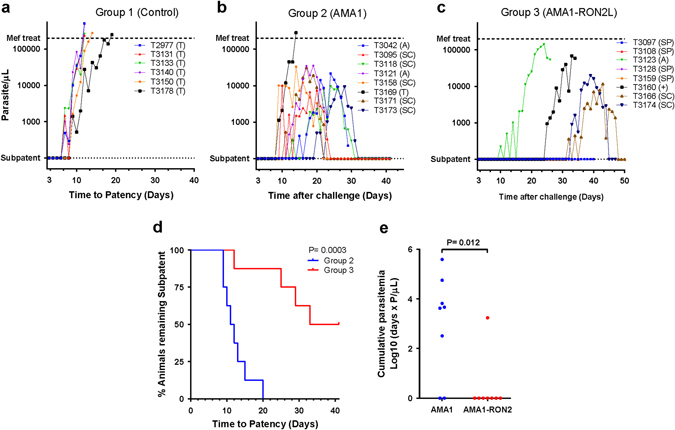
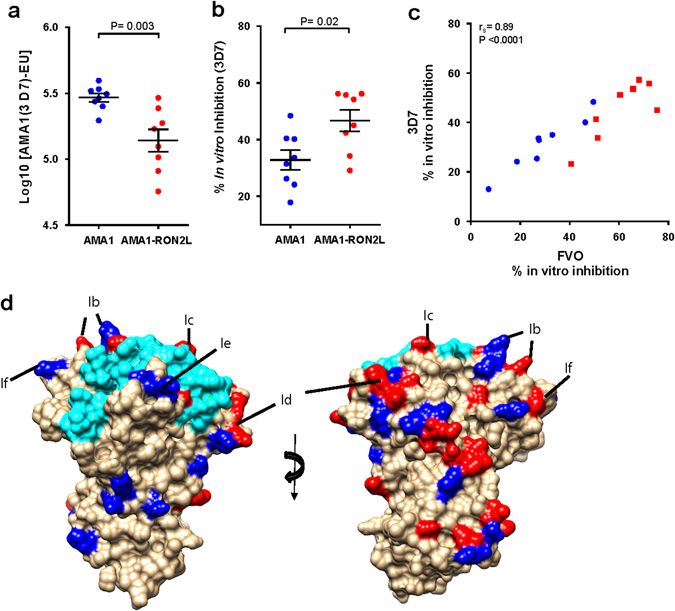
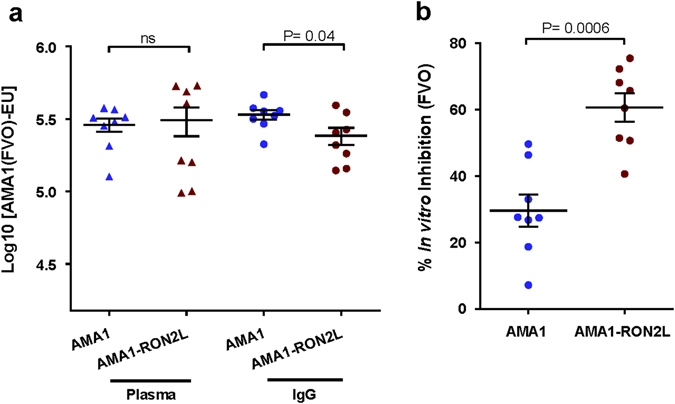
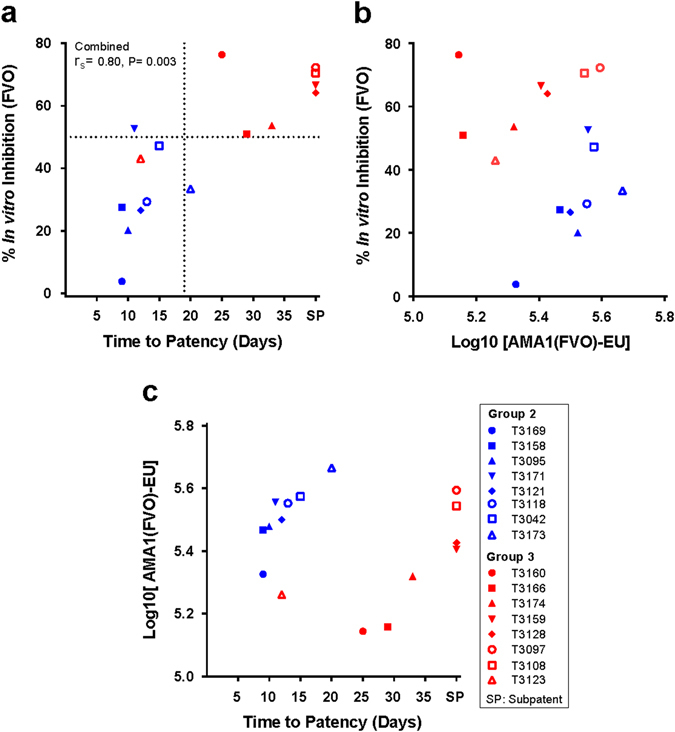
The protein, apical membrane antigen 1 forms a complex with another parasite protein, rhoptry neck protein 2, to initiate junction formation with the erythrocyte and is essential for merozoite invasion during the blood stage of infection. Consequently, apical membrane antigen 1 has been a target of vaccine development but vaccination with apical membrane antigen 1 alone in controlled human malaria infections failed to protect and showed limited efficacy in field trials. Here we show that vaccination with AMA1-RON2L complex in Freund's adjuvant protects monkeys against a virulent infection. Vaccination with AMA1 alone gave only partial protection, delaying infection in one of eight animals. However, the AMA1-RON2L complex vaccine completely protected four of eight monkeys and substantially delayed infection (>25 days) in three of the other four animals. Interestingly, antibodies from monkeys vaccinated with the AMA1-RON2L complex had significantly higher neutralizing activity than antibodies from monkeys vaccinated with AMA1 alone. Importantly, we show that antibodies from animals vaccinated with the complex have significantly higher neutralization activity against non-vaccine type parasites. We suggest that vaccination with the AMA1-RON2L complex induces functional antibodies that better recognize AMA1 as it appears complexed with RON2 during merozoite invasion. These data justify progression of this next generation AMA1 vaccine towards human trials.
蛋白顶端膜抗原1与另一种寄生虫蛋白棒状体颈部蛋白2形成复合物,以启动与红细胞的连接形成,并且在感染的血液阶段对于裂殖子入侵至关重要。因此,顶端膜抗原1一直是疫苗开发的靶点,但在受控的人类疟疾感染中单独使用顶端膜抗原1进行疫苗接种未能起到保护作用,并且在现场试验中显示出有限的疗效。在此我们表明,用弗氏佐剂中的AMA1-RON2L复合物进行疫苗接种可保护猴子免受强毒感染。单独用AMA1进行疫苗接种仅提供部分保护,在八只动物中的一只中延迟了感染。然而,AMA1-RON2L复合物疫苗完全保护了八只猴子中的四只,并在另外四只动物中的三只中显著延迟了感染(>25天)。有趣的是,用AMA1-RON2L复合物接种疫苗的猴子产生的抗体比单独用AMA1接种疫苗的猴子产生的抗体具有显著更高的中和活性。重要的是,我们表明用该复合物接种疫苗的动物产生的抗体对非疫苗类型的寄生虫具有显著更高的中和活性。我们认为,用AMA1-RON2L复合物进行疫苗接种可诱导功能性抗体,这些抗体在裂殖子入侵期间能更好地识别与RON2复合的AMA1。这些数据证明这种下一代AMA1疫苗有理由进入人体试验。