Fu Shu-Ping, Hong Hao, Lu Sheng-Feng, Hu Chen-Jun, Xu Hou-Xi, Li Qian, Yu Mei-Ling, Ou Chen, Meng Jian-Zhong, Wang Tian-Lin, Hennighausen Lothar, Zhu Bing-Mei
Key Laboratory of Acupuncture and Medicine Research of Ministry of Education, Nanjing University of Chinese Medicine, Nanjing, China.
School of Information Technology, Nanjing University of Chinese Medicine, Nanjing, China.
PLoS One. 2017 Aug 14;12(8):e0181948. doi: 10.1371/journal.pone.0181948. eCollection 2017.
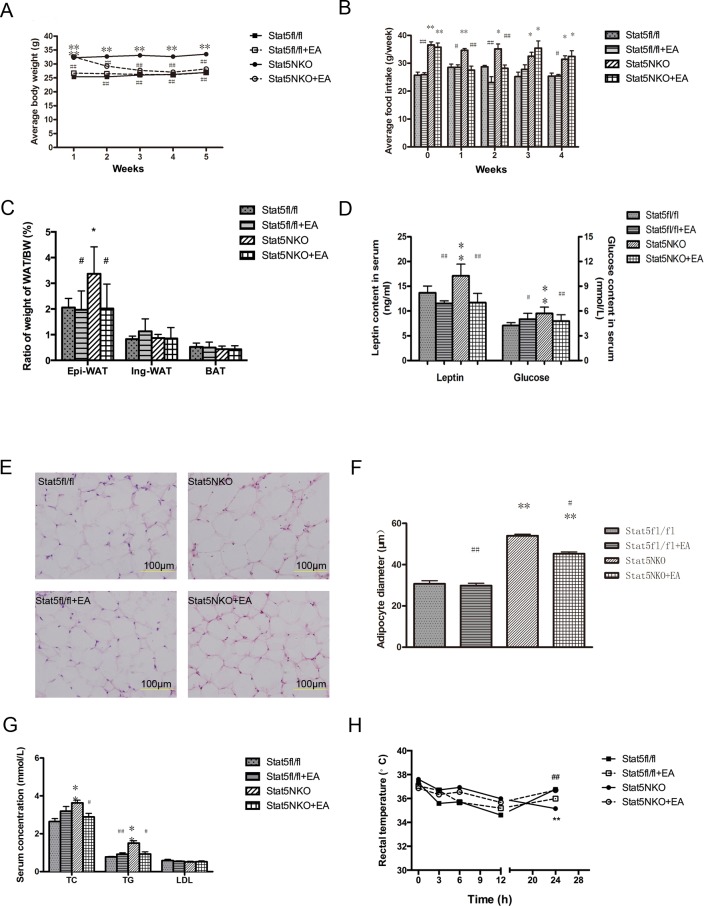
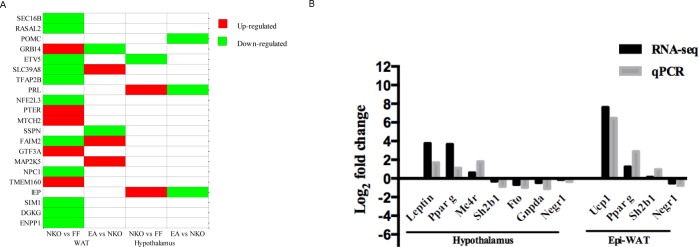
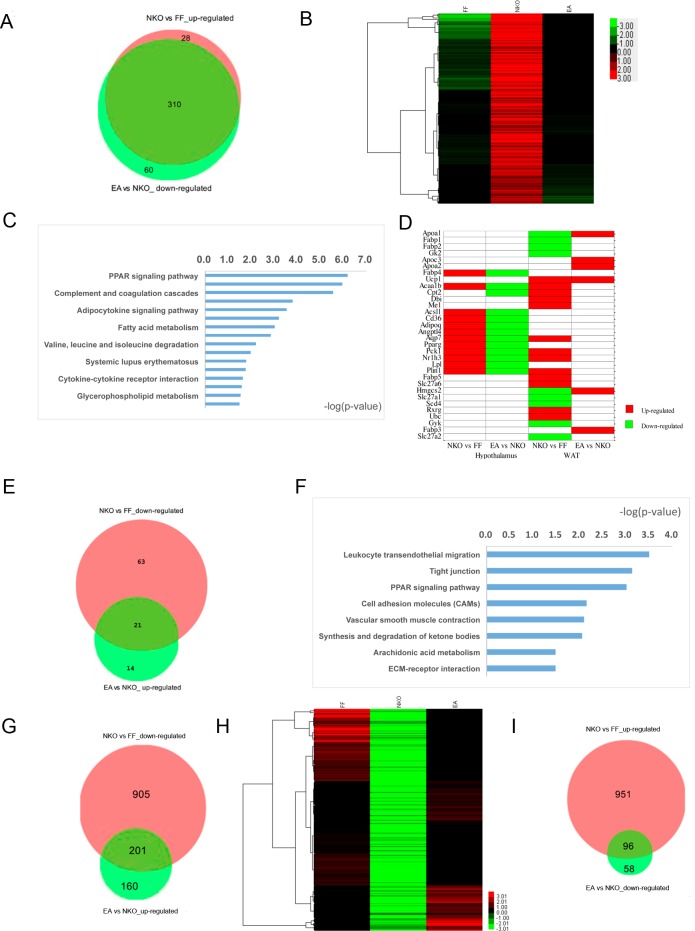
Acupuncture is reported to be effective in treating obesity related illnesses, but its mechanism is still unclear. To investigate this mechanism we applied electro-acupuncture (EA) in a mouse model of obesity and used RNA-seq to identify molecular consequences. Deletion of the transcription factor STAT5 from neurons (Stat5NKO) led to obesity. Acupuncture, in turn, reduced body weight and the ratio of epididymal white adipose tissue (Epi-WAT) to body weight, and it also decreased plasma concentrations of glucose, triglyceride, and cholesterol. In addition, EA increased cold endurance of Stat5NKO obese mice. EA reversed altered gene expressions in the hypothalamus and Epi-WAT, especially in the hypothalamus in Stat5NKO obese mice. This study provides, for the first time, insight into genomic networks of obesity and their modulation by electro-acupuncture, which in turn reveals potential mechanisms that explain acupuncture-induced weight-loss.
据报道,针灸在治疗与肥胖相关的疾病方面是有效的,但其机制仍不清楚。为了研究这一机制,我们在肥胖小鼠模型中应用了电针(EA),并使用RNA测序来确定分子效应。神经元中转录因子STAT5的缺失(Stat5NKO)导致了肥胖。反过来,针灸减轻了体重以及附睾白色脂肪组织(Epi-WAT)与体重的比值,还降低了血浆中葡萄糖、甘油三酯和胆固醇的浓度。此外,电针提高了Stat5NKO肥胖小鼠的耐寒能力。电针逆转了下丘脑和Epi-WAT中基因表达的改变,尤其是Stat5NKO肥胖小鼠下丘脑的基因表达改变。这项研究首次深入了解了肥胖的基因组网络及其通过电针的调节,进而揭示了解释针灸诱导体重减轻的潜在机制。