Mezzenga Emilio, D'Errico Vincenzo, D'Arienzo Marco, Strigari Lidia, Panagiota Koutla, Matteucci Federica, Severi Stefano, Paganelli Giovanni, Fenwick Andrew, Bianchini David, Marcocci Francesco, Sarnelli Anna
Medical Physics Unit, Istituto Scientifico Romagnolo per lo Studio e la Cura dei Tumori (IRST) IRCCS, Meldola, Italy.
National Institute of Ionizing Radiation Metrology, ENEA CR Casaccia, Rome, Italy.
PLoS One. 2017 Aug 14;12(8):e0182888. doi: 10.1371/journal.pone.0182888. eCollection 2017.
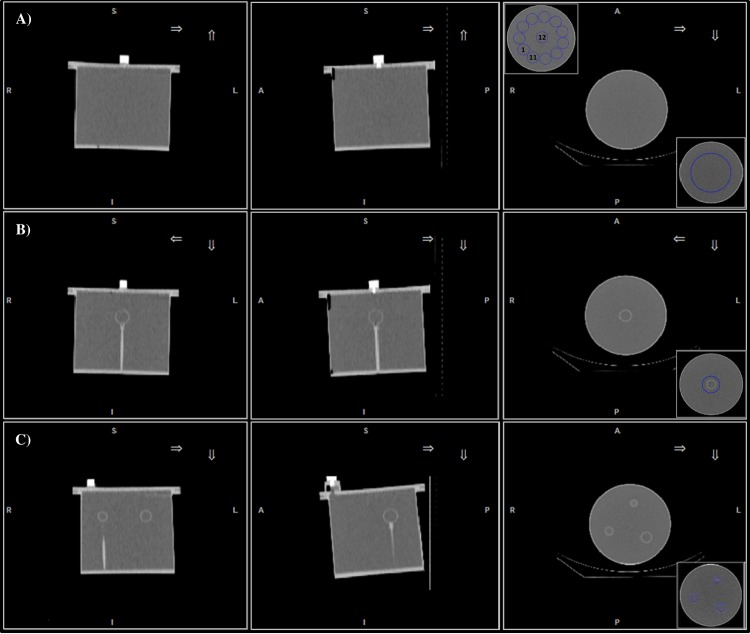
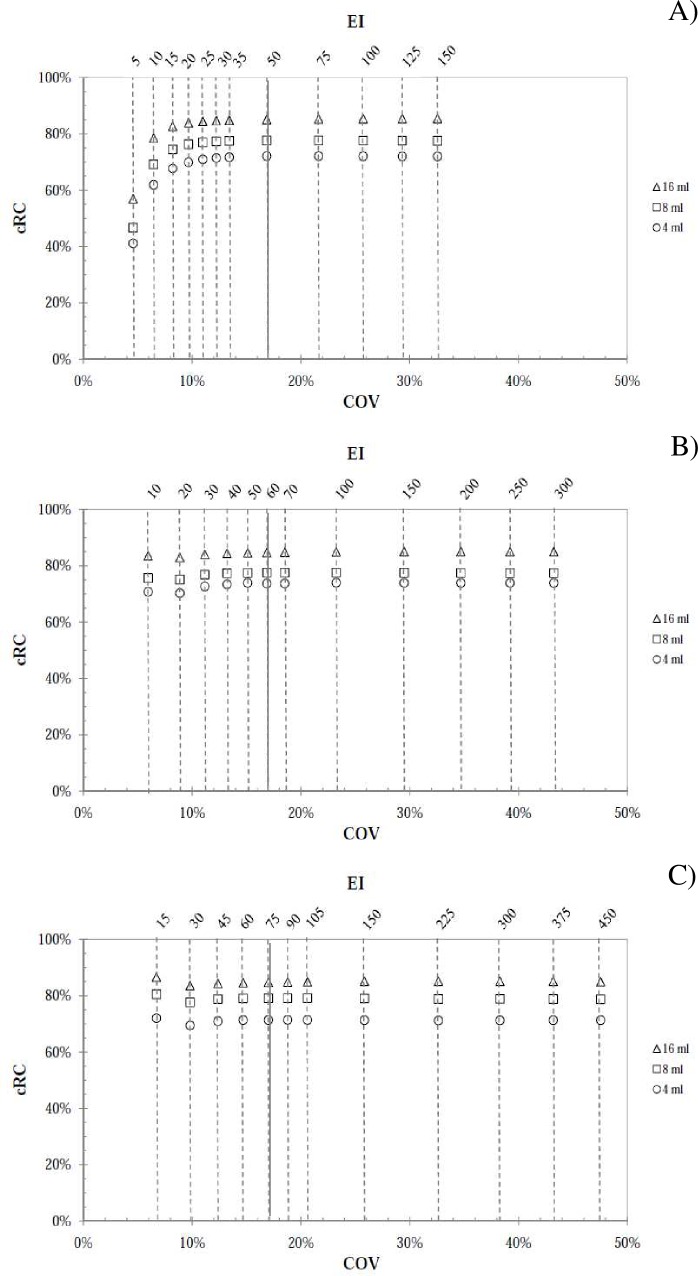
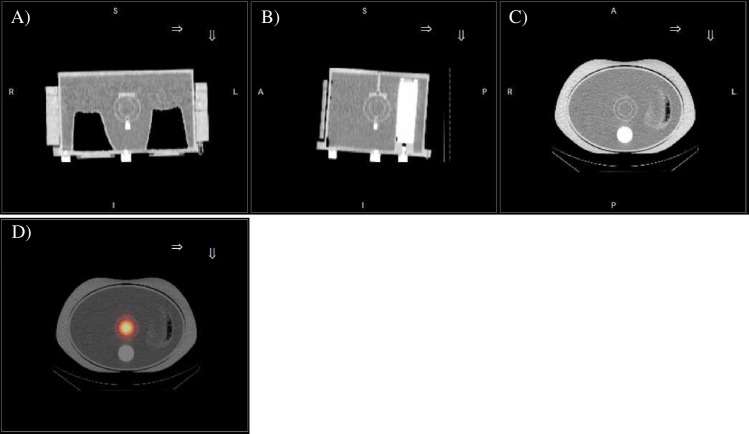
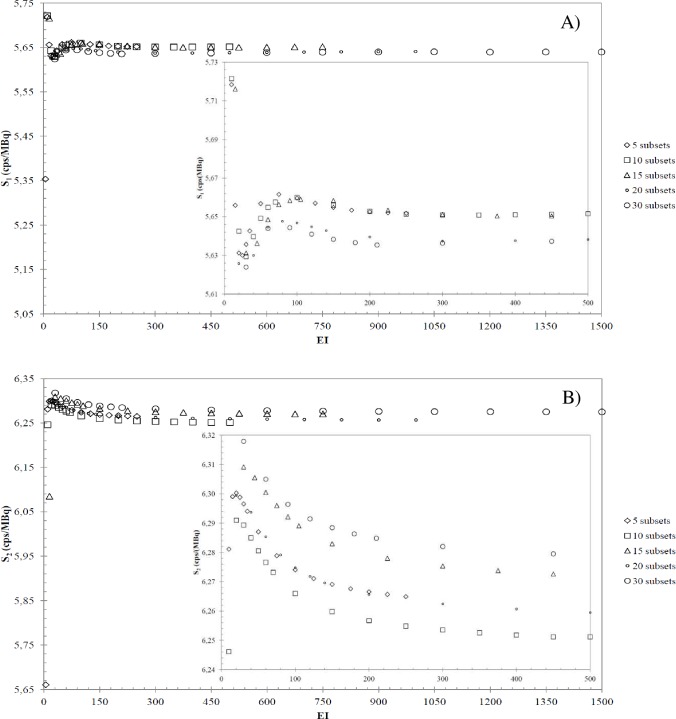
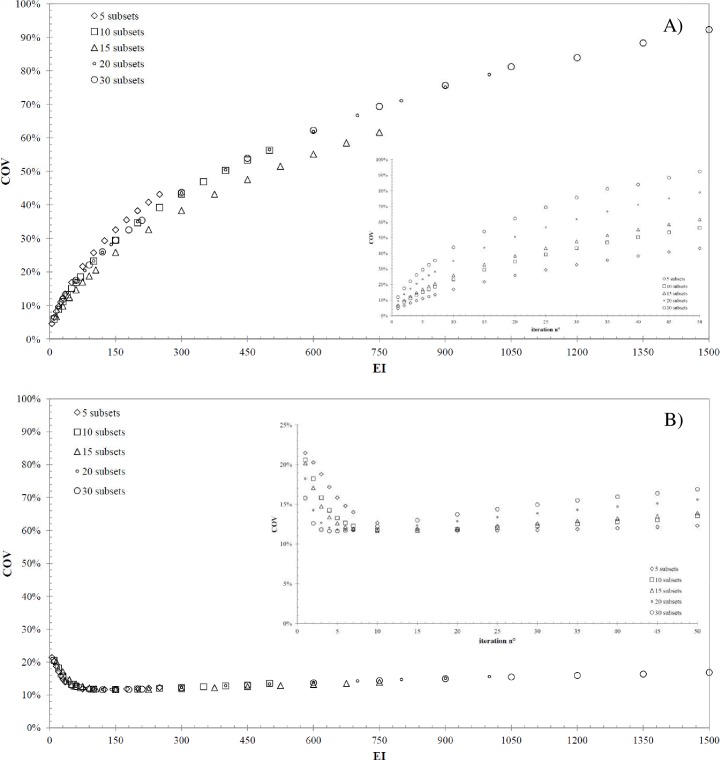
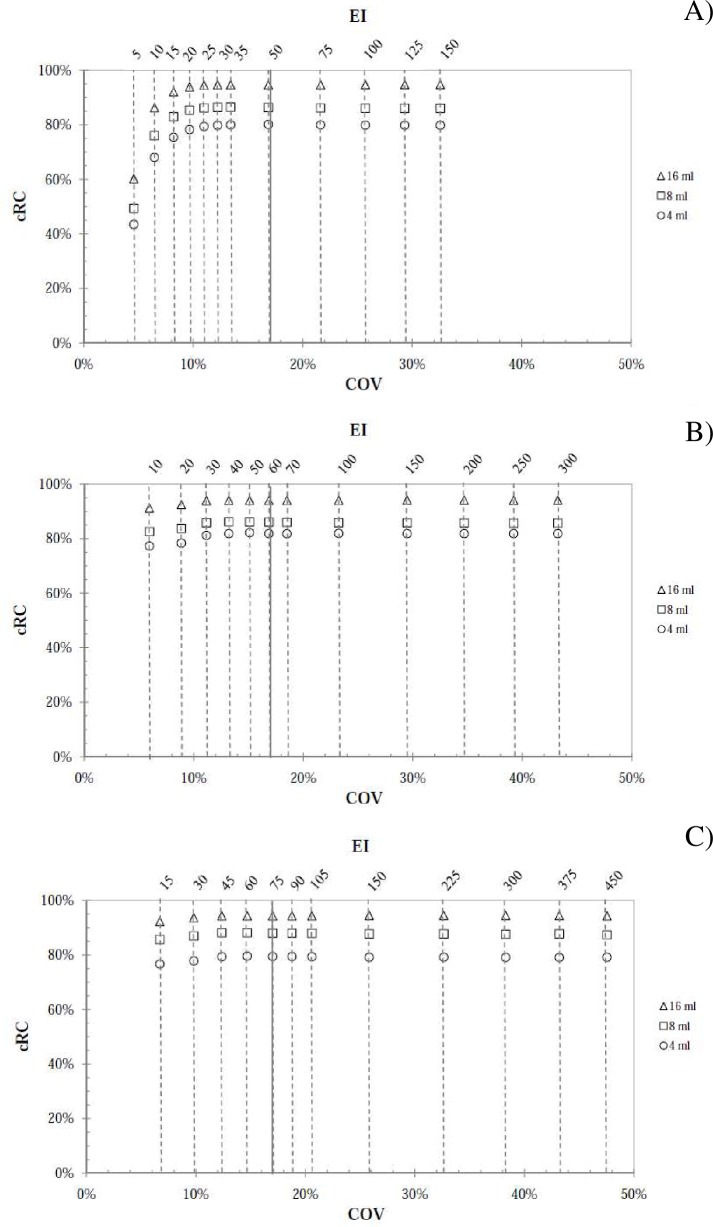
The purpose of this study is to investigate the optimal reference geometry for gamma camera calibration. Yet another question of interest was to assess the influence of the number of 3D Ordered Subsets Expectation Maximization (3D-OSEM) updates on activity quantification for SPECT imaging with 177Lu. The accuracy of 177Lu activity quantification was assessed both in small and in large objects. Two different reference geometries, namely a cylindrical homogeneous phantom and a Jaszczak 16 ml sphere surrounded by cold water, were used to determine the gamma camera calibration factor of a commercial SPECT/CT system. Moreover, the noise level and the concentration recovery coefficient were evaluated as a function of the number of 3D-OSEM updates by using the SPECT/CT images of the reference geometry phantoms and those of a cold Jaszczak phantom with three hot spheres (16ml, 8ml and 4ml), respectively. The optimal choice of the number of 3D-OSEM updates was based on a compromise between the noise level achievable in the reconstructed SPECT images and the concentration recovery coefficients. The quantitative accuracy achievable was finally validated on a test phantom, where a spherical insert composed of two concentric spheres was used to simulate a lesion in a warm background. Our data confirm and extend previous observations. Using the calibration factor obtained with the cylindrical homogeneous phantom and the Jaszczak 16 ml sphere, the recovered activity in the test phantom was underestimated by -16.4% and -24.8%, respectively. Our work has led us to conclude that gamma camera calibration performed with large homogeneous phantom outperforms calibration executed with the Jaszczak 16ml sphere. Furthermore, the results obtained support the assumption that approximately 50 OSEM updates represent a good trade-off to reach convergence in small volumes, meanwhile minimizing the noise level.
本研究的目的是探究γ相机校准的最佳参考几何形状。另一个感兴趣的问题是评估三维有序子集期望最大化(3D-OSEM)更新次数对¹⁷⁷Lu单光子发射计算机断层显像(SPECT)成像活度定量的影响。在小物体和大物体中均评估了¹⁷⁷Lu活度定量的准确性。使用两种不同的参考几何形状,即圆柱形均匀体模和被冷水包围的Jaszczak 16毫升球体,来确定商用SPECT/CT系统的γ相机校准因子。此外,通过分别使用参考几何形状体模和带有三个热球体(16毫升、8毫升和4毫升)的冷Jaszczak体模的SPECT/CT图像,评估噪声水平和浓度恢复系数作为3D-OSEM更新次数的函数。3D-OSEM更新次数的最佳选择基于重建SPECT图像中可实现的噪声水平与浓度恢复系数之间的折衷。最终在一个测试体模上验证了可实现的定量准确性,其中使用由两个同心球体组成的球形插入物来模拟温暖背景中的病变。我们的数据证实并扩展了先前的观察结果。使用通过圆柱形均匀体模和Jaszczak 16毫升球体获得的校准因子,测试体模中恢复的活度分别被低估了-16.4%和-24.8%。我们的工作使我们得出结论,使用大型均匀体模进行的γ相机校准优于使用Jaszczak 16毫升球体进行的校准。此外,获得的结果支持这样的假设,即大约50次OSEM更新代表了在小体积中达到收敛的良好权衡,同时将噪声水平降至最低。