Department of Animal Science, Faculty of Life Sciences and Engineering, University of Lleida, 25198, Lleida, Spain.
Division of Conservation Biology, Institute of Ecology and Evolution, University of Bern, CH-3012, Bern, Switzerland.
Sci Rep. 2017 Aug 14;7(1):8061. doi: 10.1038/s41598-017-08812-2.
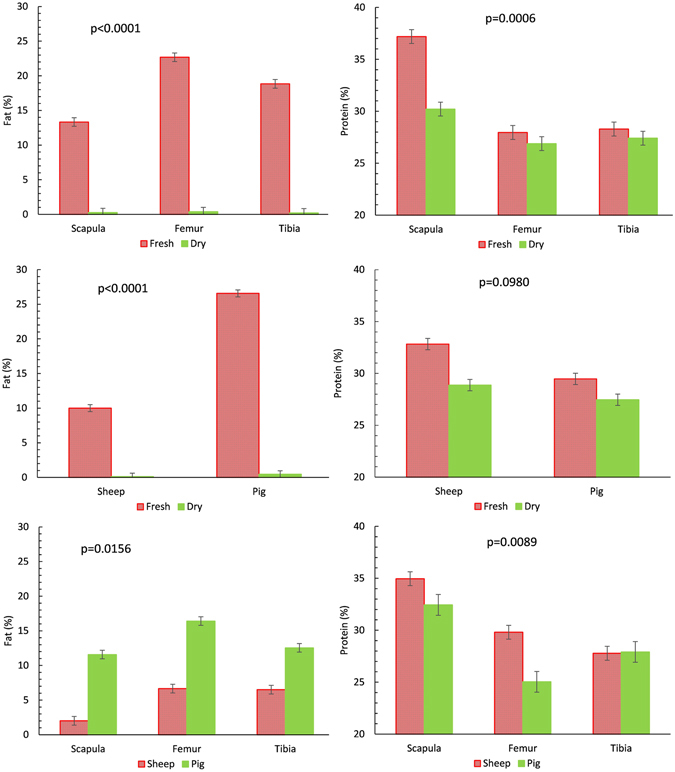
Vultures are central-place foragers and need to optimize their foraging behaviour to offset travel costs by increasing their energy gain. This process is more obvious in certain vulture species that do not feed their young by regurgitation and so must carry food items back to the nest. The Bearded Vulture Gypaetus barbatus is the only species with a bone-diet based. We analysed the chemical composition of bones and the age-related changes in their nutritive value to assess the differences in energy content between bones of differing age, body part and species. We found differences between specific anatomical parts, species and the age of the bones. Fresh bones contain 108% as much energy as fresh meat and, interestingly, dry bones retain 90% of the protein found in fresh bones. Dry femurs weighing 140 g retain enough protein to be comparable to 111 g of fresh meat, in energy terms. Compared to meat-eating species, the specialized osteophagous diet of the Bearded Vulture seems to have certain advantages. A better understanding of nutrient levels in food remains could help to improve theoretical foraging models, assist in conservation management, and even improve our understanding of the use of bones by early hominids.
秃鹫是定点觅食者,需要通过增加能量收益来优化觅食行为,以抵消旅行成本。在某些不通过反刍喂养幼鸟的秃鹫物种中,这个过程更为明显,它们必须将食物带回巢中。髯鹫(Gyps barbatus)是唯一一种以骨头为食的物种。我们分析了骨头的化学成分以及其营养价值随年龄的变化,以评估不同年龄、身体部位和物种的骨头之间能量含量的差异。我们发现了特定解剖部位、物种和骨头年龄之间的差异。新鲜的骨头所含的能量比新鲜的肉多 108%,有趣的是,干骨头保留了新鲜骨头中 90%的蛋白质。140 克重的干股骨保留的蛋白质足以与 111 克新鲜肉相媲美,从能量角度来看。与肉食性物种相比,髯鹫专门的食骨饮食似乎具有某些优势。更好地了解食物残渣中的营养水平可以帮助改进理论觅食模型,有助于保护管理,甚至可以增进我们对早期人类使用骨头的理解。