Kaplan Abdullah, Abidi Emna, Ghali Rana, Booz George W, Kobeissy Firas, Zouein Fouad A
Department of Pharmacology and Toxicology, American University of Beirut Faculty of Medicine, Beirut, Lebanon.
Department of Pharmacology and Toxicology, University of Mississippi Medical Center School of Medicine, Jackson, MS, USA.
Oxid Med Cell Longev. 2017;2017:3759186. doi: 10.1155/2017/3759186. Epub 2017 Jul 20.
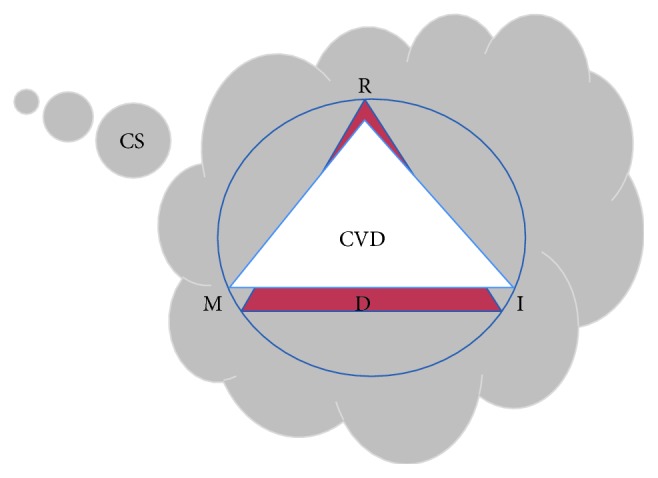
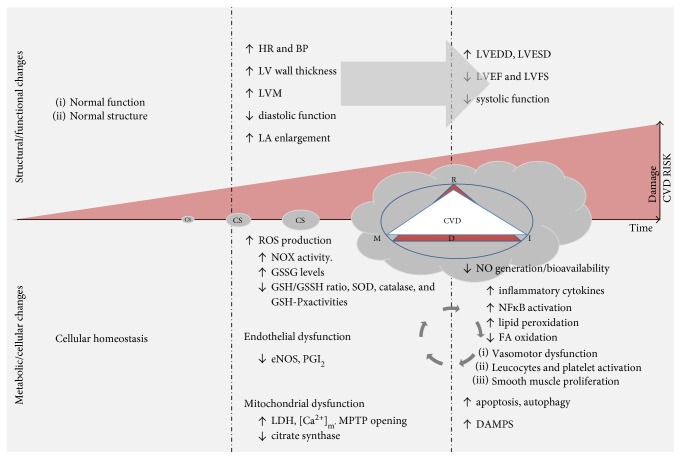
Passive and active chronic cigarette smoking (CS) remains an international epidemic and a key risk factor for cardiovascular disease (CVD) development. CS-induced cardiac damage is divided into two major and interchangeable mechanisms: (1) direct adverse effects on the myocardium causing smoking cardiomyopathy and (2) indirect effects on the myocardium by fueling comorbidities such as atherosclerotic syndromes and hypertension that eventually damage and remodel the heart. To date, our understanding of cardiac remodeling following acute and chronic smoking exposure is not well elucidated. This manuscript presents for the first time the RIMD (oxidative stress (R), inflammation (I), metabolic impairment (M), and cell death (D)) detrimental cycle concept as a major player in CS-induced CVD risks and direct cardiac injury. Breakthroughs and latest findings in the field with respect to structural, functional, cellular, and molecular cardiac remodeling following chronic smoking exposure are summarized. This review also touches the genetics/epigenetics of smoking as well as the smoker's paradox and highlights the most currently prominent pharmacological venues to mitigate CS-induced adverse cardiac remodeling.
被动和主动长期吸烟仍是一种国际流行病,也是心血管疾病(CVD)发生的关键风险因素。吸烟引起的心脏损害分为两种主要且可相互转换的机制:(1)对心肌的直接不良影响导致吸烟性心肌病;(2)通过加剧共病(如动脉粥样硬化综合征和高血压)对心肌产生间接影响,最终损害并重塑心脏。迄今为止,我们对急性和慢性吸烟暴露后心脏重塑的理解尚不明确。本手稿首次提出RIMD(氧化应激(R)、炎症(I)、代谢损害(M)和细胞死亡(D))有害循环概念,认为其是吸烟引起的心血管疾病风险和直接心脏损伤的主要因素。总结了长期吸烟暴露后在心脏结构、功能、细胞和分子重塑方面该领域的突破和最新发现。本综述还涉及吸烟的遗传学/表观遗传学以及吸烟者悖论,并重点介绍了目前最突出的减轻吸烟引起的不良心脏重塑的药理学途径。