Wellcome Centre for Molecular Parasitology, Institute of Infection, Immunity & Inflammation, Glasgow Biomedical Research Centre, University of Glasgow, 120 University Place, Glasgow, G12 8TA, UK.
Department of Life Sciences, Imperial College London, South Kensington, London, SW7 2AZ, UK.
BMC Biol. 2017 Aug 15;15(1):70. doi: 10.1186/s12915-017-0406-2.
The phylum Apicomplexa includes intracellular parasites causing immense global disease burden, the deadliest of them being the human malaria parasite Plasmodium falciparum, which invades and replicates within erythrocytes. The cytoskeletal protein actin is well conserved within apicomplexans but divergent from mammalian actins, and was primarily reported to function during host cell invasion. However, novel invasion mechanisms have been described for several apicomplexans, and specific functions of the acto-myosin system are being reinvestigated. Of the two actin genes in P. falciparum, actin-1 (pfact1) is ubiquitously expressed in all life-cycle stages and is thought to be required for erythrocyte invasion, although its functions during parasite development are unknown, and definitive in vivo characterisation during invasion is lacking.
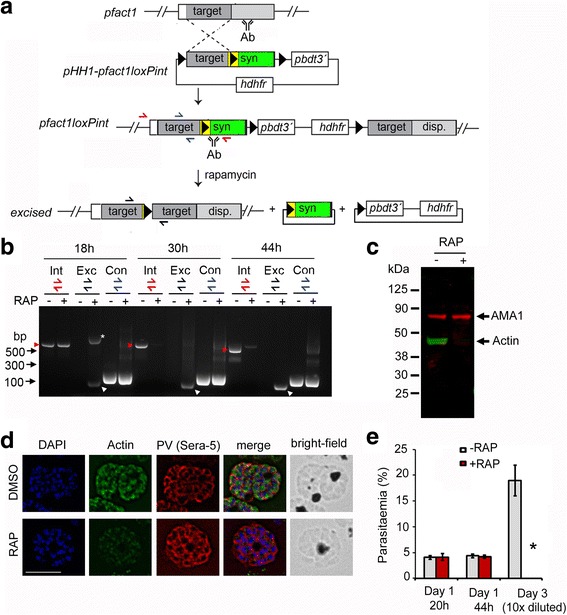
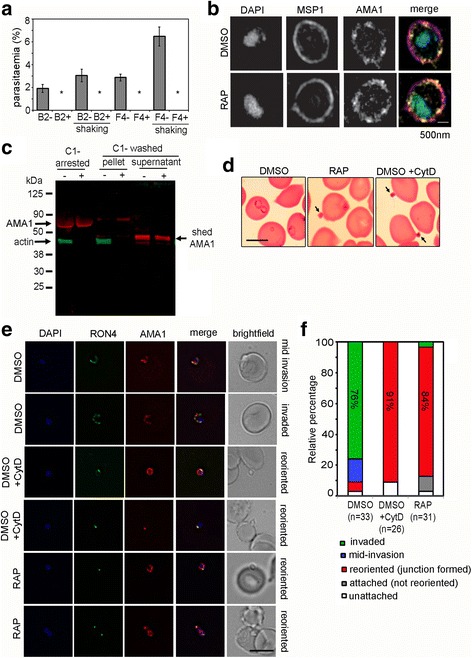
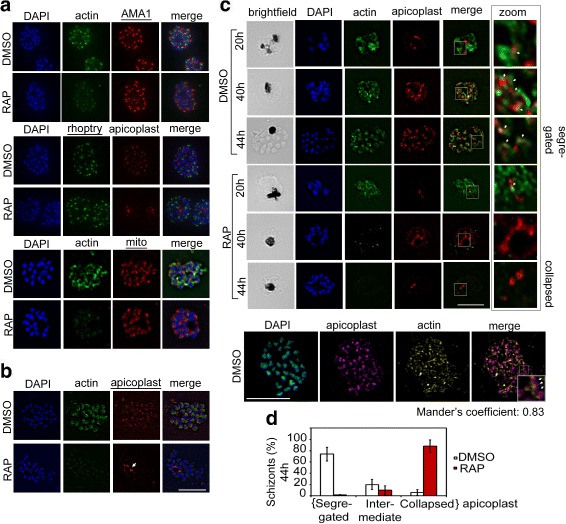
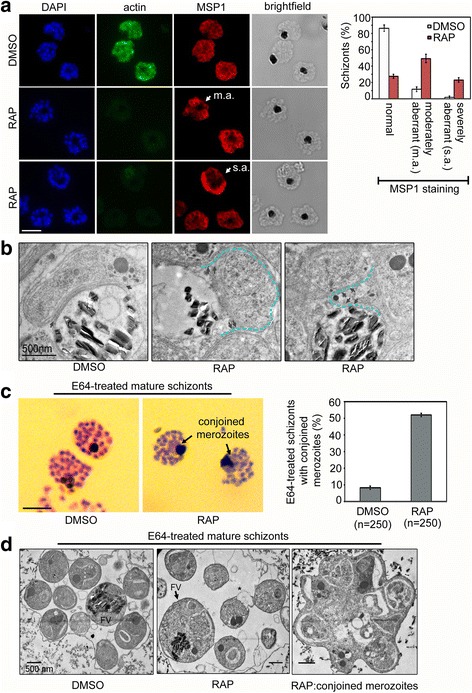
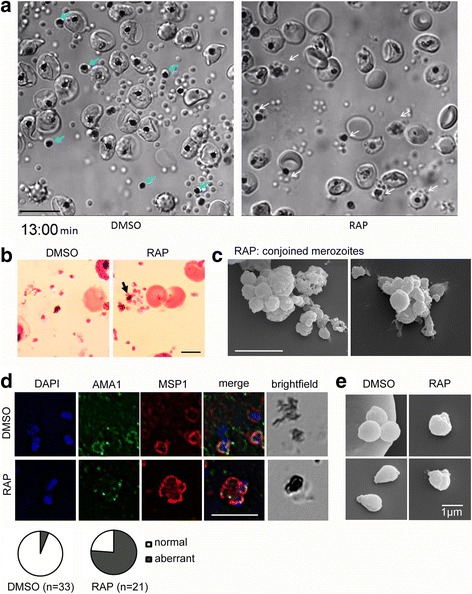
Here we have used a conditional Cre-lox system to investigate the functions of PfACT1 during P. falciparum blood-stage development and host cell invasion. We demonstrate that PfACT1 is crucially required for segregation of the plastid-like organelle, the apicoplast, and for efficient daughter cell separation during the final stages of cytokinesis. Surprisingly, we observe that egress from the host cell is not an actin-dependent process. Finally, we show that parasites lacking PfACT1 are capable of microneme secretion, attachment and formation of a junction with the erythrocyte, but are incapable of host cell invasion.
This study provides important mechanistic insights into the definitive essential functions of PfACT1 in P. falciparum, which are not only of biological interest, but owing to functional divergence from mammalian actins, could also form the basis for the development of novel therapeutics against apicomplexans.
肉足鞭毛门包括引起巨大全球疾病负担的细胞内寄生虫,其中最致命的是人类疟原虫 Plasmodium falciparum,它在红细胞内入侵和复制。细胞骨架蛋白肌动蛋白在肉足鞭毛门中高度保守,但与哺乳动物肌动蛋白不同,主要报道其在宿主细胞入侵过程中发挥作用。然而,已经描述了几种肉足鞭毛门的新入侵机制,并且正在重新研究肌球蛋白系统的特定功能。在疟原虫中有两个肌动蛋白基因,肌动蛋白-1(pfact1)在所有生命周期阶段都广泛表达,被认为是红细胞入侵所必需的,尽管其在寄生虫发育过程中的功能未知,并且在入侵过程中缺乏明确的体内特征。
在这里,我们使用条件 Cre-lox 系统研究了 PfACT1 在疟原虫血期发育和宿主细胞入侵中的功能。我们证明 PfACT1 对于质体样细胞器,即顶体的分离以及在胞质分裂的最后阶段有效分离子细胞至关重要。令人惊讶的是,我们观察到出胞过程不是一个肌动蛋白依赖的过程。最后,我们表明缺乏 PfACT1 的寄生虫能够分泌微线体、附着并与红细胞形成连接,但不能入侵宿主细胞。
这项研究为 PfACT1 在疟原虫中的明确基本功能提供了重要的机制见解,这些功能不仅具有生物学意义,而且由于与哺乳动物肌动蛋白的功能分化,也可能为开发针对肉足鞭毛门的新型治疗方法奠定基础。