Department of Food and Nutrition, Brain Korea 21 PLUS Project, College of Human Ecology, Yonsei University, Seoul 03722, Korea.
Nutrients. 2017 Aug 16;9(8):883. doi: 10.3390/nu9080883.
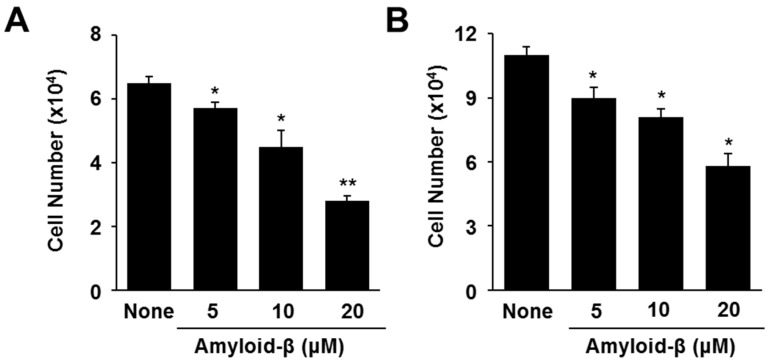
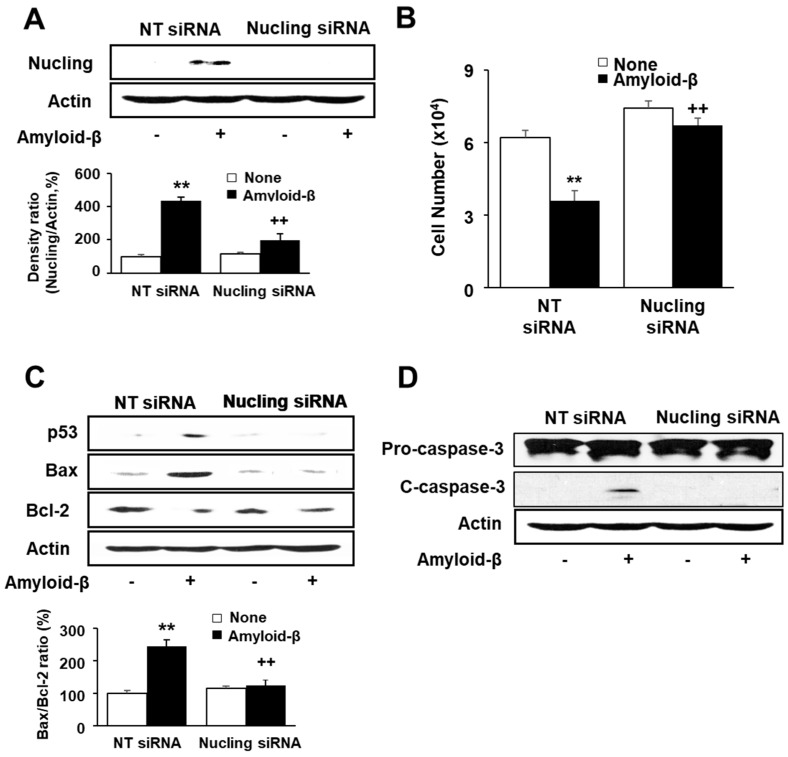
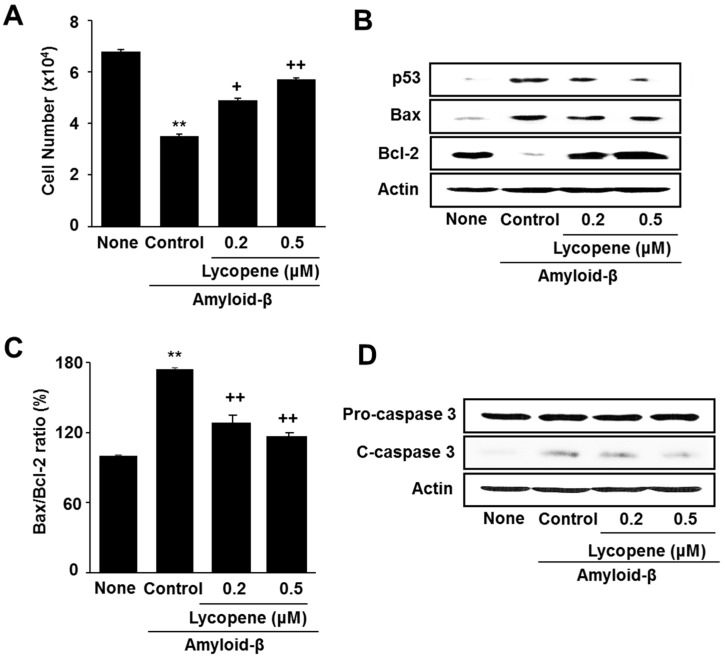
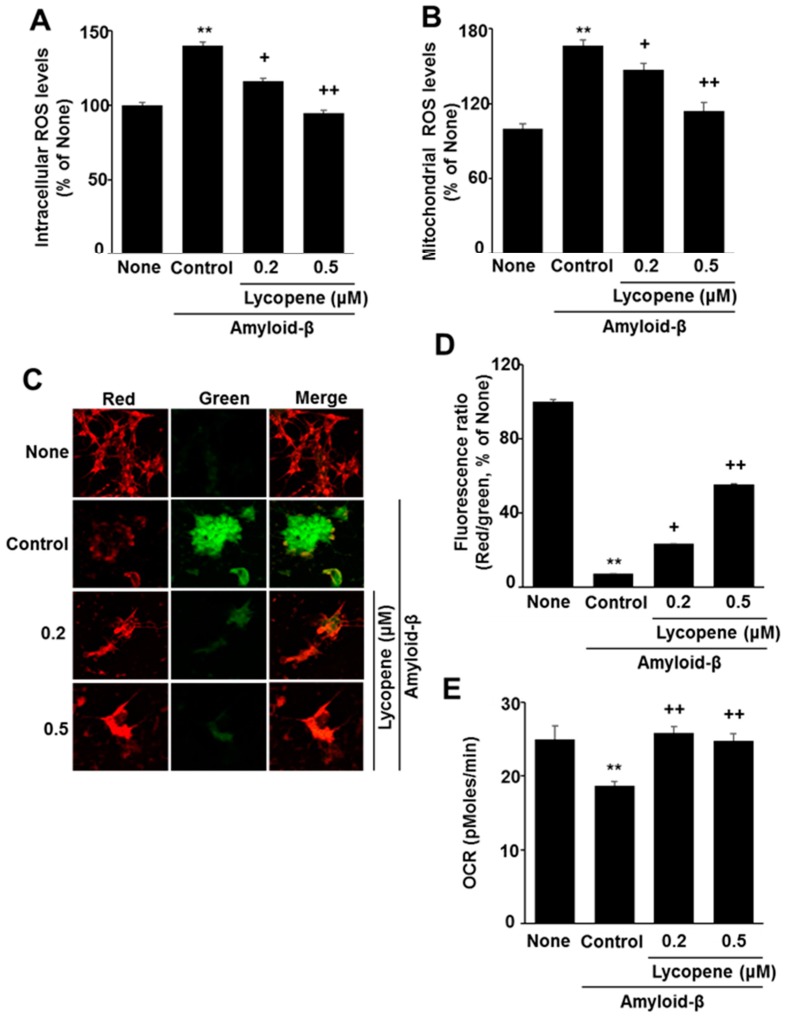
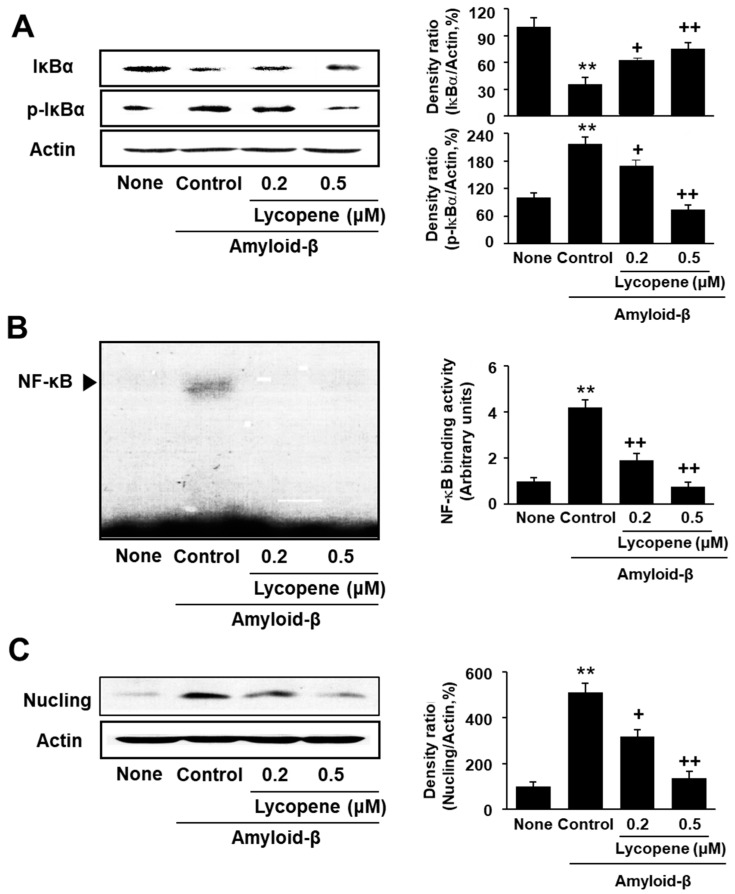
Alzheimer's disease (AD) is a fatal neurodegenerative disease. Brain amyloid-β deposition is a crucial feature of AD, causing neuronal cell death by inducing oxidative damage. Reactive oxygen species (ROS) activate NF-κB, which induces expression of Nucling. Nucling is a pro-apoptotic factor recruiting the apoptosome complex. Lycopene is an antioxidant protecting from oxidative stress-induced cell damage. We investigated whether lycopene inhibits amyloid-β-stimulated apoptosis through reducing ROS and inhibiting mitochondrial dysfunction and NF-κB-mediated Nucling expression in neuronal SH-SY5Y cells. We prepared cells transfected with siRNA for Nucling or nontargeting control siRNA to determine the role of Nucling in amyloid-β-induced apoptosis. The amyloid-β increased intracellular and mitochondrial ROS levels, apoptotic indices (p53, Bax/Bcl-2 ratio, caspase-3 cleavage), NF-kB activation and Nucling expression, while cell viability, mitochondrial membrane potential, and oxygen consumption rate decreased in SH-SY5Y cells. Lycopene inhibited these amyloid-β-induced alterations. However, amyloid-β did not induce apoptosis, determined by cell viability and apoptotic indices (p53, Bax/Bcl-2 ratio, caspase-3 cleavage), in the cells transfected with siRNA for Nucling. Lycopene inhibited apoptosis by reducing ROS, and by inhibiting mitochondrial dysfunction and NF-κB-target gene Nucling expression in neuronal cells. Lycopene may be beneficial for preventing oxidative stress-mediated neuronal death in patients with neurodegeneration.
阿尔茨海默病(AD)是一种致命的神经退行性疾病。脑淀粉样蛋白-β沉积是 AD 的一个关键特征,通过诱导氧化损伤导致神经元细胞死亡。活性氧(ROS)激活 NF-κB,诱导 Nucling 的表达。Nucling 是一种促凋亡因子,可募集凋亡小体复合物。番茄红素是一种抗氧化剂,可防止氧化应激引起的细胞损伤。我们研究了番茄红素是否通过减少 ROS 以及抑制线粒体功能障碍和 NF-κB 介导的 Nucling 表达来抑制淀粉样蛋白-β刺激的神经元 SH-SY5Y 细胞凋亡。我们制备了转染了 Nucling 或非靶向对照 siRNA 的细胞,以确定 Nucling 在淀粉样蛋白-β诱导的细胞凋亡中的作用。淀粉样蛋白-β增加了细胞内和线粒体中的 ROS 水平、凋亡指数(p53、Bax/Bcl-2 比值、caspase-3 切割)、NF-kB 激活和 Nucling 的表达,而 SH-SY5Y 细胞中的细胞活力、线粒体膜电位和耗氧量降低。番茄红素抑制了这些淀粉样蛋白-β引起的变化。然而,在转染了 Nucling siRNA 的细胞中,淀粉样蛋白-β并没有诱导细胞活力和凋亡指数(p53、Bax/Bcl-2 比值、caspase-3 切割)所测定的细胞凋亡。番茄红素通过减少 ROS,抑制线粒体功能障碍和 NF-κB 靶基因 Nucling 的表达来抑制细胞凋亡。番茄红素可能有益于预防神经退行性疾病患者的氧化应激介导的神经元死亡。