Mezzadra Riccardo, Sun Chong, Jae Lucas T, Gomez-Eerland Raquel, de Vries Evert, Wu Wei, Logtenberg Meike E W, Slagter Maarten, Rozeman Elisa A, Hofland Ingrid, Broeks Annegien, Horlings Hugo M, Wessels Lodewyk F A, Blank Christian U, Xiao Yanling, Heck Albert J R, Borst Jannie, Brummelkamp Thijn R, Schumacher Ton N M
Division of Molecular Oncology &Immunology, The Netherlands Cancer Institute, Plesmanlaan 121, 1066 CX Amsterdam, The Netherlands.
Division of Biochemistry, The Netherlands Cancer Institute, Plesmanlaan 121, 1066 CX Amsterdam, The Netherlands.
Nature. 2017 Sep 7;549(7670):106-110. doi: 10.1038/nature23669. Epub 2017 Aug 16.
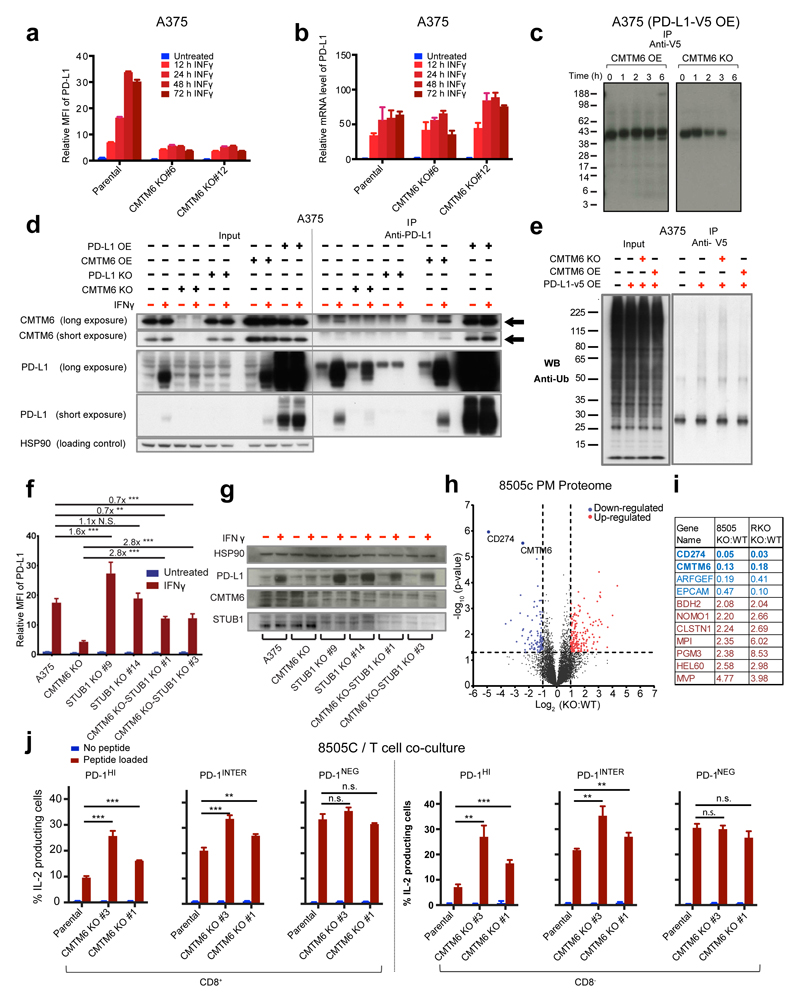
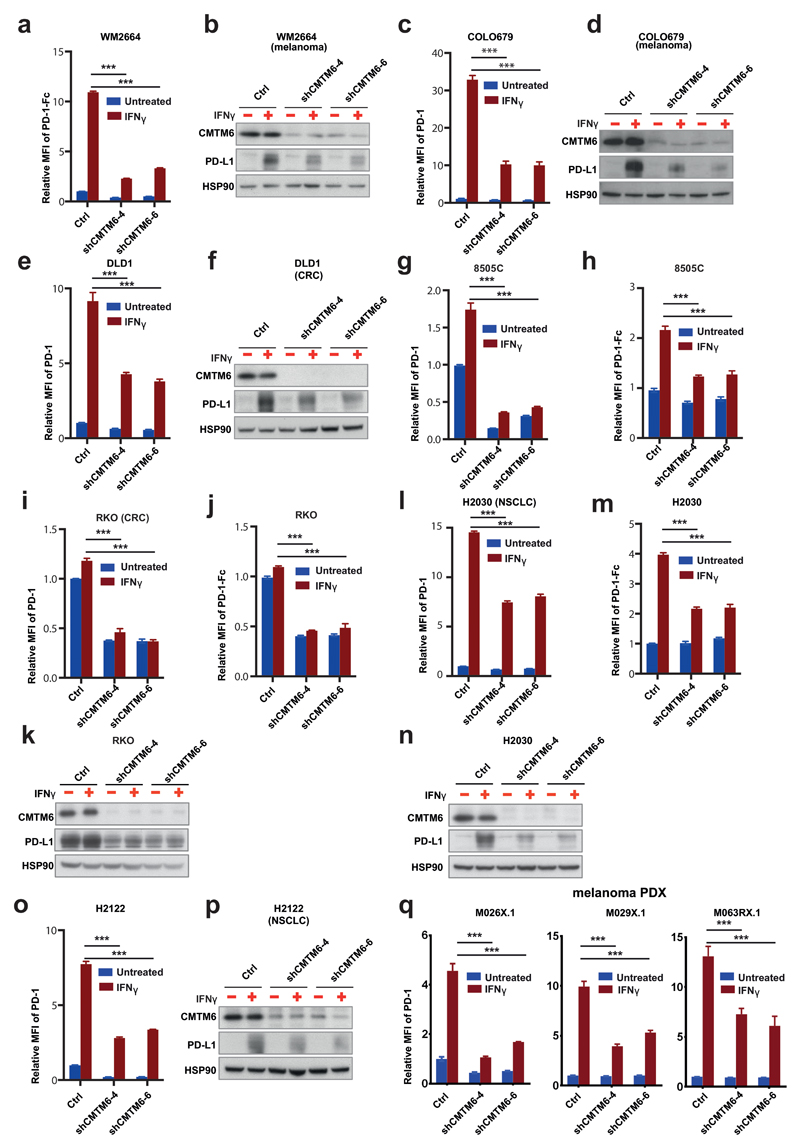
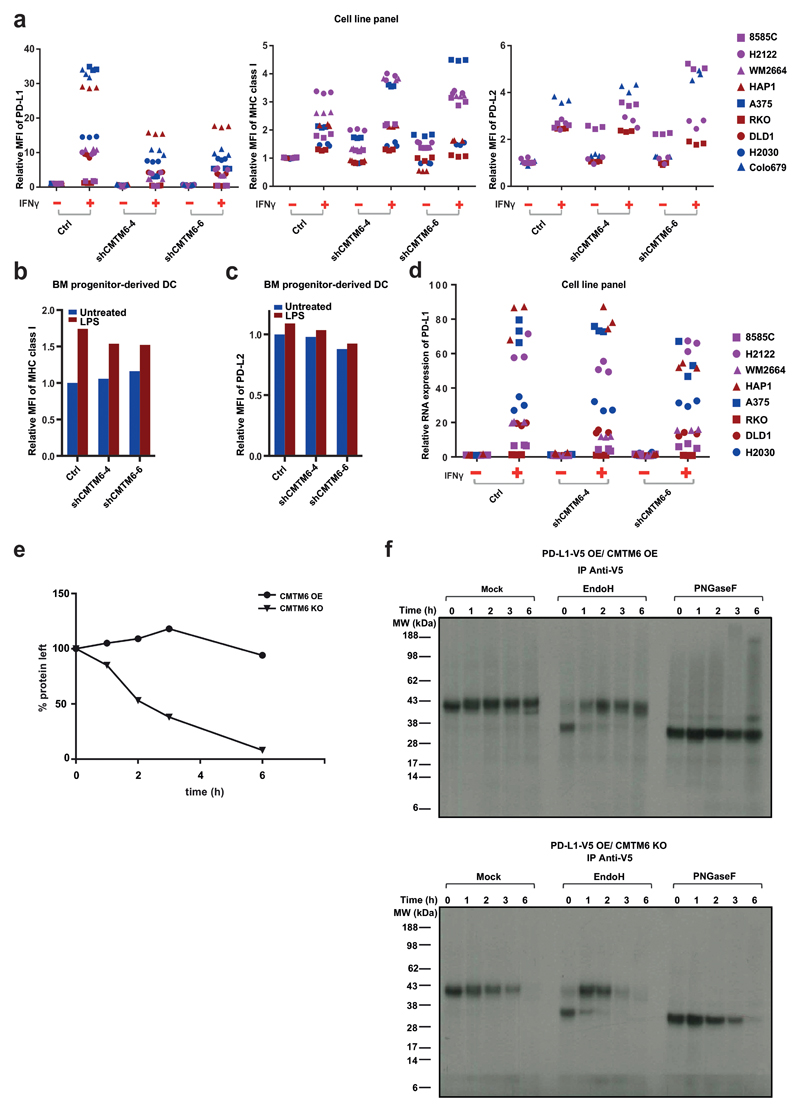
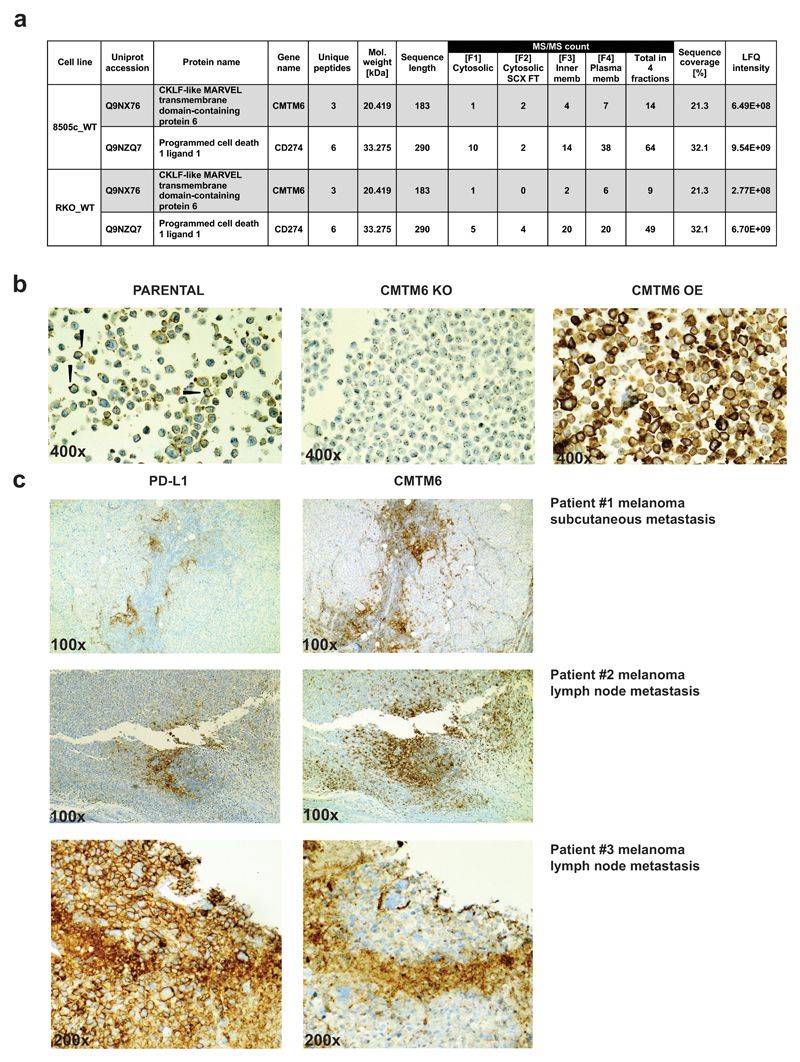
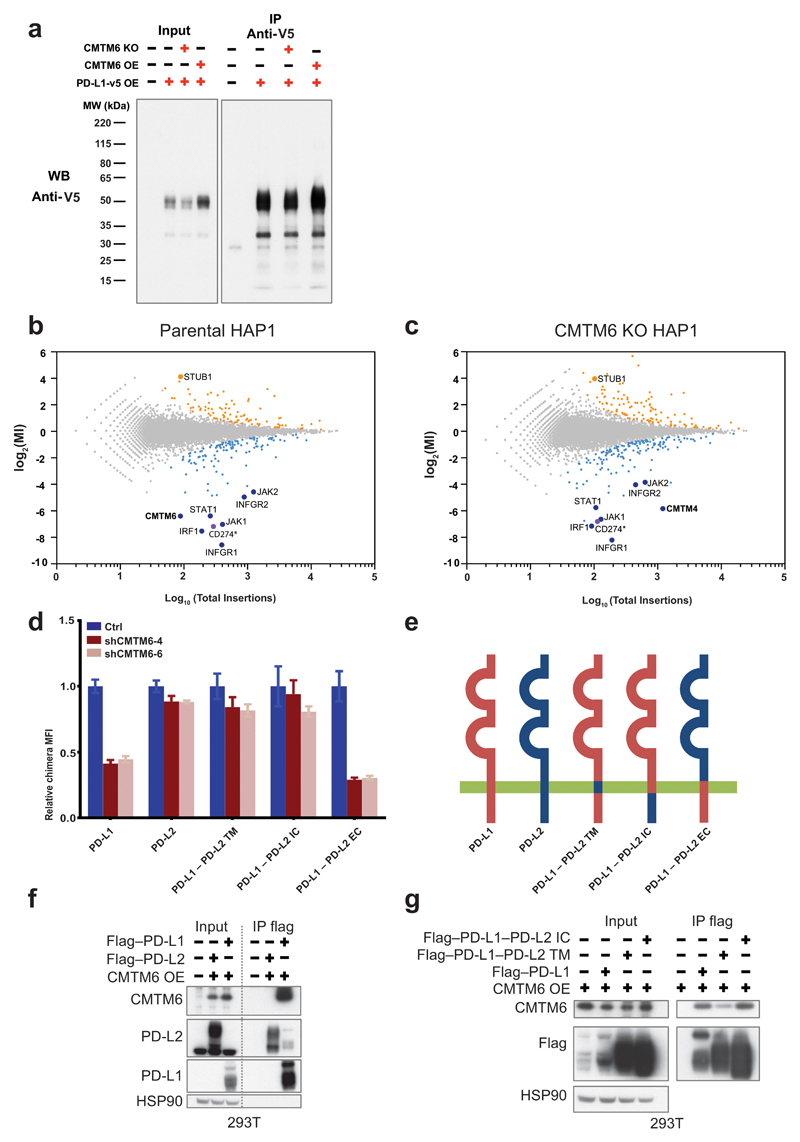
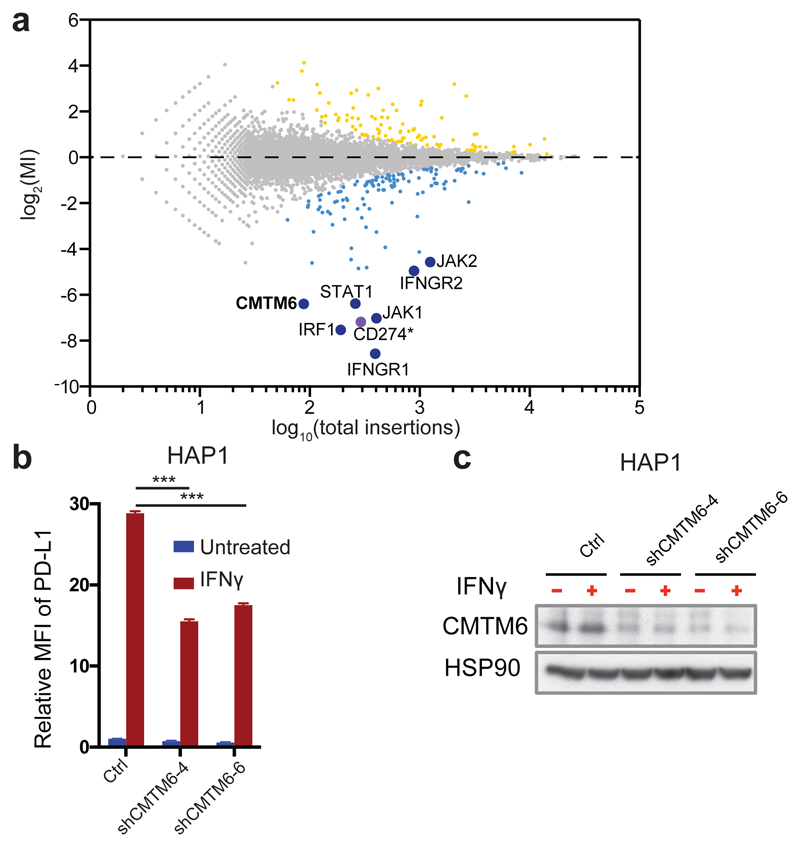
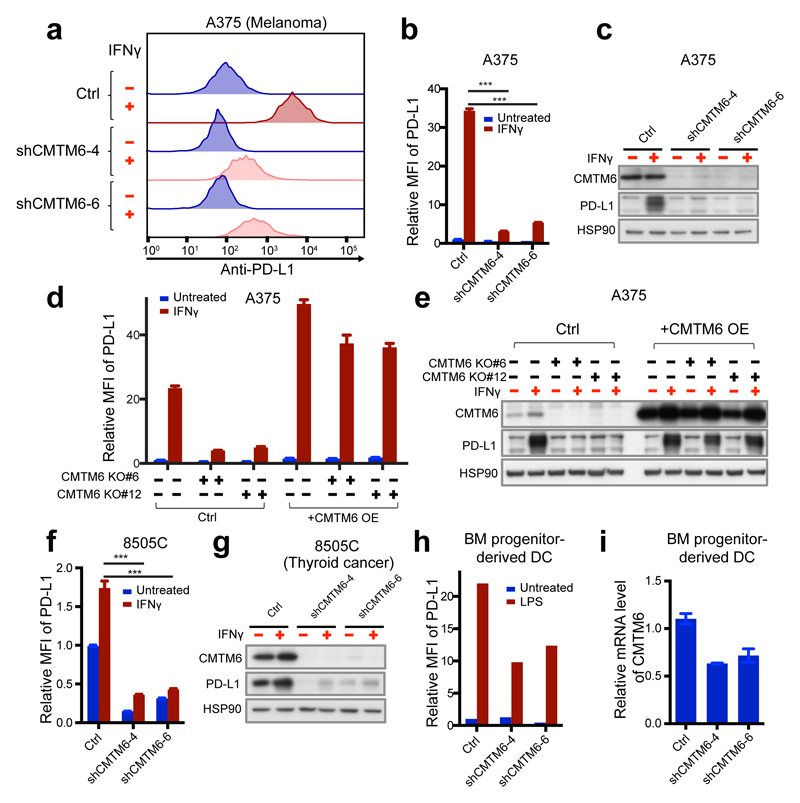
The clinical benefit for patients with diverse types of metastatic cancers that has been observed upon blockade of the interaction between PD-1 and PD-L1 has highlighted the importance of this inhibitory axis in the suppression of tumour-specific T-cell responses. Notwithstanding the key role of PD-L1 expression by cells within the tumour micro-environment, our understanding of the regulation of the PD-L1 protein is limited. Here we identify, using a haploid genetic screen, CMTM6, a type-3 transmembrane protein of previously unknown function, as a regulator of the PD-L1 protein. Interference with CMTM6 expression results in impaired PD-L1 protein expression in all human tumour cell types tested and in primary human dendritic cells. Furthermore, through both a haploid genetic modifier screen in CMTM6-deficient cells and genetic complementation experiments, we demonstrate that this function is shared by its closest family member, CMTM4, but not by any of the other CMTM members tested. Notably, CMTM6 increases the PD-L1 protein pool without affecting PD-L1 (also known as CD274) transcription levels. Rather, we demonstrate that CMTM6 is present at the cell surface, associates with the PD-L1 protein, reduces its ubiquitination and increases PD-L1 protein half-life. Consistent with its role in PD-L1 protein regulation, CMTM6 enhances the ability of PD-L1-expressing tumour cells to inhibit T cells. Collectively, our data reveal that PD-L1 relies on CMTM6/4 to efficiently carry out its inhibitory function, and suggest potential new avenues to block this pathway.
在阻断PD-1与PD-L1之间的相互作用后,已观察到对多种类型转移性癌症患者的临床益处,这突出了该抑制轴在抑制肿瘤特异性T细胞反应中的重要性。尽管肿瘤微环境中的细胞表达PD-L1起着关键作用,但我们对PD-L1蛋白调控的了解仍然有限。在此,我们通过单倍体基因筛选,鉴定出CMTM6(一种功能未知的3型跨膜蛋白)作为PD-L1蛋白的调节因子。干扰CMTM6的表达会导致在所有测试的人类肿瘤细胞类型和原代人类树突状细胞中,PD-L1蛋白表达受损。此外,通过在CMTM6缺陷细胞中的单倍体基因修饰筛选和基因互补实验,我们证明其最接近的家族成员CMTM4也具有此功能,而其他测试的CMTM成员则没有。值得注意的是,CMTM6增加了PD-L1蛋白库,但不影响PD-L1(也称为CD274)的转录水平。相反,我们证明CMTM6存在于细胞表面,与PD-L1蛋白结合,减少其泛素化并增加PD-L1蛋白的半衰期。与其在PD-L1蛋白调控中的作用一致,CMTM6增强了表达PD-L1的肿瘤细胞抑制T细胞的能力。总体而言,我们的数据表明PD-L1依赖CMTM6/4来有效地发挥其抑制功能,并提出了阻断该途径的潜在新途径。