Lustosa Lygia Paccini, Batista Patrícia Parreira, Pereira Daniele Sirineu, Pereira Leani Souza Máximo, Scianni Aline, Ribeiro-Samora Giane Amorim
Physical Therapy Department, Universidade Federal de Minas Gerais, Belo Horizonte.
Physical Therapy Department, Universidade Federal de Alfenas, Alfenas, Brazil.
Clin Interv Aging. 2017 Aug 2;12:1183-1191. doi: 10.2147/CIA.S139579. eCollection 2017.
Sarcopenia is a multifactorial geriatric syndrome with complex interrelationships. Increased plasma levels of inflammatory mediators increase the catabolic stimuli of the musculature, thereby causing a decrease in mass and muscular function.
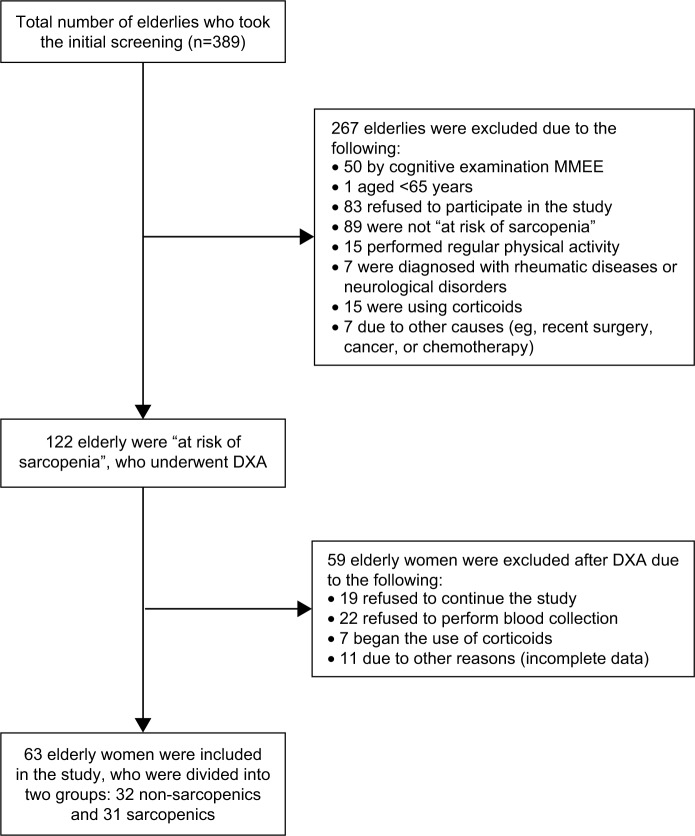
The objective of this study was to compare the performance of the knee extensors test (by isokinetic dynamometer) and plasma levels of interleukin-6 (IL-6) and soluble receptors of tumor necrosis factor alpha (sTNFR1) between sarcopenics and non-sarcopenics community-dwelling elderly women residents of Brazil.
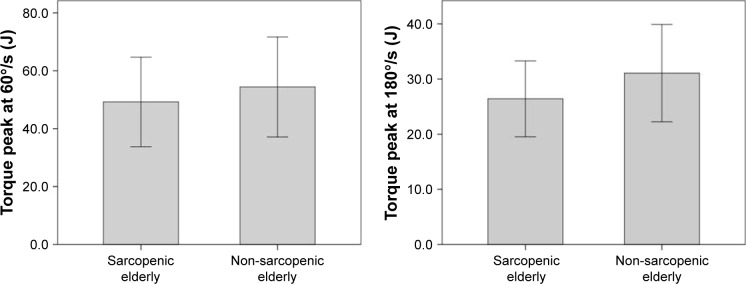
The diagnosis of sarcopenia included measurements of body composition (by densitometry with dual energy source of X-ray), handgrip strength (by Jamar dynamometer), and the usual gait velocity according to the recommendations of the European Working Group on Sarcopenia in Older People. In both sarcopenics and non-sarcopenics elderly women, we evaluated the muscle function by knee extensors test (using an isokinetic dynamometer Byodex System 4 Pro) at angular speeds of 60°/s and 180°/s) and also we evaluated the plasma concentrations of IL-6 and sTNFR1. Comparisons of muscle performance between groups were carried out using mixed factorial ANOVA with post hoc Bonferroni test; sTNFR1 and IL-6 variables were analyzed by applying Mann-Whitney test.
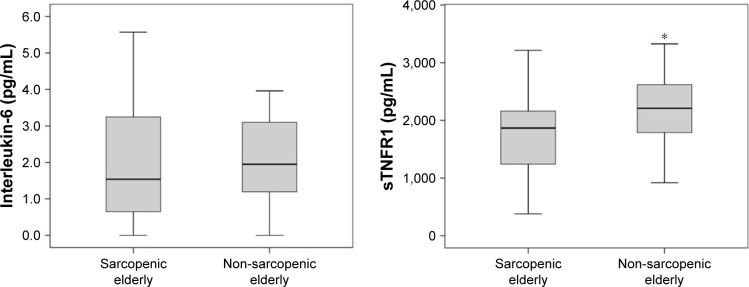
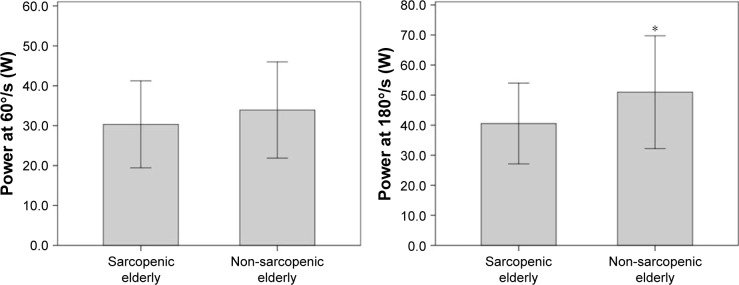
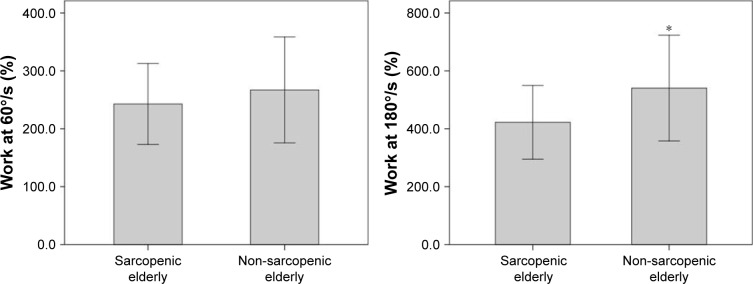
Statistical differences were observed between groups regarding muscle power (=0.01), total work adjusted to body weight (=0.01) at a rate of 180°/s, and plasma levels of sTNFR1 (=0.01).
Sarcopenic elder women showed lower performance of the lower limbs, especially at a higher speed, predisposing these older women to greater vulnerability in functional activities that require agility and postural stability. Plasma levels of sTNFR1 were higher for non-sarcopenics elderlies. However, due to the observational nature of the study, it was impossible to infer causality among the variables surveyed.
肌肉减少症是一种具有复杂相互关系的多因素老年综合征。炎症介质血浆水平升高会增加肌肉组织的分解代谢刺激,从而导致肌肉质量和功能下降。
本研究的目的是比较巴西社区居住的老年女性肌肉减少症患者和非肌肉减少症患者之间的膝关节伸肌测试(通过等速测力计)表现以及白细胞介素-6(IL-6)和肿瘤坏死因子α可溶性受体(sTNFR1)的血浆水平。
肌肉减少症的诊断包括身体成分测量(通过双能X射线密度测定法)、握力(通过Jamar测力计)以及根据欧洲老年人肌肉减少症工作组的建议测量通常的步态速度。在肌肉减少症和非肌肉减少症老年女性中,我们通过膝关节伸肌测试(使用等速测力计Byodex System 4 Pro)在60°/秒和180°/秒的角速度下评估肌肉功能,并且我们还评估了IL-6和sTNFR1的血浆浓度。使用混合因子方差分析和事后Bonferroni检验进行组间肌肉表现比较;sTNFR1和IL-6变量通过应用Mann-Whitney检验进行分析。
在组间观察到关于肌肉力量(P = 0.01)、以180°/秒的速度调整至体重的总功(P = 0.01)以及sTNFR1的血浆水平(P = 0.01)存在统计学差异。
肌肉减少症老年女性下肢表现较低,尤其是在较高速度下,使这些老年女性在需要敏捷性和姿势稳定性的功能活动中更容易出现脆弱性。非肌肉减少症老年人的sTNFR1血浆水平较高。然而,由于该研究的观察性质,无法推断所调查变量之间的因果关系。