Han Jin, Zhou Jifang, Saraf Santosh L, Gordeuk Victor R, Calip Gregory S
Department of Pharmacy Practice, College of Pharmacy, University of Illinois at Chicago, Chicago, IL, USA.
Center for Pharmacoepidemiology and Pharmacoeconomic Research, University of Illinois at Chicago, Chicago, IL, USA.
Pharmacoepidemiol Drug Saf. 2018 May;27(5):479-486. doi: 10.1002/pds.4291. Epub 2017 Aug 16.
Opioid analgesics are commonly used to treat vaso-occlusive pain episodes in sickle cell disease (SCD), but comprehensive evidence characterizing opioid use in this patient population is limited. Our objective was to characterize opioid use patterns among SCD patients using a large nationwide database.
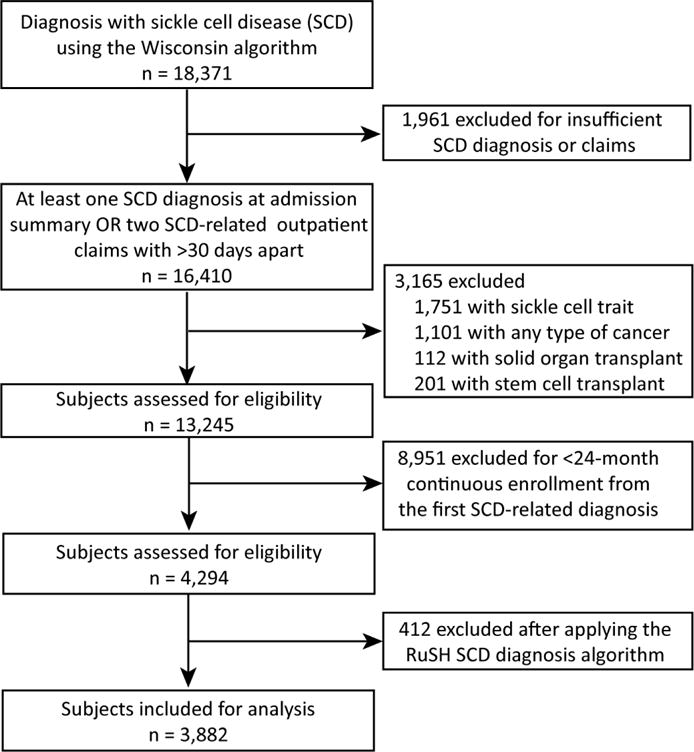
A large, US medical claims database was utilized to identify a cohort of 3882 SCD patients, and characteristics of opioid use were analyzed. Clinical variables including age, gender, medication use, health care utilization, and medical history were evaluated for correlations with opioid use.
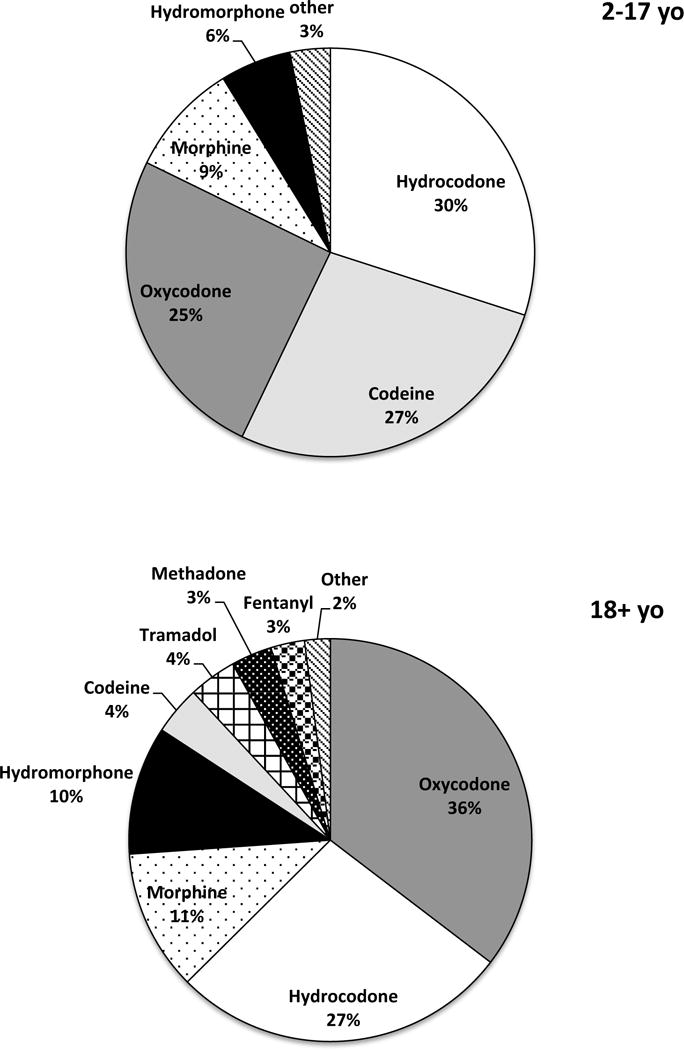
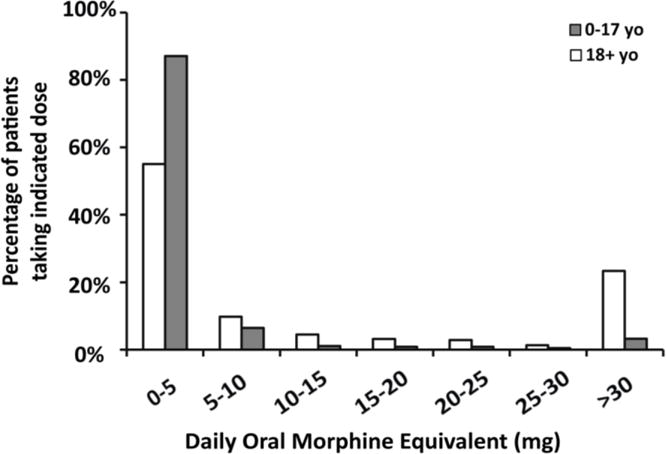
Forty percent of patients took opioid medications during a 12-month span, and the prevalence of any opioid use was highest for 20 to 29-year-old patients (58%). The median daily opioid dose was 1.85 mg (interquartile range: 0.62-10.68 mg) oral morphine equivalents (OME). While most opioid users took between 0 and 5 mg OME daily, 3% of pediatric patients and 23% of adult patients used more than 30-mg OME daily. High-dose opioid use was associated with older age, hydroxyurea therapy, nonsteroidal anti-inflammatory drug (NSAID) use, and frequent inpatient hospitalizations. In multivariable-adjusted analyses, patients with vaso-occlusive complications such as pain crisis (OR = 3.8, 95% CI 2.7-5.3) and avascular necrosis (AVN) (OR = 3.7, 95% CI 2.7-5.1) were associated with high-dose opioid use.
Our study showed that only 40% SCD patients were on opioid analgesics during a 12-month span. However, a non-trivial number of patients used a much higher dose of opioids despite a relatively low average daily opioid dose among SCD patients, particularly with vaso-occlusive complications.
阿片类镇痛药常用于治疗镰状细胞病(SCD)的血管闭塞性疼痛发作,但关于该患者群体使用阿片类药物的全面证据有限。我们的目标是利用一个大型全国性数据库来描述SCD患者的阿片类药物使用模式。
利用一个大型美国医疗索赔数据库确定了3882名SCD患者队列,并分析了阿片类药物使用的特征。评估了包括年龄、性别、药物使用、医疗保健利用和病史在内的临床变量与阿片类药物使用的相关性。
40%的患者在12个月期间服用了阿片类药物,20至29岁患者的任何阿片类药物使用率最高(58%)。每日阿片类药物剂量中位数为1.85毫克口服吗啡当量(OME)(四分位间距:0.62 - 10.68毫克)。虽然大多数阿片类药物使用者每日服用0至5毫克OME,但3%的儿科患者和23%的成年患者每日使用超过30毫克OME。高剂量阿片类药物使用与年龄较大、羟基脲治疗、非甾体抗炎药(NSAID)使用以及频繁住院有关。在多变量调整分析中,患有血管闭塞性并发症如疼痛危机(OR = 3.8,95% CI 2.7 - 5.3)和无血管性坏死(AVN)(OR = 3.7,95% CI 2.7 - 5.1)的患者与高剂量阿片类药物使用有关。
我们的研究表明,在12个月期间只有40%的SCD患者使用阿片类镇痛药。然而,尽管SCD患者的平均每日阿片类药物剂量相对较低,但仍有相当数量的患者使用了高得多的剂量,尤其是患有血管闭塞性并发症的患者。