Salahshoor Meisam, Guo Yuebin
Department of Mechanical Engineering, The University of Alabama, Tuscaloosa, AL 35487, USA.
Materials (Basel). 2012 Jan 9;5(1):135-155. doi: 10.3390/ma5010135.
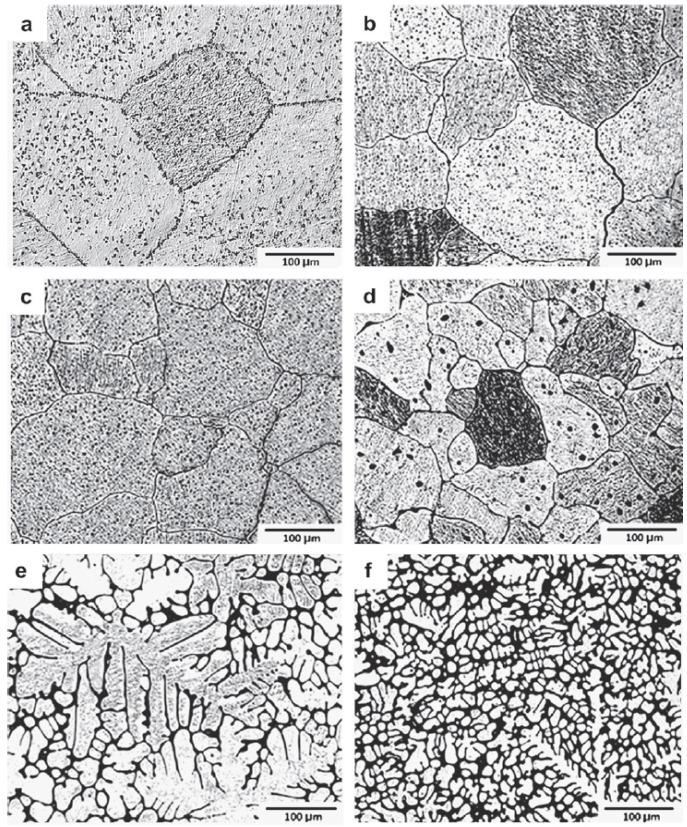
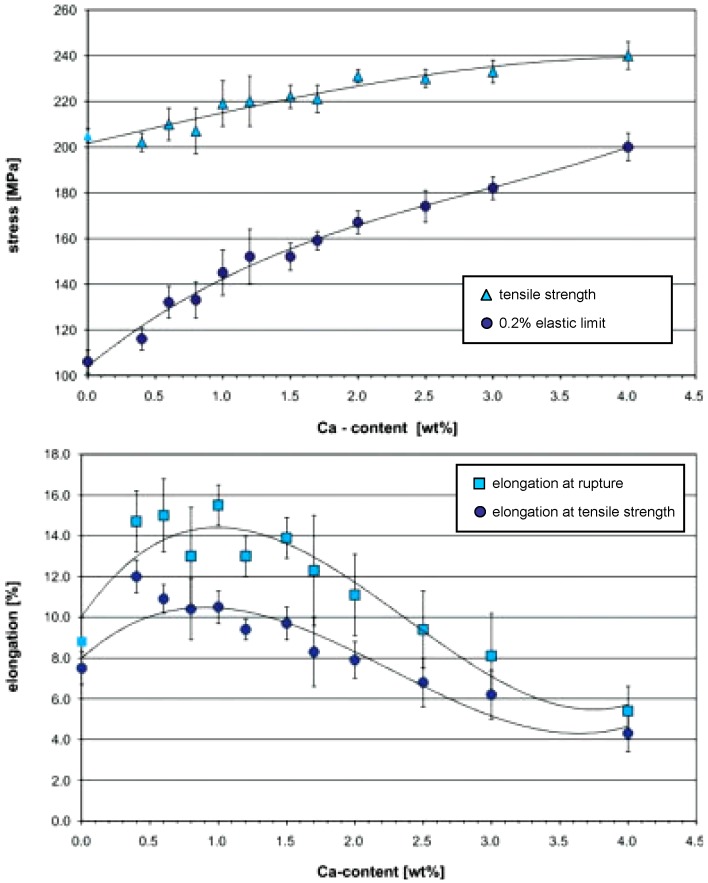
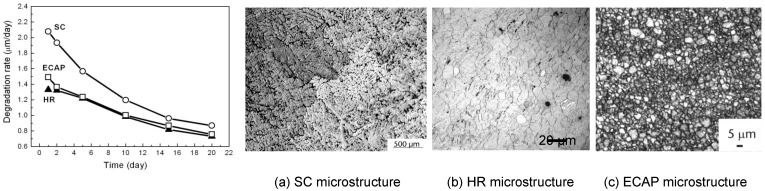
Magnesium-Calcium (Mg-Ca) alloy has received considerable attention as an emerging biodegradable implant material in orthopedic fixation applications. The biodegradable Mg-Ca alloys avoid stress shielding and secondary surgery inherent with permanent metallic implant materials. They also provide sufficient mechanical strength in load carrying applications as opposed to biopolymers. However, the key issue facing a biodegradable Mg-Ca implant is the fast corrosion in the human body environment. The ability to adjust degradation rate of Mg-Ca alloys is critical for the successful development of biodegradable orthopedic implants. This paper focuses on the functions and requirements of bone implants and critical issues of current implant biomaterials. Microstructures and mechanical properties of Mg-Ca alloys, and the unique properties of novel magnesium-calcium implant materials have been reviewed. Various manufacturing techniques to process Mg-Ca based alloys have been analyzed regarding their impacts on implant performance. Corrosion performance of Mg-Ca alloys processed by different manufacturing techniques was compared. In addition, the societal and economical impacts of developing biodegradable orthopedic implants have been emphasized.
镁钙(Mg-Ca)合金作为一种新兴的可生物降解植入材料,在骨科固定应用中受到了广泛关注。可生物降解的镁钙合金避免了永久性金属植入材料固有的应力屏蔽和二次手术问题。与生物聚合物相比,它们在承载应用中还提供了足够的机械强度。然而,可生物降解镁钙植入物面临的关键问题是在人体环境中的快速腐蚀。调节镁钙合金降解速率的能力对于可生物降解骨科植入物的成功开发至关重要。本文重点关注骨植入物的功能和要求以及当前植入生物材料的关键问题。综述了镁钙合金的微观结构和力学性能,以及新型镁钙植入材料的独特性能。分析了各种加工镁钙基合金的制造技术对植入物性能的影响。比较了不同制造技术加工的镁钙合金的腐蚀性能。此外,还强调了开发可生物降解骨科植入物的社会和经济影响。