Bittner Sean R, Williamson Ryan C, Snyder Adam C, Litwin-Kumar Ashok, Doiron Brent, Chase Steven M, Smith Matthew A, Yu Byron M
Department of Electrical and Computer Engineering, Carnegie Mellon University, Pittsburgh, Pennsylvania, United States of America.
Center for the Neural Basis of Cognition, Carnegie Mellon University, Pittsburgh, Pennsylvania, United States of America.
PLoS One. 2017 Aug 17;12(8):e0181773. doi: 10.1371/journal.pone.0181773. eCollection 2017.
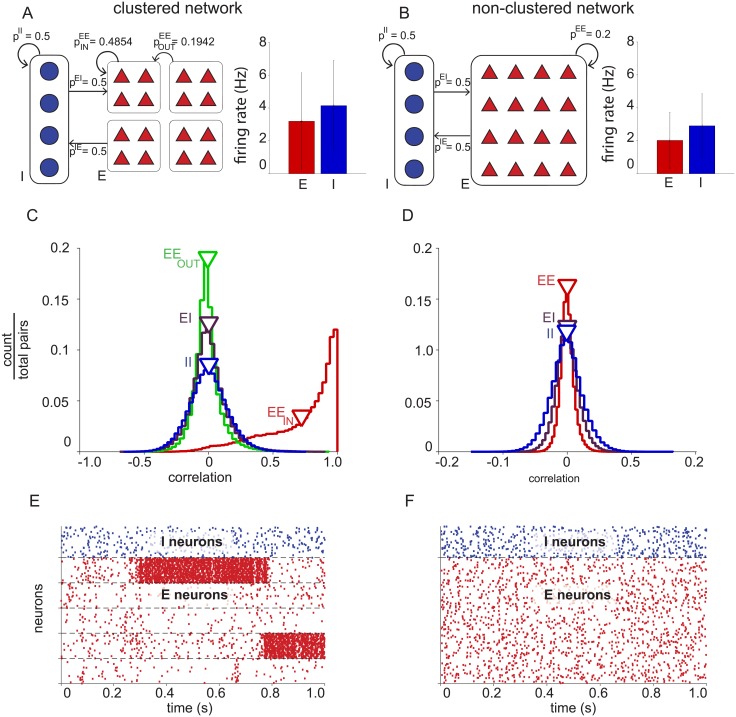
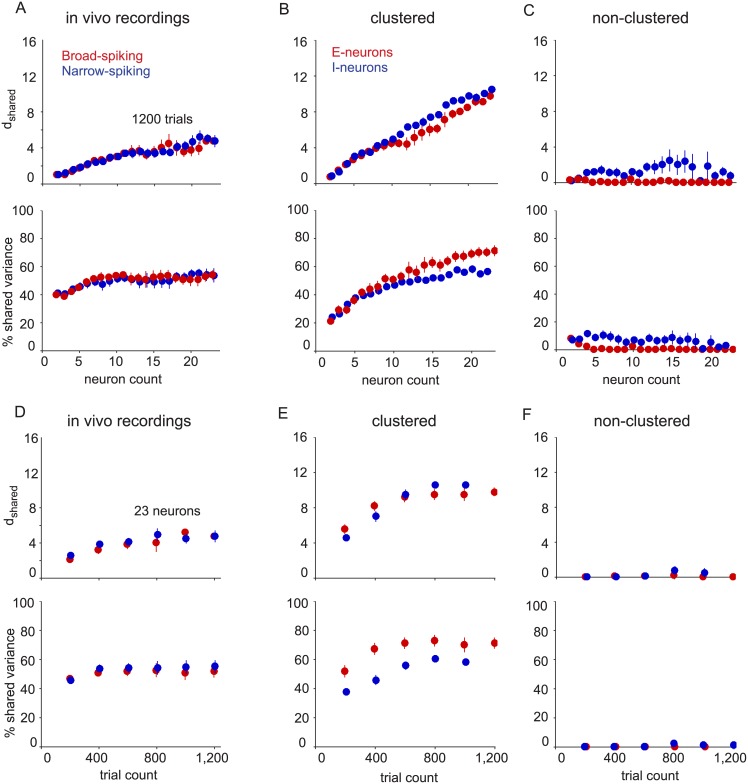
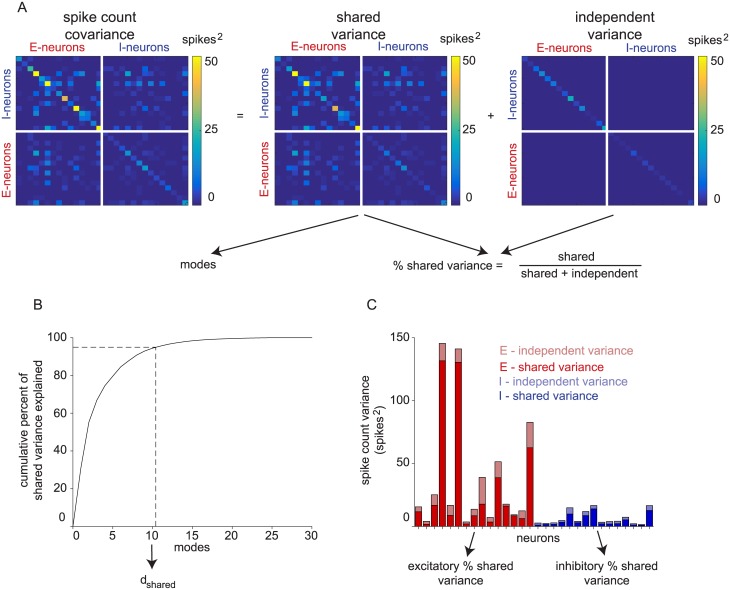
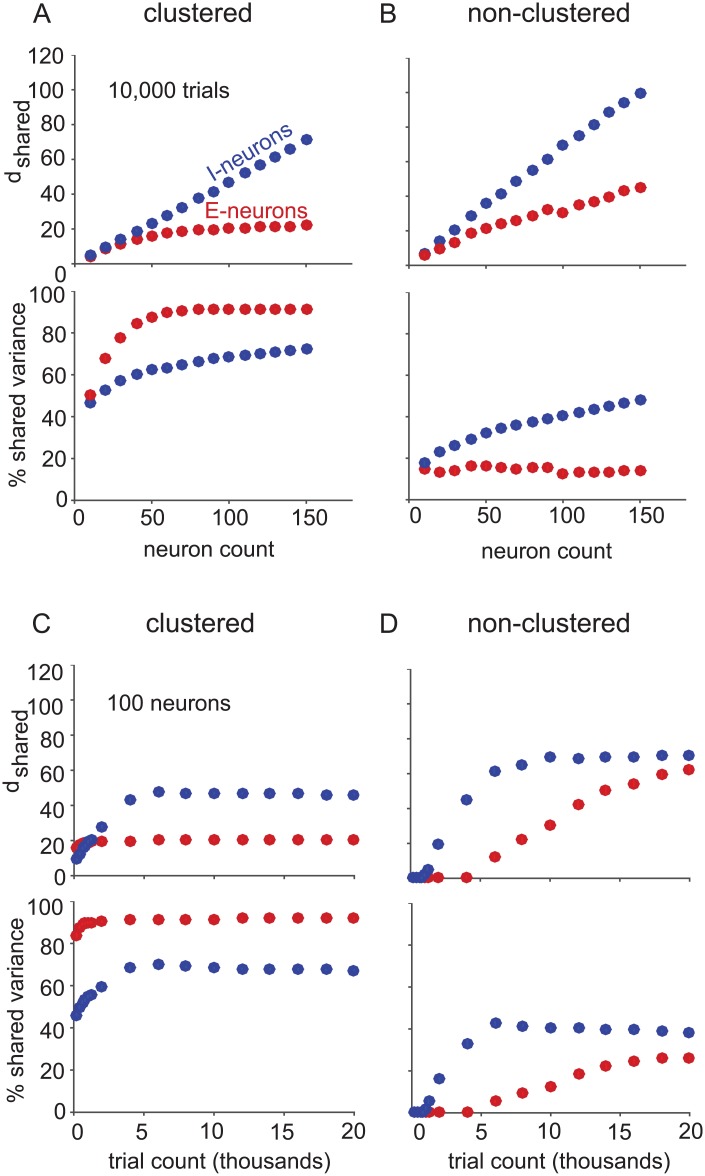
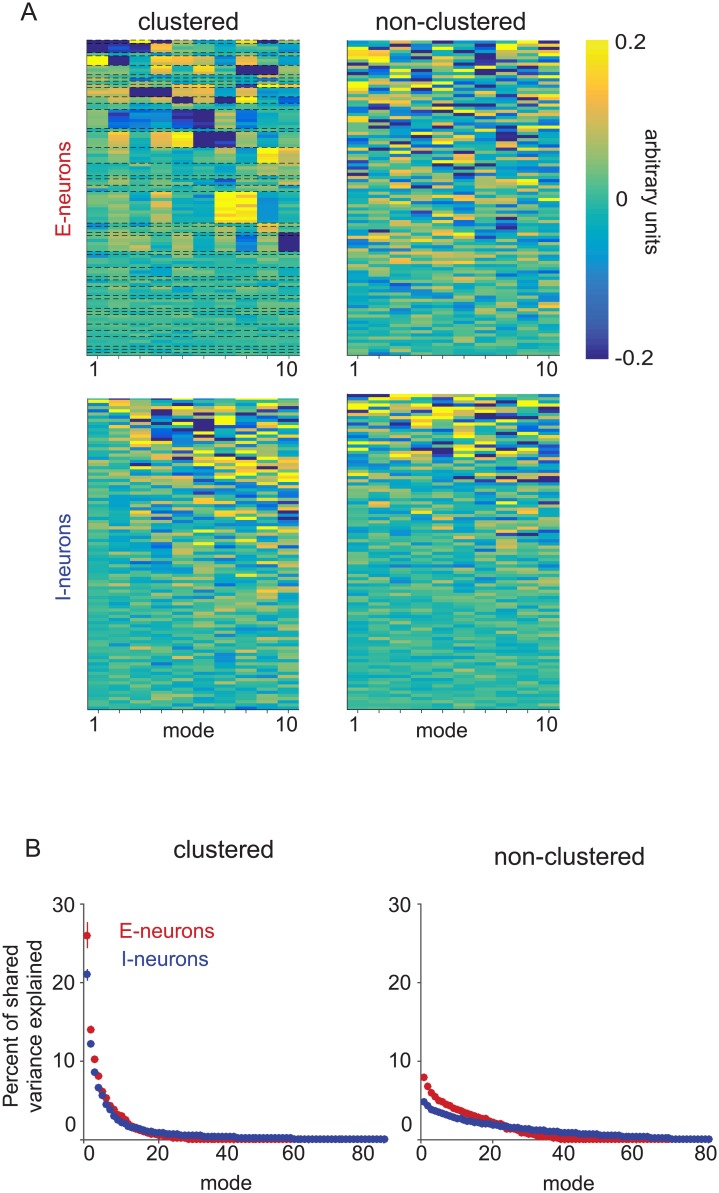
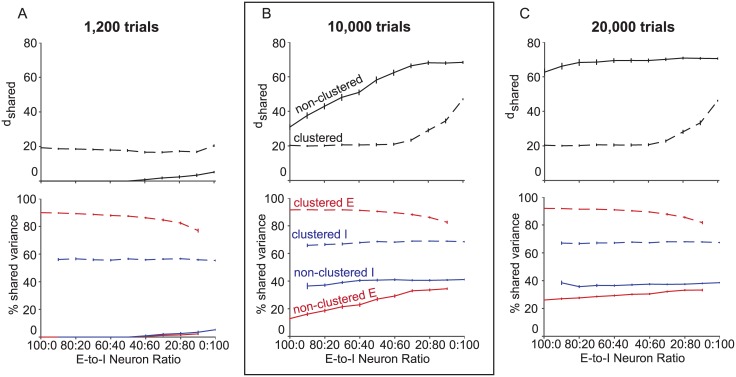
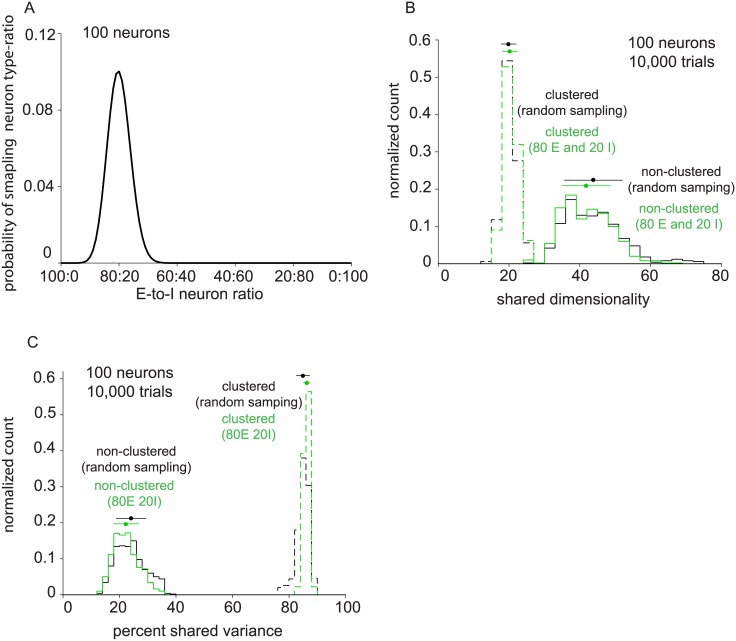
Many studies use population analysis approaches, such as dimensionality reduction, to characterize the activity of large groups of neurons. To date, these methods have treated each neuron equally, without taking into account whether neurons are excitatory or inhibitory. We studied population activity structure as a function of neuron type by applying factor analysis to spontaneous activity from spiking networks with balanced excitation and inhibition. Throughout the study, we characterized population activity structure by measuring its dimensionality and the percentage of overall activity variance that is shared among neurons. First, by sampling only excitatory or only inhibitory neurons, we found that the activity structures of these two populations in balanced networks are measurably different. We also found that the population activity structure is dependent on the ratio of excitatory to inhibitory neurons sampled. Finally we classified neurons from extracellular recordings in the primary visual cortex of anesthetized macaques as putative excitatory or inhibitory using waveform classification, and found similarities with the neuron type-specific population activity structure of a balanced network with excitatory clustering. These results imply that knowledge of neuron type is important, and allows for stronger statistical tests, when interpreting population activity structure.
许多研究采用群体分析方法,如降维,来表征大量神经元的活动。迄今为止,这些方法对每个神经元一视同仁,并未考虑神经元是兴奋性的还是抑制性的。我们通过对具有平衡兴奋和抑制的脉冲网络的自发活动应用因子分析,研究了群体活动结构作为神经元类型的函数。在整个研究过程中,我们通过测量其维度以及神经元之间共享的总体活动方差的百分比来表征群体活动结构。首先,通过仅对兴奋性或仅对抑制性神经元进行采样,我们发现在平衡网络中这两类群体的活动结构存在显著差异。我们还发现群体活动结构取决于所采样的兴奋性神经元与抑制性神经元的比例。最后,我们使用波形分类将麻醉猕猴初级视觉皮层细胞外记录中的神经元分类为假定的兴奋性或抑制性神经元,并发现其与具有兴奋性聚类的平衡网络的神经元类型特异性群体活动结构存在相似性。这些结果表明,在解释群体活动结构时,神经元类型的知识很重要,并且能进行更有力的统计检验。