Department of Viroscience, Postgraduate School of Molecular Medicine, Erasmus MC, Rotterdam, The Netherlands.
Department of Pulmonary Medicine, Erasmus MC, Rotterdam, The Netherlands.
Sci Rep. 2017 Aug 17;7(1):8580. doi: 10.1038/s41598-017-08719-y.
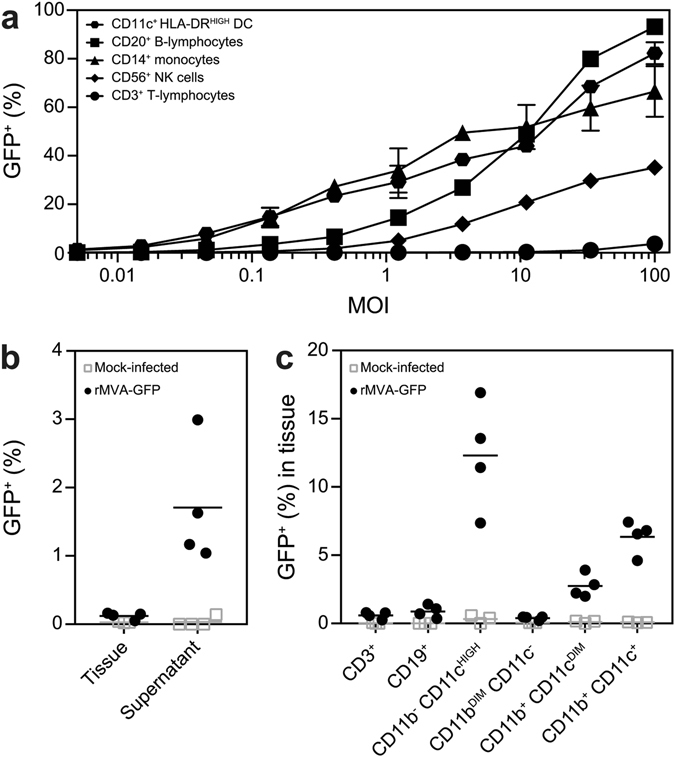
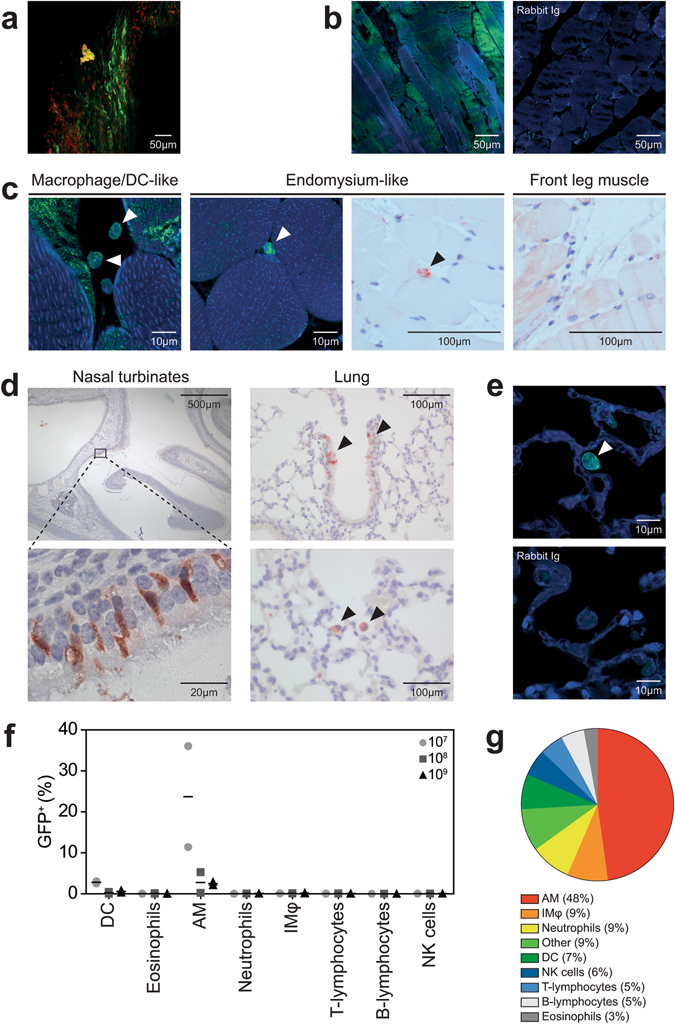
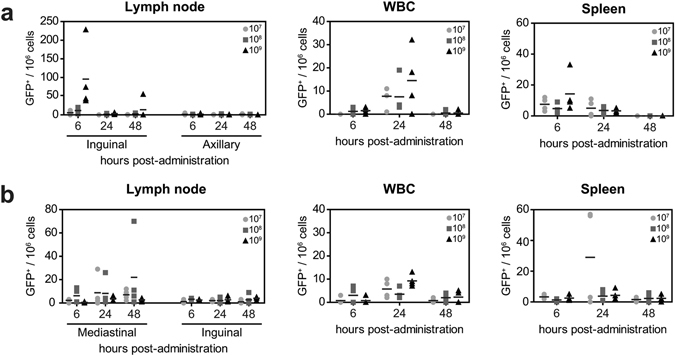
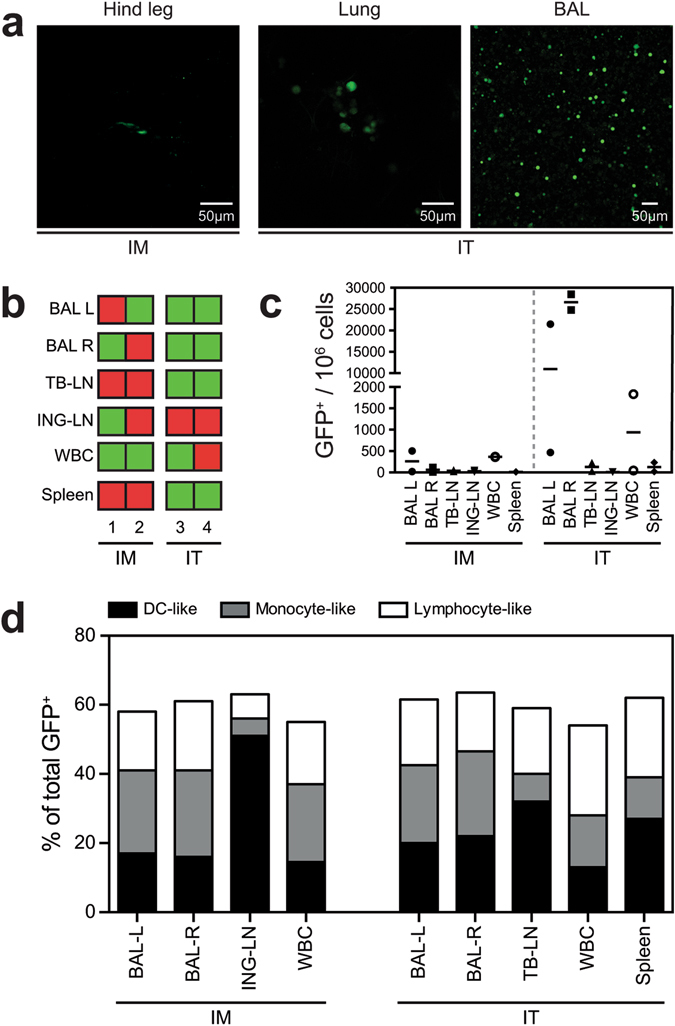
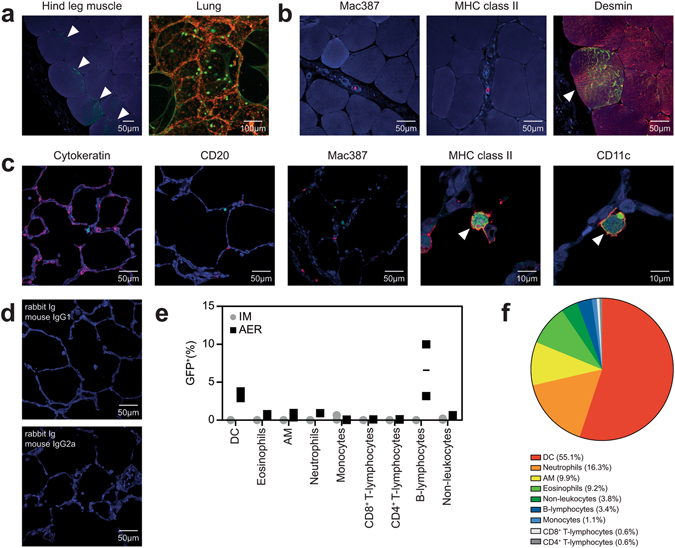
Modified Vaccinia virus Ankara (MVA) is a promising vaccine vector with an excellent safety profile. However, despite extensive pre-clinical and clinical testing, surprisingly little is known about the cellular tropism of MVA, especially in relevant animal species. Here, we performed in vitro, ex vivo and in vivo experiments with recombinant MVA expressing green fluorescent protein (rMVA-GFP). In both human peripheral blood mononuclear cells and mouse lung explants, rMVA-GFP predominantly infected antigen presenting cells. Subsequent in vivo experiments performed in mice, ferrets and non-human primates indicated that preferential targeting of dendritic cells and alveolar macrophages was observed after respiratory administration, although subtle differences were observed between the respective animal species. Following intramuscular injection, rMVA-GFP was detected in interdigitating cells between myocytes, but also in myocytes themselves. These data are important in advancing our understanding of the basis for the immunogenicity of MVA-based vaccines and aid rational vaccine design and delivery strategies.
改良安卡拉痘苗病毒(MVA)是一种很有前途的疫苗载体,具有极佳的安全性。然而,尽管已经进行了广泛的临床前和临床测试,但对于 MVA 的细胞嗜性,特别是在相关动物物种中的细胞嗜性,人们知之甚少。在这里,我们使用表达绿色荧光蛋白的重组 MVA(rMVA-GFP)进行了体外、离体和体内实验。在人外周血单核细胞和小鼠肺外植体中,rMVA-GFP 主要感染抗原呈递细胞。在随后的小鼠、雪貂和非人类灵长类动物体内实验中表明,在呼吸道给药后观察到树突状细胞和肺泡巨噬细胞的优先靶向,尽管在各自的动物物种中观察到细微的差异。肌内注射后,rMVA-GFP 可在肌细胞之间的交错细胞中检测到,但也可在肌细胞本身中检测到。这些数据对于深入了解 MVA 疫苗免疫原性的基础以及辅助合理的疫苗设计和传递策略非常重要。