Department of Anatomy and Neurobiology, Virginia Commonwealth University School of Medicine, Richmond, VA, USA.
Instituto de Biofísica Carlos Chagas Filho, Universidade Federal do Rio de Janeiro, Rio de Janeiro, Brazil.
J Neuroinflammation. 2017 Aug 18;14(1):162. doi: 10.1186/s12974-017-0936-0.
Multiple sclerosis (MS) is an inflammatory demyelinating disease classically associated with axonal damage and loss; more recently, however, synaptic changes have been recognized as additional contributing factors. An anatomical area commonly affected in MS is the visual pathway; yet, changes other than those associated with inflammatory demyelination of the optic nerve, i.e., optic neuritis, have not been described in detail.
Adult mice were subjected to a diet containing cuprizone to mimic certain aspects of inflammatory demyelination as seen in MS. Demyelination and inflammation were assessed by real-time polymerase chain reaction and immunohistochemistry. Synaptic changes associated with inflammatory demyelination in the dorsal lateral geniculate nucleus (dLGN) were determined by immunohistochemistry, Western blot analysis, and electrophysiological field potential recordings.
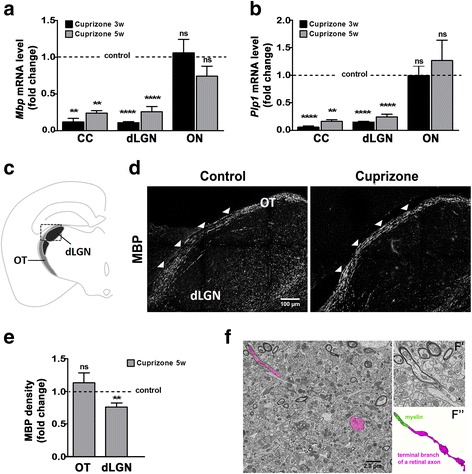
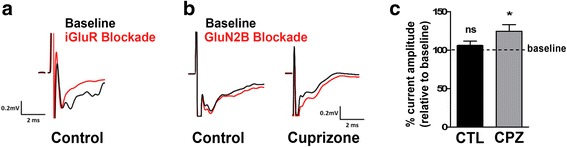
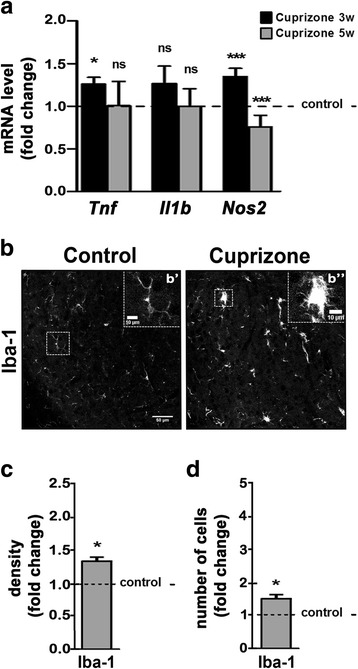
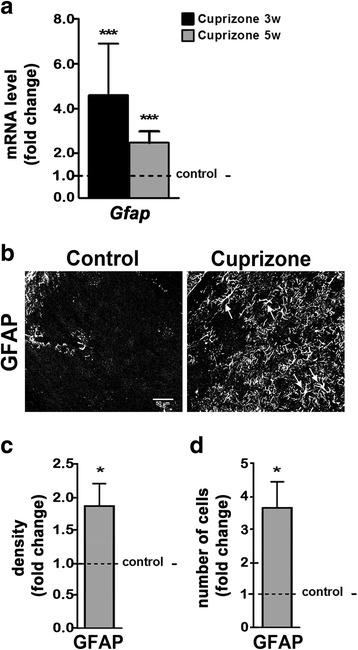
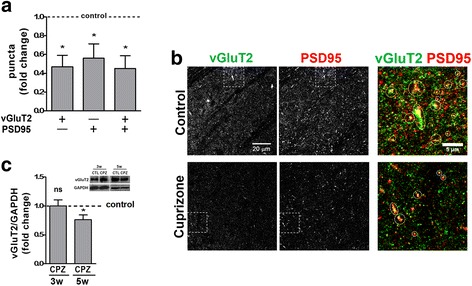
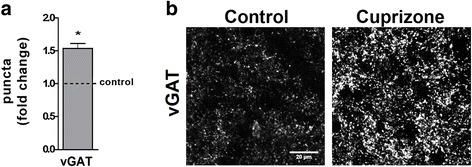
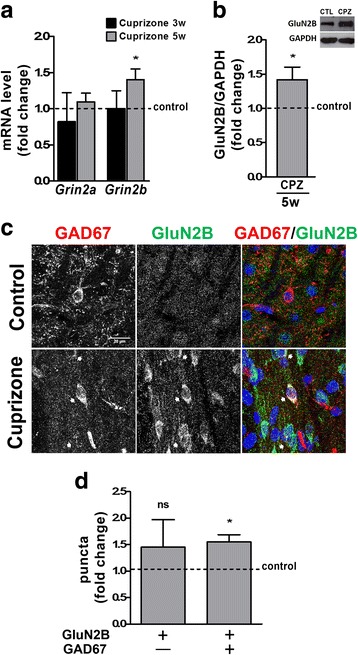
In the cuprizone model, demyelination was observed in retinorecipient regions of the subcortical visual system, in particular the dLGN, where it was found accompanied by microglia activation and astrogliosis. In contrast, anterior parts of the pathway, i.e., the optic nerve and tract, appeared largely unaffected. Under the inflammatory demyelinating conditions, as seen in the dLGN of cuprizone-treated mice, there was an overall decrease in excitatory synaptic inputs from retinal ganglion cells. At the same time, the number of synaptic complexes arising from gamma-aminobutyric acid (GABA)-generating inhibitory neurons was found increased, as were the synapses that contain the N-methyl-D-aspartate receptor (NMDAR) subunit GluN2B and converge onto inhibitory neurons. These synaptic changes were functionally found associated with a shift toward an overall increase in network inhibition.
Using the cuprizone model of inflammatory demyelination, our data reveal a novel form of synaptic (mal)adaption in the CNS that is characterized by a shift of the excitation/inhibition balance toward inhibitory network activity associated with an increase in GABAergic inhibitory synapses and a possible increase in excitatory input onto inhibitory interneurons. In addition, our data recognize the cuprizone model as a suitable tool in which to assess the effects of inflammatory demyelination on subcortical retinorecipient regions of the visual system, such as the dLGN, in the absence of overt optic neuritis.
多发性硬化症(MS)是一种炎症性脱髓鞘疾病,通常与轴突损伤和丢失有关;然而,最近人们认识到突触变化是另外的致病因素。MS 常累及的解剖区域之一是视觉通路;然而,除视神经炎症性脱髓鞘(即视神经炎)相关的改变外,其他改变尚未详细描述。
成年小鼠接受含铜锌饮食以模拟 MS 中所见的某些炎症性脱髓鞘方面。通过实时聚合酶链反应和免疫组织化学评估脱髓鞘和炎症。通过免疫组织化学、Western blot 分析和电生理场电位记录确定背外侧膝状体核(dLGN)中与炎症性脱髓鞘相关的突触变化。
在铜锌饮食模型中,在皮质下视觉系统的视网膜接受区,特别是 dLGN,观察到脱髓鞘,同时发现小胶质细胞激活和星形胶质细胞增生。相比之下,通路的前部,即视神经和束,似乎基本不受影响。在铜锌饮食处理的小鼠的 dLGN 中,观察到炎症性脱髓鞘条件下,来自视网膜神经节细胞的兴奋性突触输入总体减少。与此同时,产生γ-氨基丁酸(GABA)的抑制性神经元的突触复合物数量增加,并且包含 N-甲基-D-天冬氨酸受体(NMDAR)亚基 GluN2B 并汇聚到抑制性神经元的突触也增加。这些突触变化在功能上与网络抑制的整体增加有关。
使用炎症性脱髓鞘的铜锌饮食模型,我们的数据揭示了中枢神经系统中一种新形式的突触(失调)适应,其特征是兴奋/抑制平衡向与 GABA 能抑制性突触增加和可能增加兴奋性输入到抑制性中间神经元有关的抑制性网络活动转移。此外,我们的数据将铜锌饮食模型视为一种合适的工具,可用于评估炎症性脱髓鞘对视觉系统皮质下视网膜接受区(如 dLGN)的影响,而不存在明显的视神经炎。