Kumar Anoop, Chatterjee Ishita, Gujral Tarunmeet, Alakkam Anas, Coffing Hayley, Anbazhagan Arivarasu N, Borthakur Alip, Saksena Seema, Gill Ravinder K, Alrefai Waddah A, Dudeja Pradeep K
Division of Gastroenterology and Hepatology, University of Illinois at Chicago, Chicago, Illinois.
Department of Microbiology and Immunology, Department of Medicine, University of Illinois at Chicago, Chicago, Illinois.
Gastroenterology. 2017 Nov;153(5):1338-1350.e3. doi: 10.1053/j.gastro.2017.08.024. Epub 2017 Aug 18.
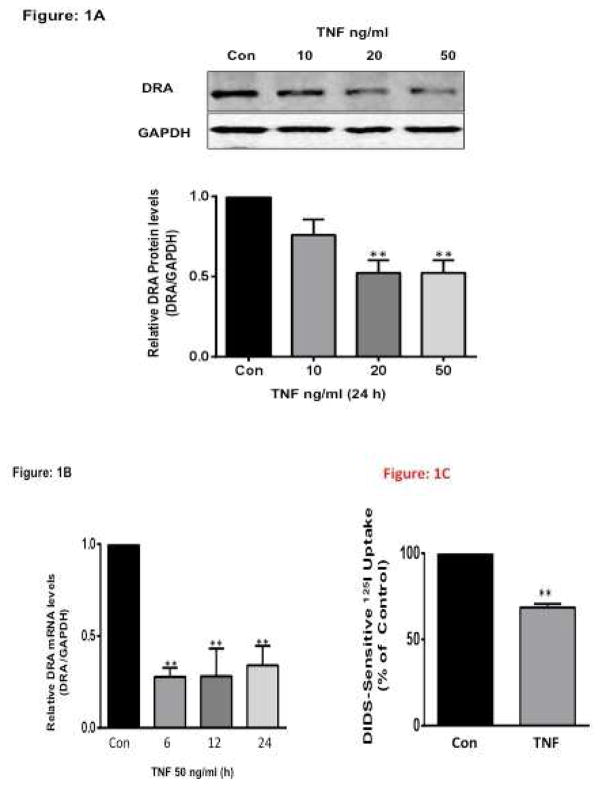
BACKGROUND & AIMS: Diarrhea associated with inflammatory bowel diseases has been associated with increased levels of inflammatory cytokines, including tumor necrosis factor (TNF). The intestinal mucosa of patients with inflammatory bowel diseases has reduced expression of solute carrier family 26 member 3 (SLC26A3, also called DRA). We investigated whether TNF directly affects expression of DRA in human intestinal epithelial cells (IECs) and in the intestines of mice, and studied the mechanisms of these effects.
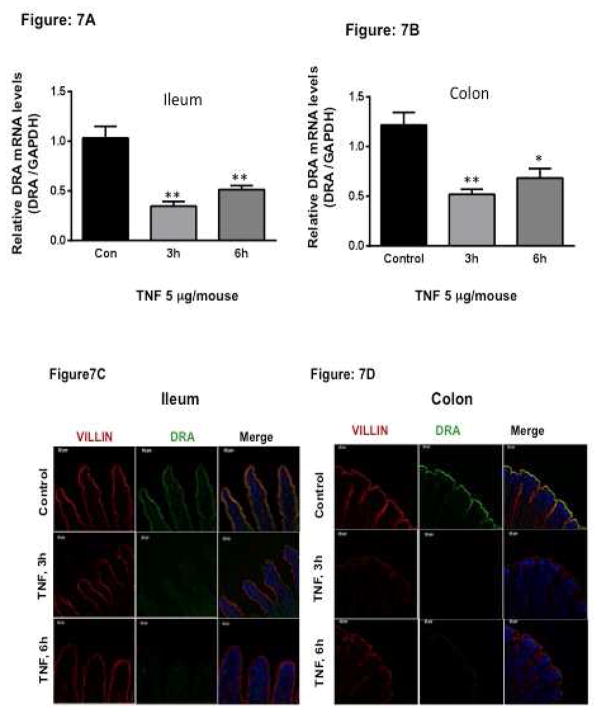
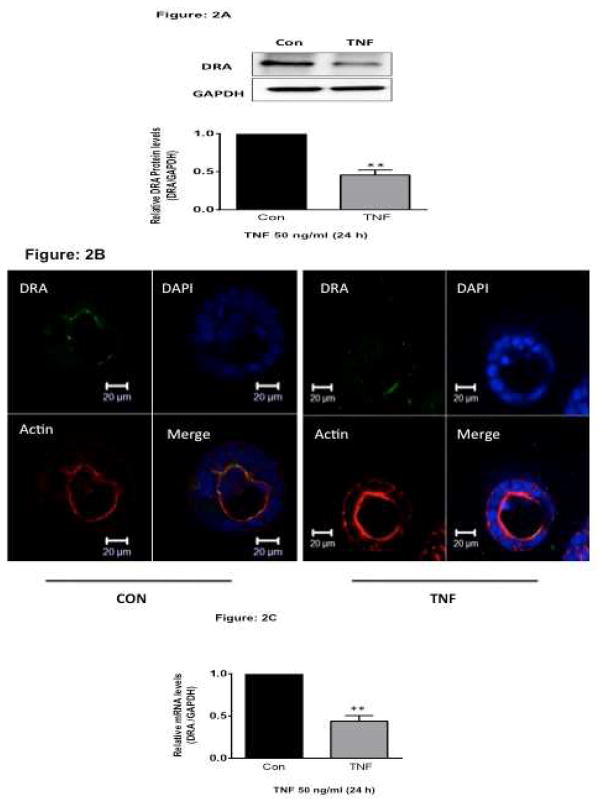
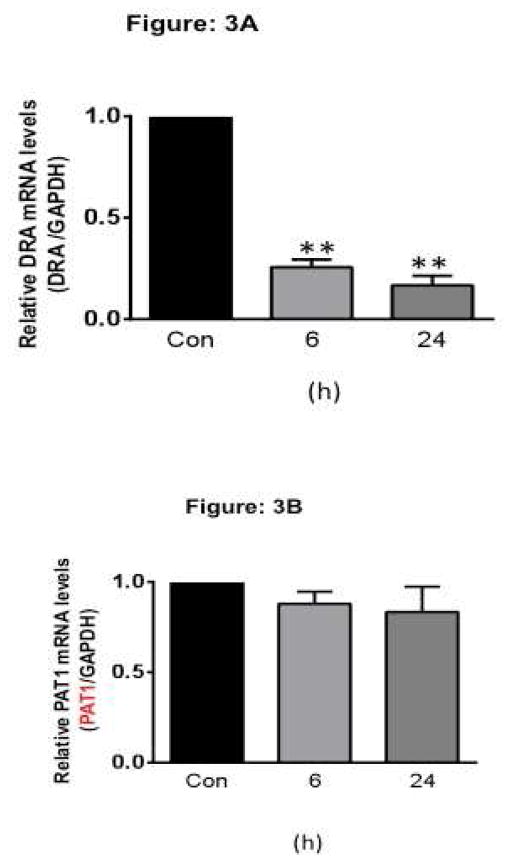
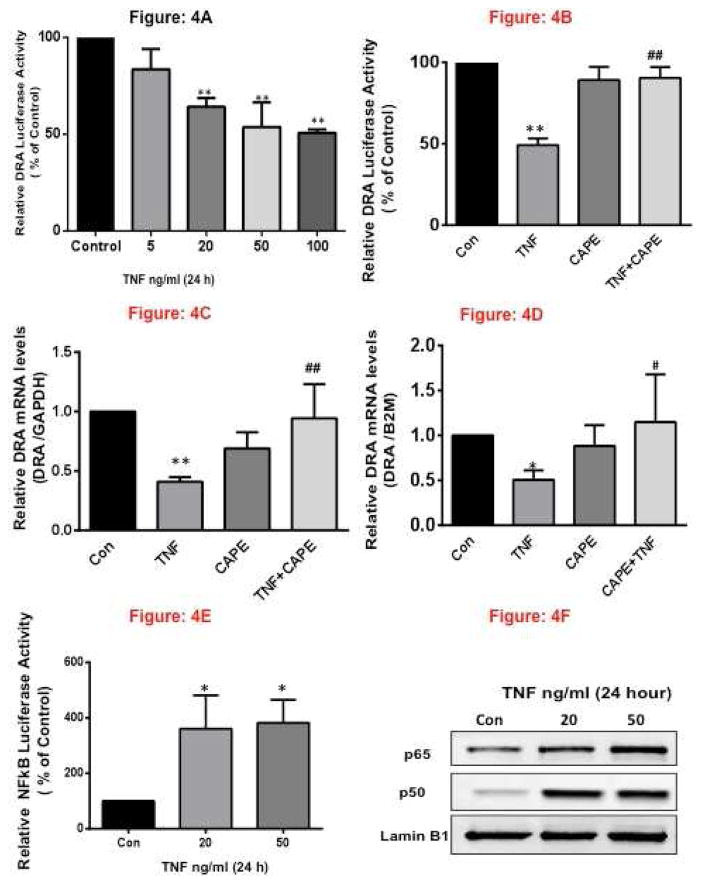
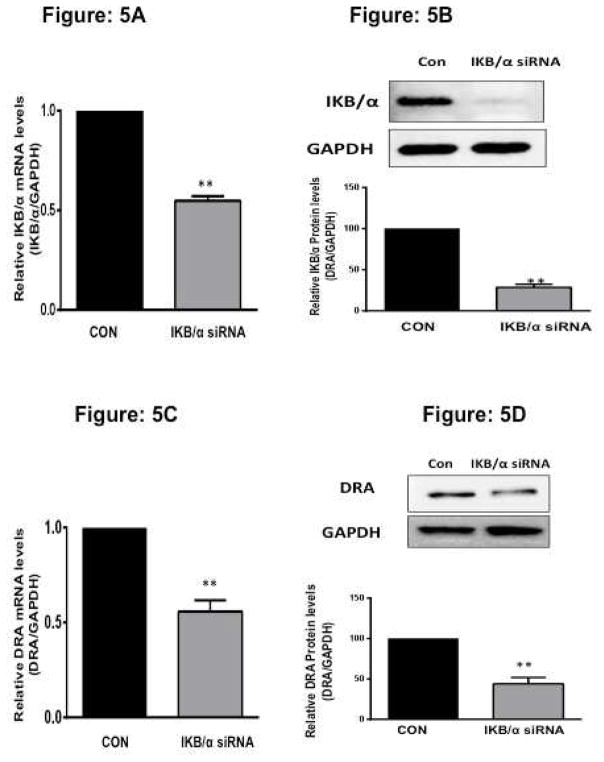
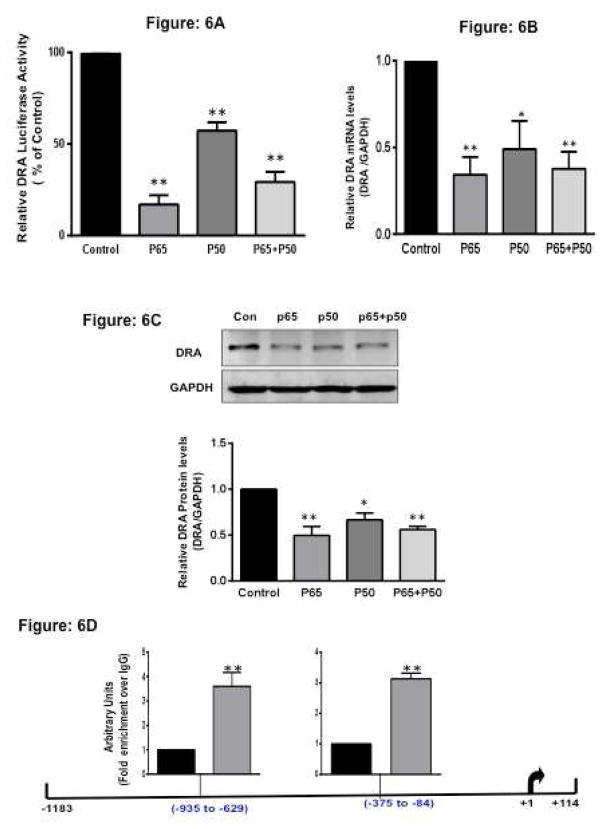
We performed quantitative reverse transcription polymerase chain reaction, immunofluorescence, and immunoblot analyses in Caco-2, HT-29, and T-84 cells human IECs cultured in 2 or 3 dimensions with or without TNF (50 ng/mL for 6-24 hours). We purified nuclear extracts and quantified nuclear factor-κB (NF-κB) activation and DNA binding. We isolated intestinal crypts from C57BL/6 mice, cultured enteroids, incubated these with TNF (50 ng/mL, 24 hours), and quantified messenger RNAs. DRA-mediated exchange of Cl for HCO was measured by uptake of I. Expression of the NF-κB inhibitor α (IkBa) was knocked down in Caco-2 cells with small interfering RNAs. Activation of NF-κB in response to TNF was measured by luciferase reporter assays; binding of the NF-κB subunit p65 in cells was analyzed in chromatin immunoprecipitation assays. DRA promoter activity was measured in a luciferase reporter assay. C57BL/6 mice were injected with TNF (5 μg/mouse for 3-6 hours) or vehicle (control); intestines were collected and analyzed by immunofluorescence, or RNA and protein were collected from the mucosa.
Incubation of IECs with TNF reduced expression of DRA. Knockdown of NF-κB inhibitor α in IECs led to nuclear translocation of the NF-κB subunit p65 and reduced levels of DRA messenger RNA and protein. Expression of a transgene encoding p65 or p50 in IECs led to significant reductions in the promoter activity of DRA and its expression. In chromatin immunoprecipitation assays, p65 bound directly to the promoter of DRA, at the regions of -935 to -629 and -375 to -84. Injection of mice with TNF or incubation of crypt-derived enteroids with TNF reduced their expression of DRA messenger RNA and protein.
In human IECs and intestinal tissues from mice, we found TNF to activate NF-κB, which reduced expression of the Cl / HCO exchanger DRA (SLC26A3), via direct binding to the promoter of DRA. This pathway is an important therapeutic target for inflammatory bowel disease-associated diarrhea.
炎症性肠病相关腹泻与包括肿瘤坏死因子(TNF)在内的炎症细胞因子水平升高有关。炎症性肠病患者的肠黏膜溶质载体家族26成员3(SLC26A3,也称为DRA)表达降低。我们研究了TNF是否直接影响人肠上皮细胞(IECs)和小鼠肠道中DRA的表达,并探讨了这些影响的机制。
我们在二维或三维培养的Caco-2、HT-29和T-84人IECs细胞中,加入或不加入TNF(50 ng/mL,处理6 - 24小时),进行定量逆转录聚合酶链反应、免疫荧光和免疫印迹分析。我们纯化核提取物并定量核因子κB(NF-κB)的激活和DNA结合。我们从C57BL/6小鼠中分离肠隐窝,培养肠类器官,用TNF(50 ng/mL,24小时)孵育,然后定量信使RNA。通过碘摄取测量DRA介导的Cl与HCO的交换。用小干扰RNA敲低Caco-2细胞中NF-κB抑制剂α(IkBa)的表达。通过荧光素酶报告基因测定法测量TNF刺激后NF-κB的激活;通过染色质免疫沉淀测定法分析细胞中NF-κB亚基p65的结合情况。通过荧光素酶报告基因测定法测量DRA启动子活性。给C57BL/6小鼠注射TNF(5 μg/小鼠,3 - 6小时)或赋形剂(对照);收集肠道进行免疫荧光分析,或从黏膜收集RNA和蛋白质。
用TNF孵育IECs可降低DRA的表达。敲低IECs中NF-κB抑制剂α导致NF-κB亚基p65核转位,并降低DRA信使RNA和蛋白质水平。在IECs中表达编码p65或p50的转基因导致DRA启动子活性及其表达显著降低。在染色质免疫沉淀测定中,p65直接结合到DRA启动子的 - 935至 - 629和 - 375至 - 84区域。给小鼠注射TNF或用TNF孵育隐窝来源的肠类器官可降低其DRA信使RNA和蛋白质的表达。
在人IECs和小鼠肠道组织中,我们发现TNF激活NF-κB,通过直接结合DRA启动子降低Cl / HCO交换体DRA(SLC26A3)的表达。该途径是炎症性肠病相关腹泻的重要治疗靶点。