Chao Pei-Yu, Lin James A, Ye Je-Chiuan, Hwang Jin-Ming, Ting Wei-Jen, Huang Chih-Yang, Liu Jer-Yuh
Graduate Institute of Basic Medical Science, China Medical University, Taichung, Taiwan.
Bachelor Program of Senior Services, Southern Taiwan University of Science and Technology, Tainan, Taiwan.
Int J Med Sci. 2017 Jul 18;14(8):764-771. doi: 10.7150/ijms.19535. eCollection 2017.
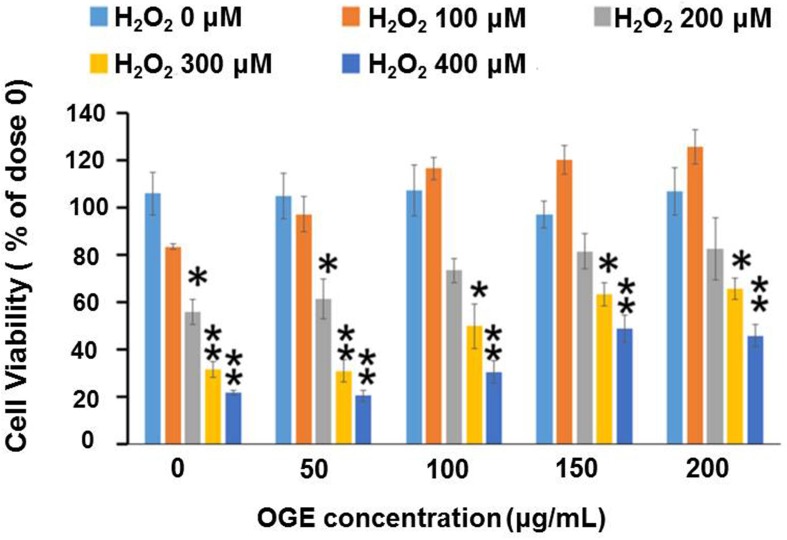
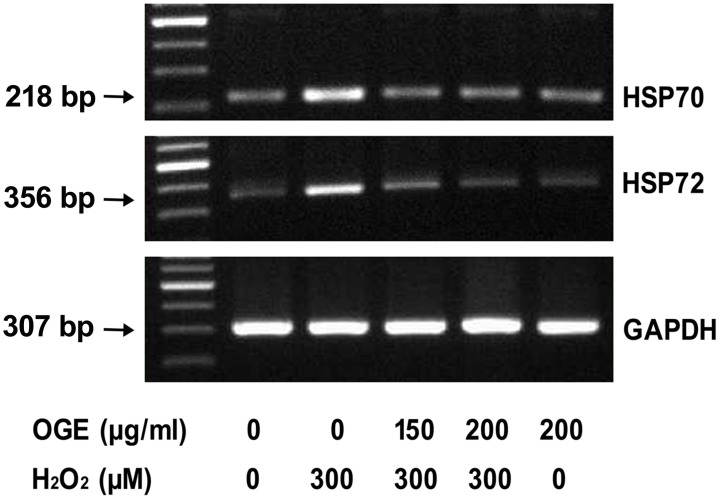
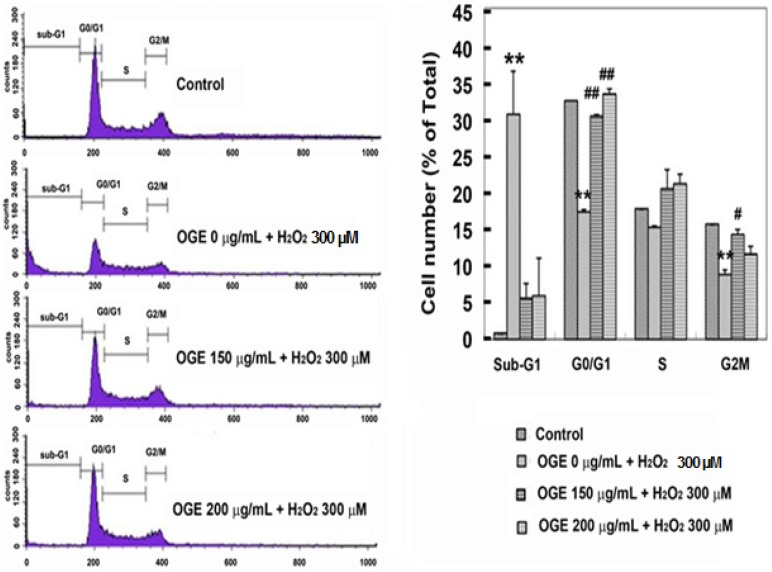
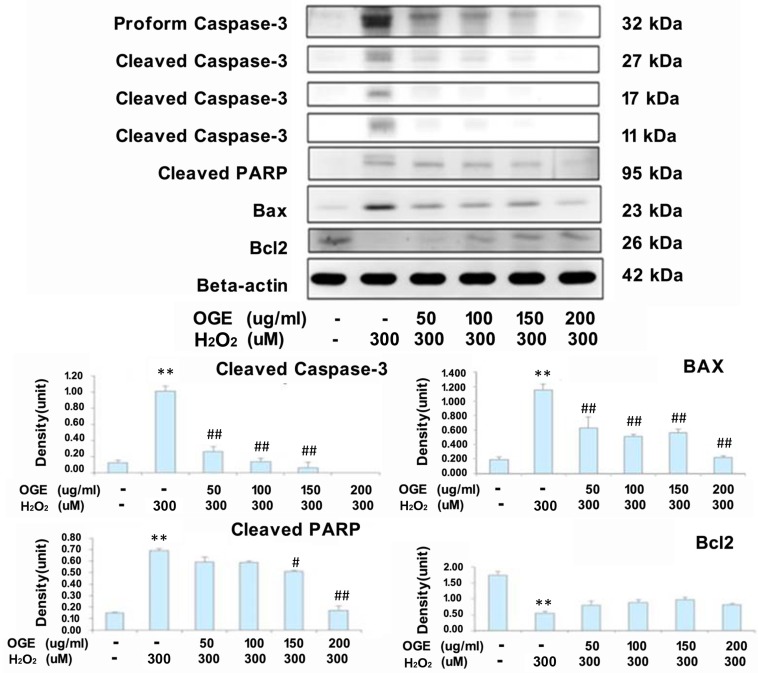
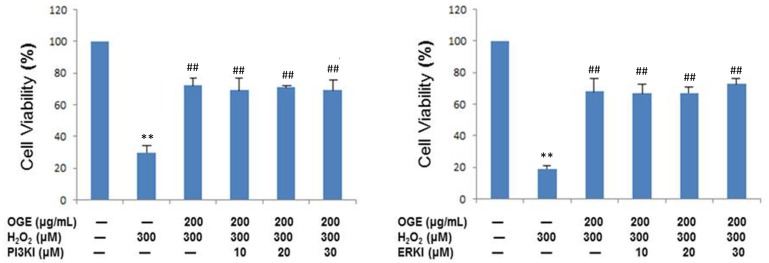
Cell transplantation therapy of Schwann cells (SCs) is a promising therapeutic strategy after spinal cord injury. However, challenges such as oxidative stress hinder satisfactory cell viability and intervention for enhancing SCs survival is critical throughout the transplantation procedures. widely used as a folk medicine in many countries, has therapeutic and anti-oxidative properties and may protect SCs survival. We examined the protective effects of aqueous extract (OGE) against cell damage caused by HO-induced oxidative stress in RSC96 Schwann cells. Our results showed that the RSC96 cells, damaged by HO oxidative stress, decreased their viability up to 32% after treatment with different concentrations of up to 300 μM HO, but OGE pretreatment (150 or 200 μg/mL) increased cell viability by approximately 62% or 66%, respectively. Cell cycle analysis indicated a high (43%) sub-G1 cell population in the HO-treated RSC96 cells compared with untreated cells (1%); whereas OGE pretreatment (150 and 200 μg/mL) of RSC96 cells significantly reduced the sub-G1 cells (7% and 8%, respectively). Furthermore, Western blot analysis revealed that OGE pretreatment inhibited HO-induced apoptotic protein caspase-3 activation and PARP cleavage, as well as it reversed Bax up-regulation and Bcl-2 down-regulation. The amelioration of OGE of cell stress and stress-induced apoptosis was proved by the HSP70 and HSP72 decrease. Our data suggest that OGE may minimize the cytotoxic effects of HO-induced SCs apoptosis by modulating the apoptotic pathway and could potentially supplement cell transplantation therapy.
雪旺细胞(SCs)的细胞移植疗法是脊髓损伤后一种很有前景的治疗策略。然而,诸如氧化应激等挑战阻碍了令人满意的细胞活力,并且在整个移植过程中,采取干预措施提高雪旺细胞的存活率至关重要。在许多国家被广泛用作民间药物,具有治疗和抗氧化特性,可能保护雪旺细胞的存活。我们研究了水提取物(OGE)对RSC96雪旺细胞中过氧化氢(HO)诱导的氧化应激所造成的细胞损伤的保护作用。我们的结果表明,在使用不同浓度高达300μM的HO处理后,受HO氧化应激损伤的RSC96细胞活力降低了32%,但OGE预处理(150或200μg/mL)分别使细胞活力提高了约62%或66%。细胞周期分析表明,与未处理的细胞(1%)相比,经HO处理的RSC96细胞中有较高比例(43%)的亚G1期细胞群体;而对RSC96细胞进行OGE预处理(150和200μg/mL)显著减少了亚G1期细胞(分别为7%和8%)。此外,蛋白质印迹分析显示,OGE预处理抑制了HO诱导的凋亡蛋白半胱天冬酶-3的激活和聚(ADP-核糖)聚合酶(PARP)的裂解,并且它逆转了Bax上调和Bcl-2下调。热休克蛋白70(HSP70)和热休克蛋白72(HSP72)的减少证明了OGE对细胞应激和应激诱导的凋亡有改善作用。我们的数据表明,OGE可能通过调节凋亡途径将HO诱导的雪旺细胞凋亡的细胞毒性作用降至最低,并且可能潜在地补充细胞移植疗法。