Zhou Ping, Lu Shan, Luo Yun, Wang Shan, Yang Ke, Zhai Yadong, Sun Guibo, Sun Xiaobo
Institute of Medicinal Plant Development, Peking Union Medical College and Chinese Academy of Medical SciencesBeijing, China.
Beijing Key Laboratory of Innovative Drug Discovery of Traditional Chinese Medicine (Natural Medicine) and Translational MedicineBeijing, China.
Front Pharmacol. 2017 Aug 3;8:464. doi: 10.3389/fphar.2017.00464. eCollection 2017.
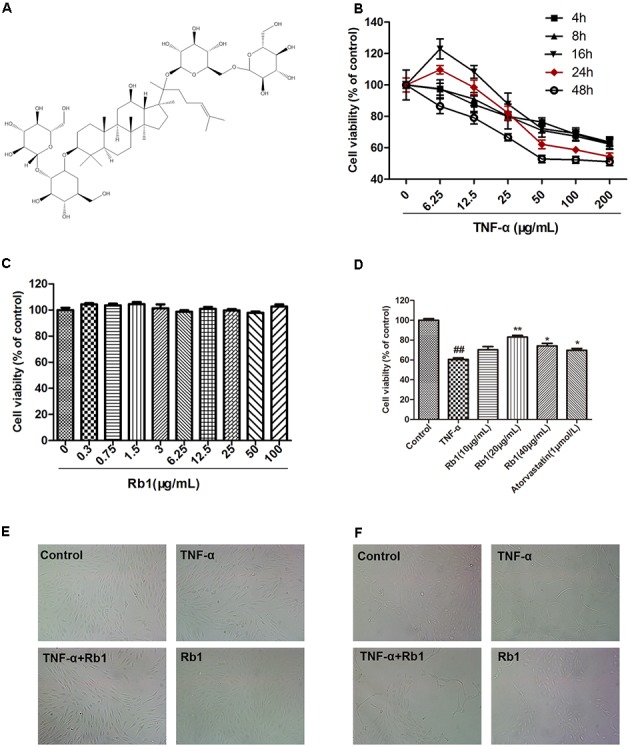
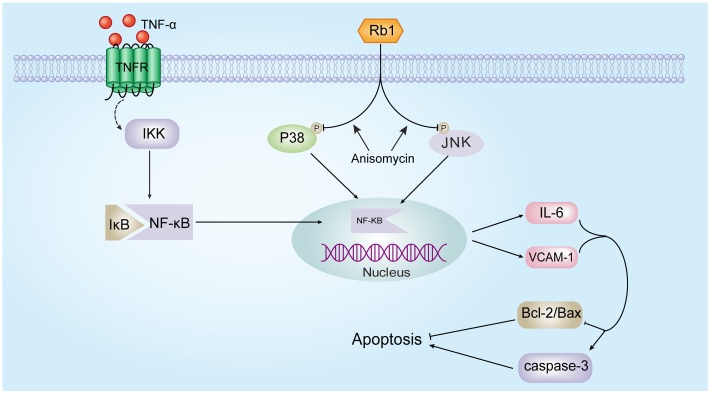
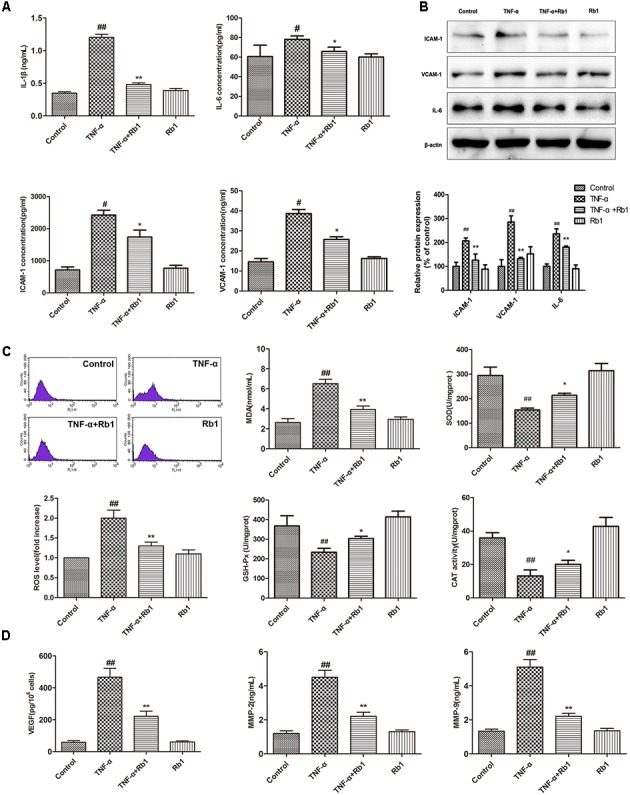
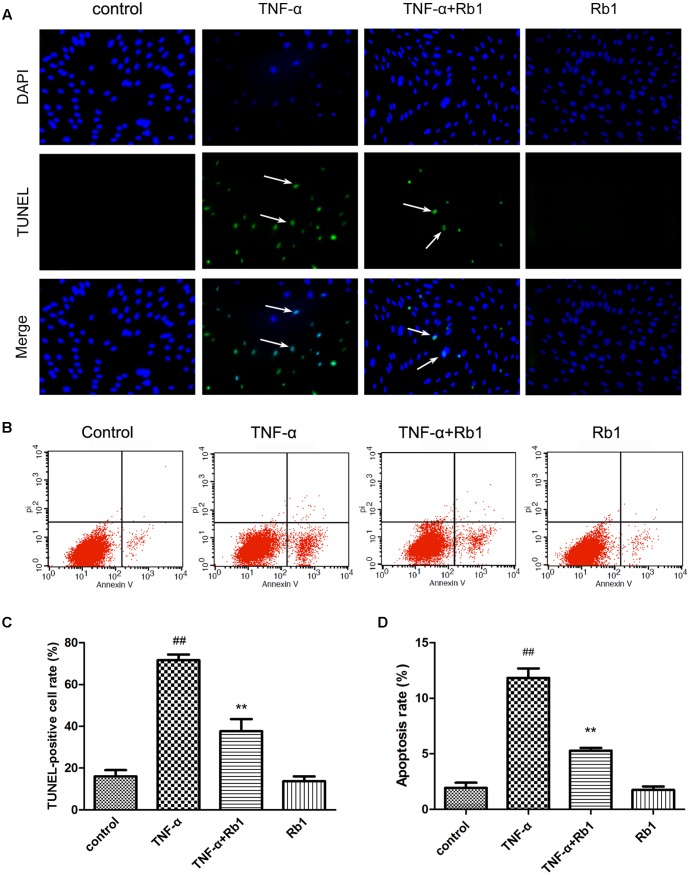
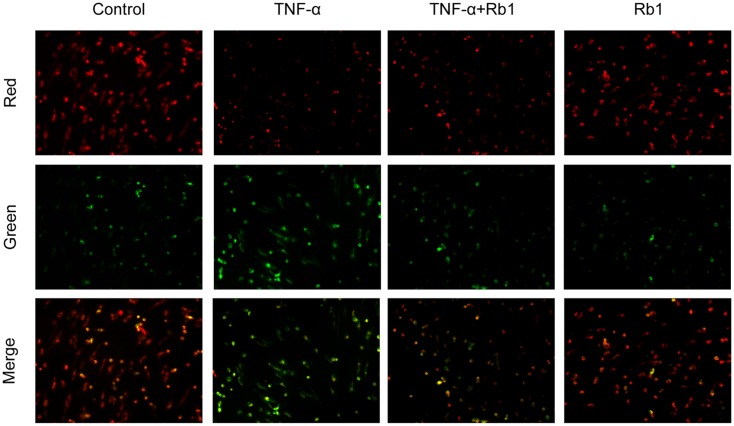
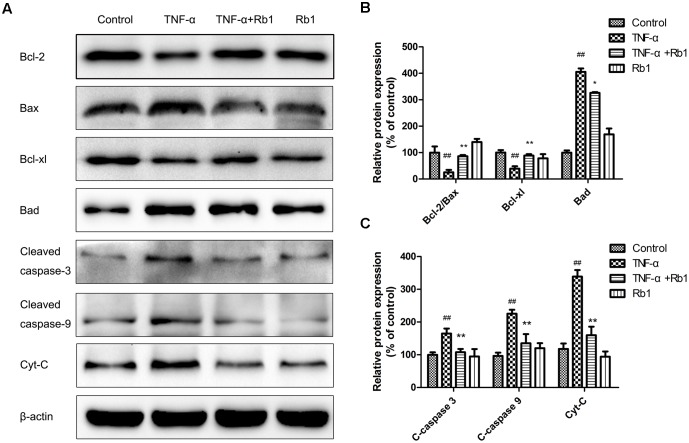
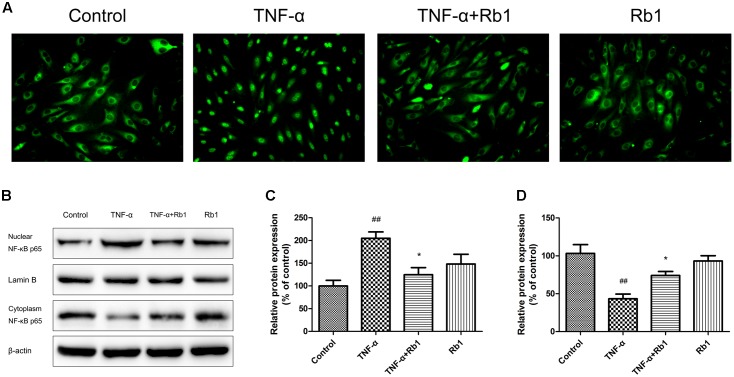
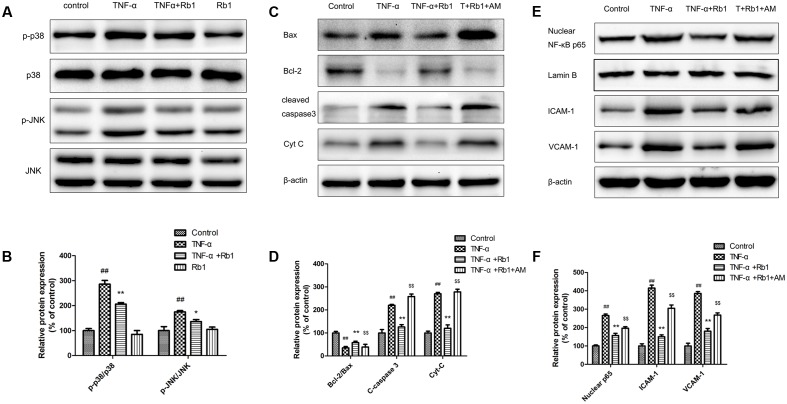
It is currently believed that inflammation plays a central role in the pathophysiology of atherosclerosis. Oxidative stress and redox-sensitive transcription factors are implicated in the process. Ginsenoside Rb1, a major active ingredient in processed Radix notoginseng, has attracted widespread attention because of its potential to improve cardiovascular function. However, the effects of ginsenoside Rb1 on tumor necrosis factor-α (TNF-α)-induced vascular endothelial cell injury and the underlying molecular mechanisms have never been studied. This study showed that TNF-α-induced oxidative stress, inflammation and apoptosis in human umbilical vein endothelial cells (HUVECs) could be attenuated by ginsenoside Rb1 pretreatment. Using JC-1, Annexin V/PI and TUNEL staining, and a caspase-3 activity assay, we found that Rb1 provided significant protection against TNF-α-induced cell death. Furthermore, Rb1 pretreatment could inhibit TNF-α-induced ROS and MDA production; increase the activities of SOD, CAT, and GSH-Px; and decrease the levels of IL-1β, IL-6, VCAM-1, ICAM-1, VEGF, MMP-2 and MMP-9. Importantly, the cytoprotective effects of Rb1 were correlated with NF-κB signaling pathway inhibition. Additionally, we found that Rb1 may suppress the NF-κB pathway through p-38 and JNK pathway activation, findings supported by the results of our experiments involving anisomycin (AM), a JNK and p38 activator. In conclusion, this study showed that ginsenoside Rb1 protects HUVECs from TNF-α-induced oxidative stress and inflammation by inhibiting JNK and p38. This inhibition suppressed NF-κB signaling and down-regulated the expression of inflammatory factors and apoptosis-related proteins.
目前认为,炎症在动脉粥样硬化的病理生理学中起核心作用。氧化应激和氧化还原敏感转录因子参与了这一过程。人参皂苷Rb1是加工后三七的主要活性成分,因其改善心血管功能的潜力而受到广泛关注。然而,人参皂苷Rb1对肿瘤坏死因子-α(TNF-α)诱导的血管内皮细胞损伤的影响及其潜在分子机制尚未见研究报道。本研究表明,人参皂苷Rb1预处理可减轻TNF-α诱导的人脐静脉内皮细胞(HUVECs)氧化应激、炎症和凋亡。通过JC-1、Annexin V/PI和TUNEL染色以及caspase-3活性测定,我们发现Rb1对TNF-α诱导的细胞死亡具有显著保护作用。此外,Rb1预处理可抑制TNF-α诱导的ROS和MDA产生;提高SOD、CAT和GSH-Px活性;降低IL-1β、IL-6、VCAM-1、ICAM-1、VEGF、MMP-2和MMP-9水平。重要的是,Rb1的细胞保护作用与NF-κB信号通路抑制相关。此外,我们发现Rb1可能通过激活p-38和JNK通路抑制NF-κB通路,这一发现得到了我们使用茴香霉素(AM,一种JNK和p38激活剂)实验结果的支持。总之,本研究表明人参皂苷Rb1通过抑制JNK和p38保护HUVECs免受TNF-α诱导的氧化应激和炎症。这种抑制作用抑制了NF-κB信号传导并下调了炎症因子和凋亡相关蛋白的表达。