Lo Wan-Yu, Peng Ching-Tien, Wang Huang-Joe
Cardiovascular & Translational Medicine Laboratory, Department of Biotechnology, Hungkuang UniversityTaichung, Taiwan.
Department of Pediatrics, Children's Hospital, China Medical University and HospitalTaichung, Taiwan.
Front Physiol. 2017 Aug 2;8:551. doi: 10.3389/fphys.2017.00551. eCollection 2017.
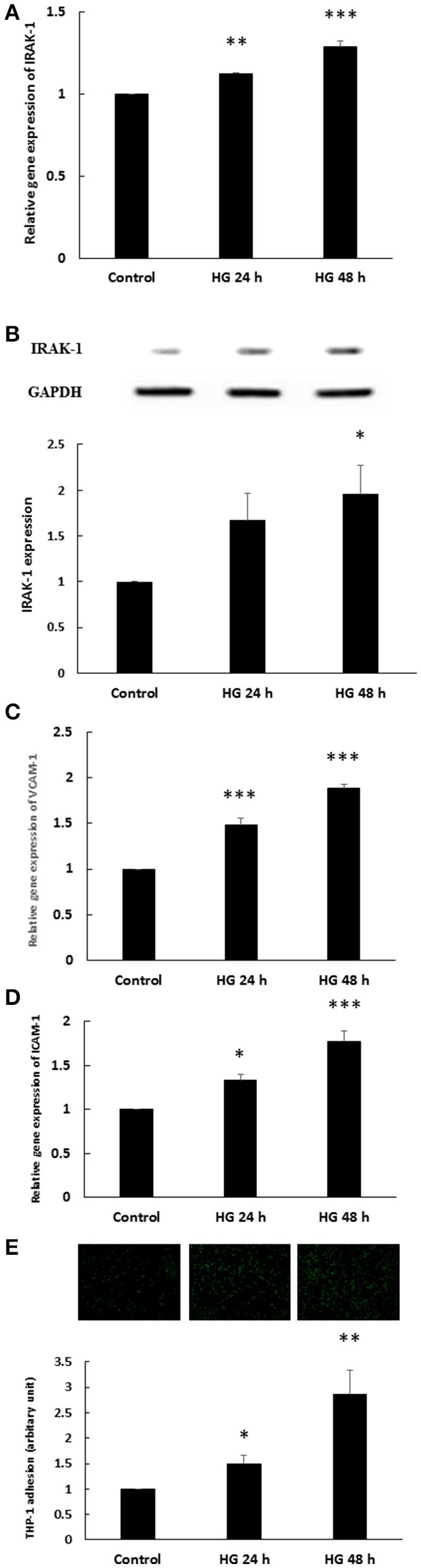
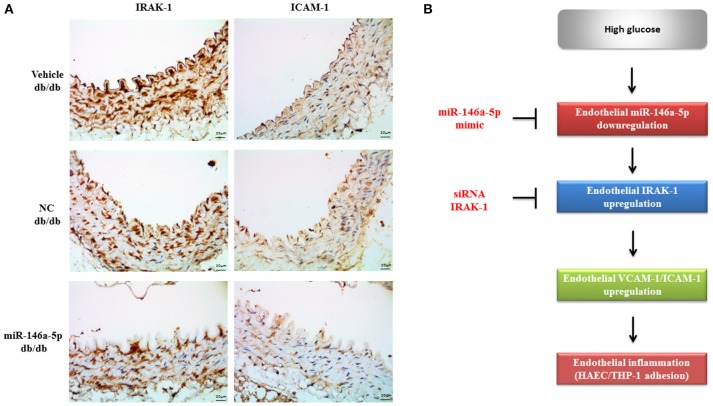
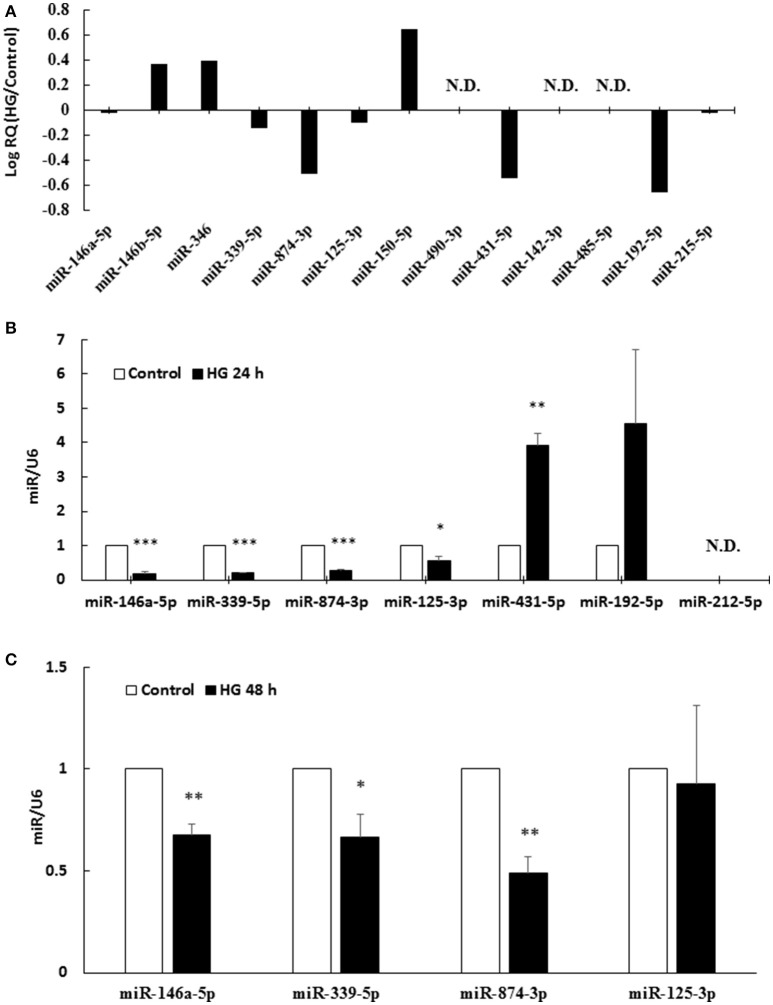
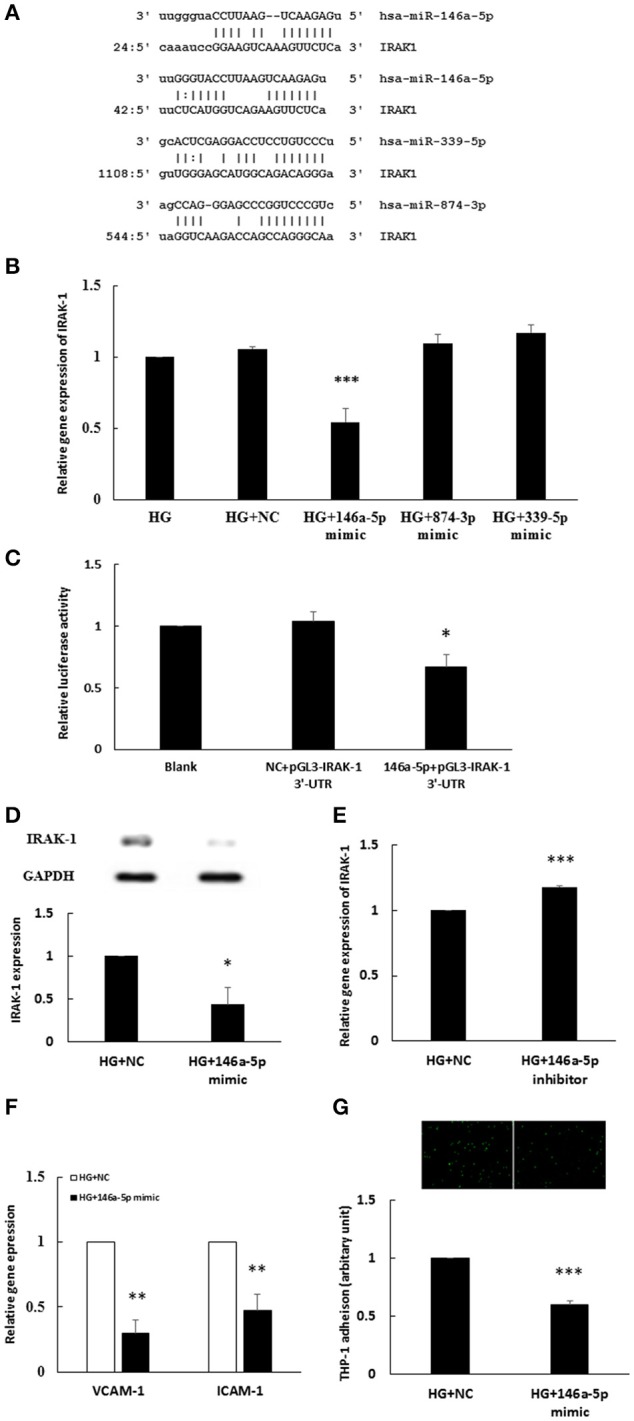
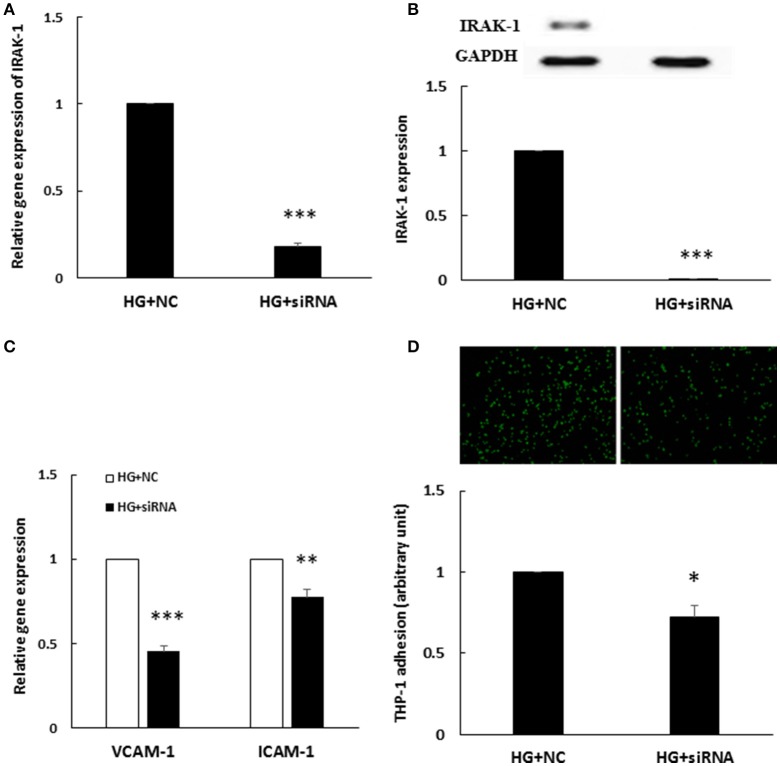
Interleukin-1 receptor-associated kinase-1 (IRAK-1) is critical for mediating toll-like receptor and interleukin-1 receptor signaling. In this study, we have examined whether IRAK-1 expression is altered in high glucose (HG)-stimulated human aortic endothelial cells (HAECs), and whether microRNAs (miRs) target IRAK-1 to regulate HG-induced endothelial inflammation. HAECs were treated with HG for 24 and 48 h. Real-time PCR, Western blot, monocyte adhesion assay, bioinformatics analysis, TaqMan® arrays, microRNA mimic or inhibitor transfection, luciferase reporter assay and siRNA IRAK-1 transfection were performed. The aortic tissues from db/db type 2 diabetic mice were examined by immunohistochemistry staining. HG time-dependently increased IRAK-1 mRNA and protein levels in HAECs, and was associated with increased VCAM-1/ICAM-1 gene expression and monocyte adhesion. Bioinformatic analysis, TaqMan® arrays, and real-time PCR were used to confirm that miR-146a-5p, miR-339-5p, and miR-874-3p were significantly downregulated in HG-stimulated HAECs, suggesting impaired feedback restraints on HG-induced endothelial inflammation via IRAK-1. However, only miR-146a-5p mimic transfection reduced the HG-induced upregulation of IRAK-1 expression, VCAM-1/ICAM-1 expression, and monocyte adhesion. Additionally, IRAK-1 depletion reduced HG-induced VCAM-1/ICAM-1 gene expression, and monocyte adhesion, indicating that HG-induced endothelial inflammation was mediated partially through IRAK-1. , intravenous injections of miR-146a-5p mimic prevented endothelial IRAK-1 and ICAM-1 expression in db/db mice. These results suggest that miR-146a-5p is involved in the regulation of HG-induced endothelial inflammation via modulation of IRAK-1; indicating that miR-146a-5p may be a novel target for the treatment of diabetic vascular complications.
白细胞介素-1受体相关激酶-1(IRAK-1)对于介导Toll样受体和白细胞介素-1受体信号传导至关重要。在本研究中,我们检测了高糖(HG)刺激的人主动脉内皮细胞(HAECs)中IRAK-1的表达是否发生改变,以及微小RNA(miRs)是否靶向IRAK-1以调节HG诱导的内皮炎症。将HAECs用HG处理24小时和48小时。进行了实时PCR、蛋白质印迹、单核细胞黏附试验、生物信息学分析、TaqMan®芯片、微小RNA模拟物或抑制剂转染、荧光素酶报告基因检测以及IRAK-1小干扰RNA(siRNA)转染。通过免疫组织化学染色检查db/db 2型糖尿病小鼠的主动脉组织。HG在HAECs中时间依赖性地增加IRAK-1 mRNA和蛋白质水平,并与血管细胞黏附分子-1(VCAM-1)/细胞间黏附分子-1(ICAM-1)基因表达增加和单核细胞黏附相关。生物信息学分析、TaqMan®芯片和实时PCR用于确认在HG刺激的HAECs中miR-146a-5p、miR-339-5p和miR-874-3p显著下调,提示对HG诱导的内皮炎症通过IRAK-1的反馈抑制受损。然而,只有miR-146a-5p模拟物转染降低了HG诱导的IRAK-1表达上调、VCAM-1/ICAM-1表达上调以及单核细胞黏附。此外,IRAK-1缺失降低了HG诱导的VCAM-1/ICAM-1基因表达和单核细胞黏附,表明HG诱导的内皮炎症部分通过IRAK-1介导。静脉注射miR-146a-5p模拟物可抑制db/db小鼠内皮细胞中IRAK-1和ICAM-1的表达。这些结果表明miR-146a-5p通过调节IRAK-1参与HG诱导的内皮炎症调节;表明miR-146a-5p可能是治疗糖尿病血管并发症的新靶点。