Nutrition Area, School of Biological and Population Health Sciences, Oregon State University, Corvallis, OR 87331, USA.
Department of Family and Consumer Sciences, University of Wyoming, Laramie, WY 82071, USA.
Nutrients. 2017 Aug 19;9(8):905. doi: 10.3390/nu9080905.
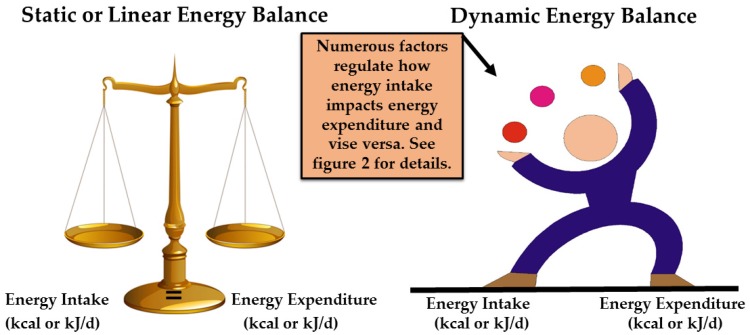
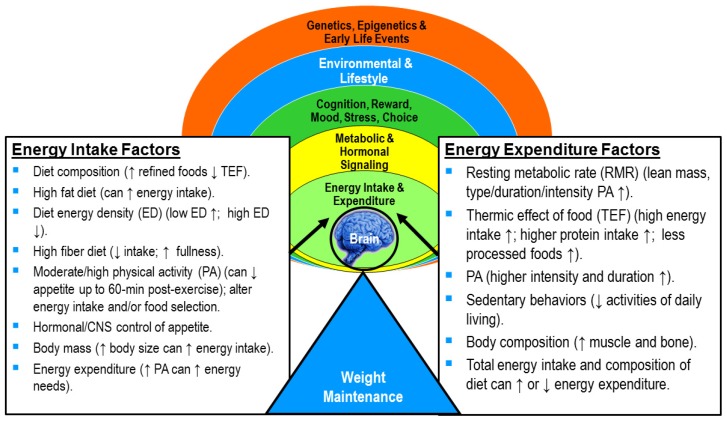
Understanding the dynamic nature of energy balance, and the interrelated and synergistic roles of diet and physical activity (PA) on body weight, will enable nutrition educators to be more effective in implementing obesity prevention education. Although most educators recognize that diet and PA are important for weight management, they may not fully understand their impact on energy flux and how diet alters energy expenditure and energy expenditure alters diet. Many nutrition educators have little training in exercise science; thus, they may not have the knowledge essential to understanding the benefits of PA for health or weight management beyond burning calories. This paper highlights the importance of advancing nutrition educators' understanding about PA, and its synergistic role with diet, and the value of incorporating a dynamic energy balance approach into obesity-prevention programs. Five key points are highlighted: (1) the concept of dynamic vs. static energy balance; (2) the role of PA in weight management; (3) the role of PA in appetite regulation; (4) the concept of energy flux; and (5) the integration of dynamic energy balance into obesity prevention programs. The rationale for the importance of understanding the physiological relationship between PA and diet for effective obesity prevention programming is also reviewed.
理解能量平衡的动态性质,以及饮食和体力活动(PA)在体重管理方面的相互关联和协同作用,将使营养教育工作者能够更有效地实施肥胖预防教育。尽管大多数教育工作者认识到饮食和 PA 对体重管理很重要,但他们可能并不完全了解它们对能量通量的影响,以及饮食如何改变能量消耗,以及能量消耗如何改变饮食。许多营养教育工作者在运动科学方面的培训较少;因此,他们可能不了解 PA 对健康或体重管理的益处,除了燃烧卡路里之外。本文强调了提高营养教育工作者对 PA 的理解及其与饮食的协同作用的重要性,以及将动态能量平衡方法纳入肥胖预防计划的价值。强调了五个关键点:(1)动态与静态能量平衡的概念;(2)PA 在体重管理中的作用;(3)PA 在食欲调节中的作用;(4)能量通量的概念;以及(5)将动态能量平衡纳入肥胖预防计划。还回顾了理解 PA 和饮食之间生理关系对有效肥胖预防计划的重要性的基本原理。