Department of Chemical and Biological Engineering, Rensselaer Polytechnic Institute, 110 8th Street, Troy, New York, 12180, United States of America.
Centre for Biotechnology and Interdisciplinary Studies, Rensselaer Polytechnic Institute, 110 8th Street, Troy New York, 12180, United States of America.
Sci Rep. 2017 Aug 21;7(1):8959. doi: 10.1038/s41598-017-08870-6.
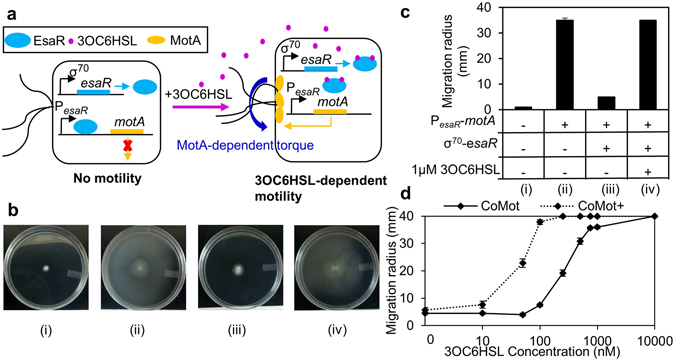
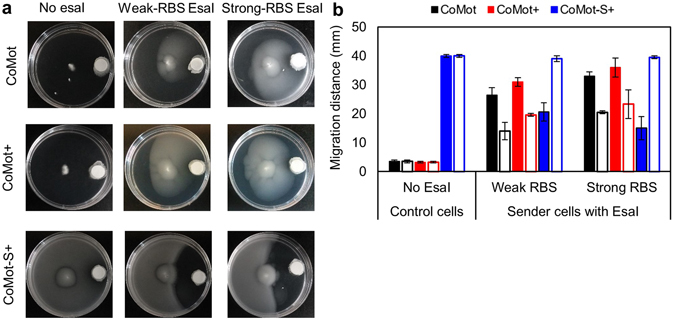
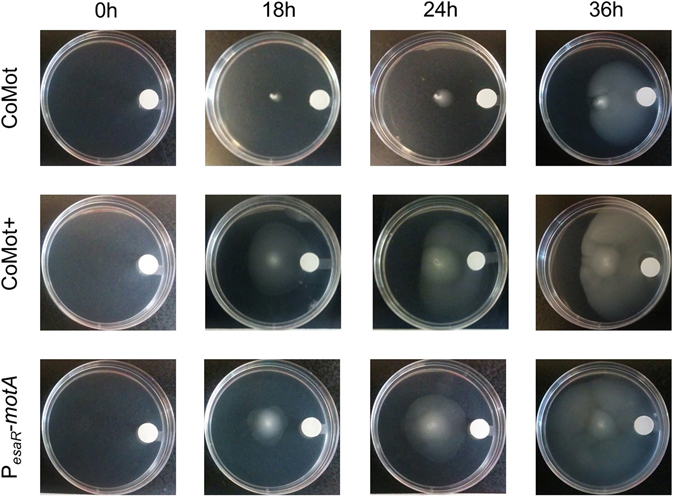
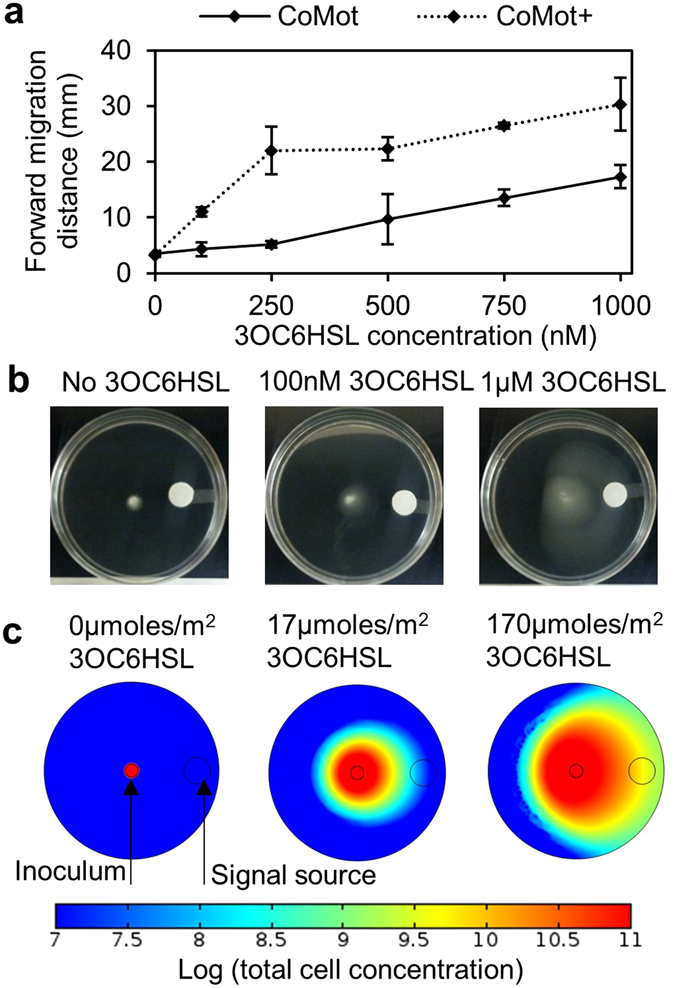
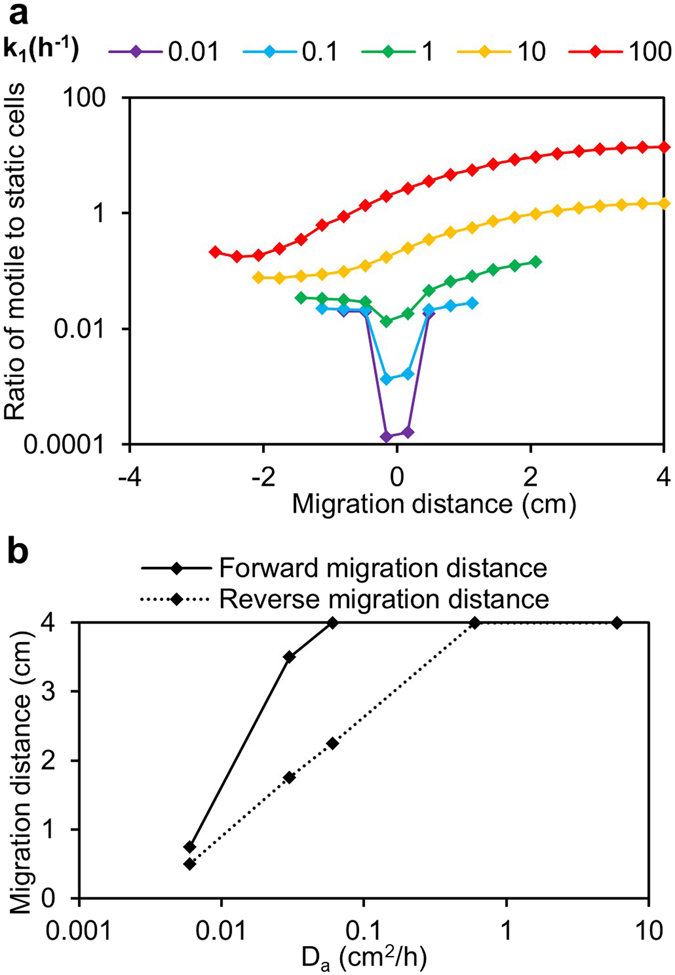
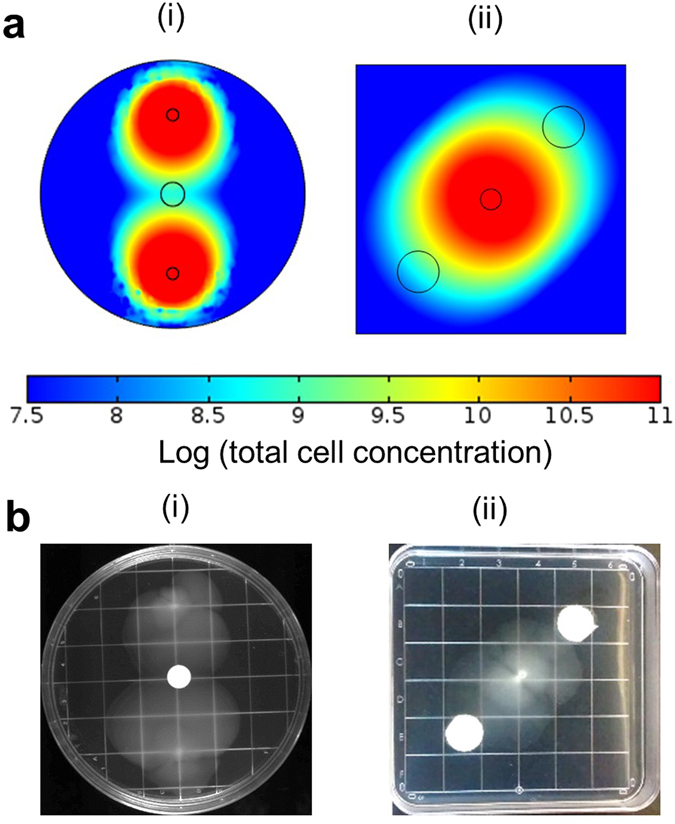
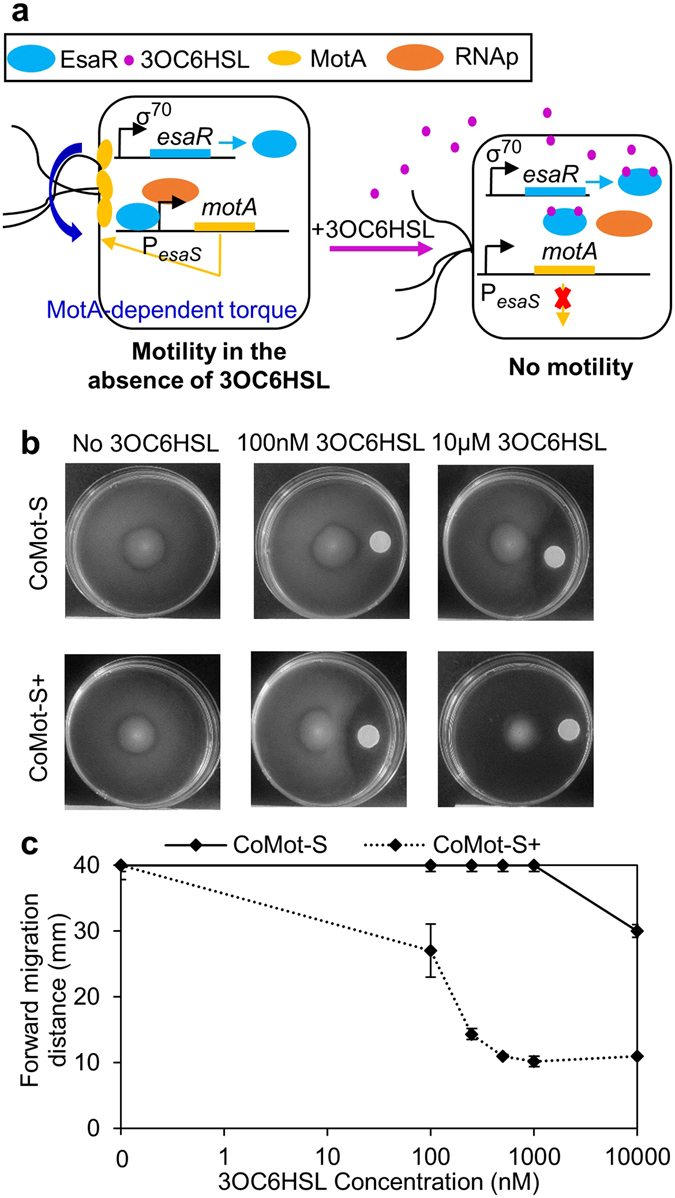
Manipulation of cellular motility using a target signal can facilitate the development of biosensors or microbe-powered biorobots. Here, we engineered signal-dependent motility in Escherichia coli via the transcriptional control of a key motility gene. Without manipulating chemotaxis, signal-dependent switching of motility, either on or off, led to population-level directional movement of cells up or down a signal gradient. We developed a mathematical model that captures the behaviour of the cells, enables identification of key parameters controlling system behaviour, and facilitates predictive-design of motility-based pattern formation. We demonstrated that motility of the receiver strains could be controlled by a sender strain generating a signal gradient. The modular quorum sensing-dependent architecture for interfacing different senders with receivers enabled a broad range of systems-level behaviours. The directional control of motility, especially combined with the potential to incorporate tuneable sensors and more complex sensing-logic, may lead to tools for novel biosensing and targeted-delivery applications.
利用目标信号来操纵细胞运动,可以促进生物传感器或微生物驱动的生物机器人的发展。在这里,我们通过关键运动基因的转录控制,在大肠杆菌中构建了信号依赖性运动。在不操纵趋化作用的情况下,运动的信号依赖性切换(开或关)导致细胞在信号梯度上向上或向下的群体水平定向运动。我们开发了一个数学模型,该模型可以捕捉细胞的行为,确定控制系统行为的关键参数,并有助于基于运动的图案形成的预测设计。我们证明了,通过发送菌株产生信号梯度,可以控制接收菌株的运动能力。用于将不同发送器与接收器进行接口连接的模块化群体感应依赖性架构,实现了广泛的系统级行为。运动的定向控制,特别是与可调节传感器和更复杂的传感逻辑相结合,可能会为新型生物传感和靶向输送应用提供工具。