Gierczik Krisztián, Novák Aliz, Ahres Mohamed, Székely András, Soltész Alexandra, Boldizsár Ákos, Gulyás Zsolt, Kalapos Balázs, Monostori István, Kozma-Bognár László, Galiba Gábor, Vágújfalvi Attila
Agricultural Institute, Centre for Agricultural Research, Hungarian Academy of Sciences, 2462 Martonvásár, Hungary.
Festetics Doctoral School, Georgikon Faculty, University of Pannonia, 8360 Keszthely, Hungary.
Int J Mol Sci. 2017 Aug 22;18(8):1828. doi: 10.3390/ijms18081828.
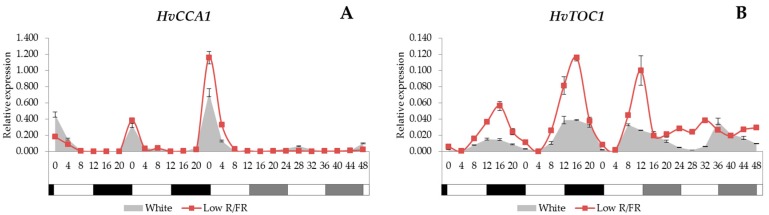
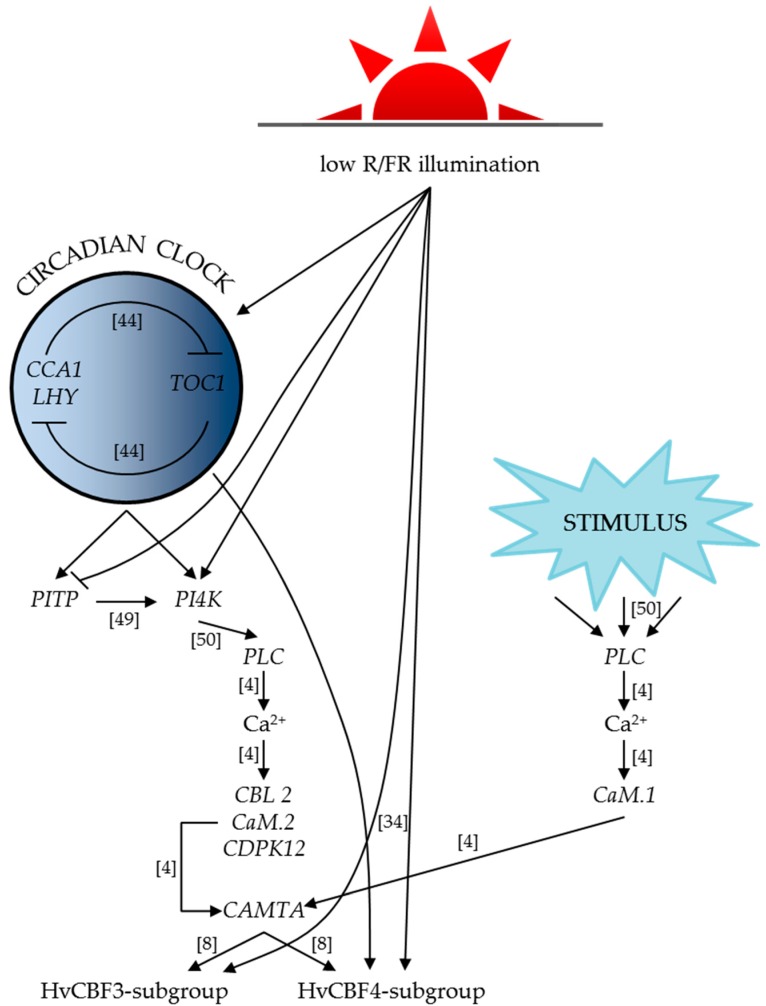
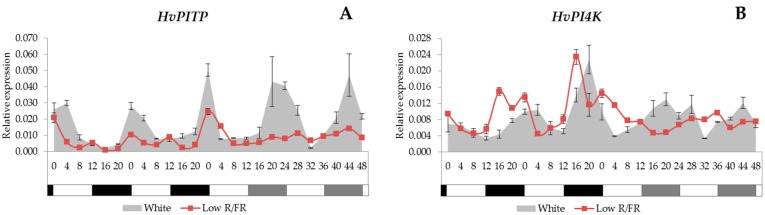
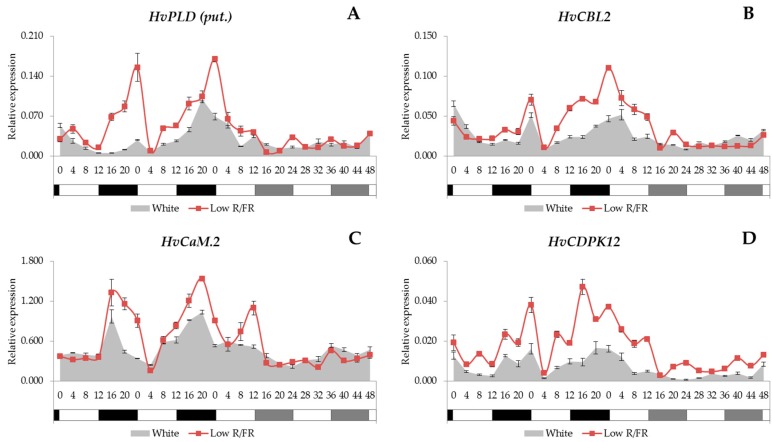
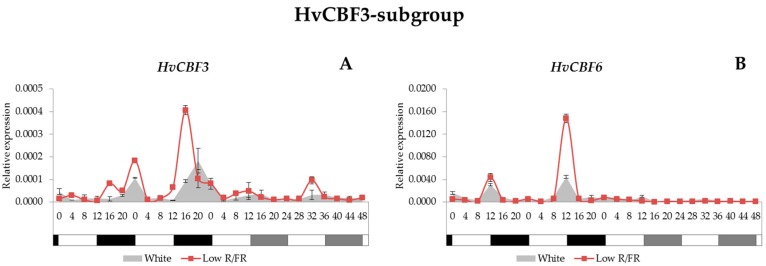
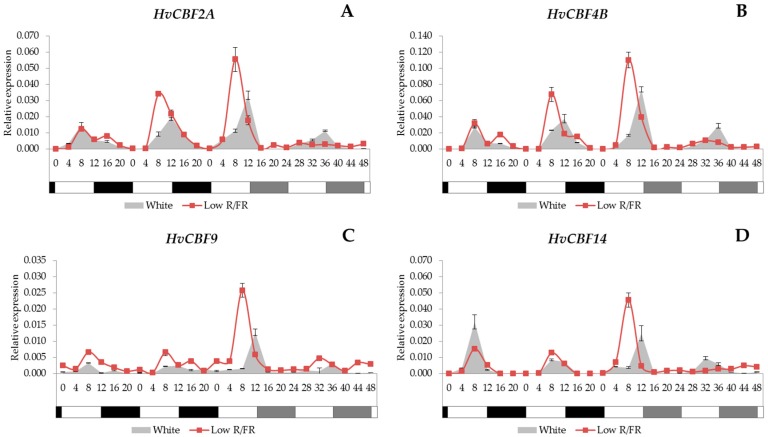
CBF (C-repeat binding factor) transcription factors show high expression levels in response to cold; moreover, they play a key regulatory role in cold acclimation processes. Recently, however, more and more information has led to the conclusion that, apart from cold, light-including its spectra-also has a crucial role in regulating expression. Earlier, studies established that the expression patterns of some of these regulatory genes follow circadian rhythms. To understand more of this complex acclimation process, we studied the expression patterns of the signal transducing pathways, including signal perception, the circadian clock and phospholipid signalling pathways, upstream of the gene regulatory hub. To exclude the confounding effect of cold, experiments were carried out at 22 °C. Our results show that the expression of genes implicated in the phospholipid signalling pathway follow a circadian rhythm. We demonstrated that, from among the tested genes expressed in () under our conditions, only the members of the HvCBF4-phylogenetic subgroup showed a circadian pattern. We found that the HvCBF4-subgroup genes were expressed late in the afternoon or early in the night. We also determined the expression changes under supplemental far-red illumination and established that the transcript accumulation had appeared four hours earlier and more intensely in several cases. Based on our results, we propose a model to illustrate the effect of the circadian clock and the quality of the light on the elements of signalling pathways upstream of the s, thus integrating the complex regulation of the early cellular responses, which finally lead to an elevated abiotic stress tolerance.
C-重复结合因子(CBF)转录因子在响应低温时表达水平较高;此外,它们在低温驯化过程中发挥关键调节作用。然而,最近越来越多的信息表明,除了低温外,光(包括其光谱)在调节基因表达方面也起着至关重要的作用。早些时候,研究表明其中一些调控基因的表达模式遵循昼夜节律。为了更深入了解这一复杂的驯化过程,我们研究了基因调控枢纽上游信号转导途径的表达模式,包括信号感知、生物钟和磷脂信号途径。为了排除低温的混杂效应,实验在22℃下进行。我们的结果表明,参与磷脂信号途径的基因表达遵循昼夜节律。我们证明,在我们的条件下,在()中表达的测试基因中,只有HvCBF4系统发育亚组的成员表现出昼夜模式。我们发现HvCBF-4亚组基因在下午晚些时候或夜间早些时候表达。我们还确定了补充远红光照射下的表达变化,并确定转录本积累在几种情况下提前4小时出现且强度更大。基于我们的结果,我们提出了一个模型来说明生物钟和光质对s上游信号通路元件的影响,从而整合早期细胞反应的复杂调控,最终导致非生物胁迫耐受性提高。