Askitas Nikolaos
IZA - Institute of Labor Economics, Schaumburg-Lippe-Str. 5/9, D-53113, Bonn Germany.
PLoS One. 2017 Aug 22;12(8):e0183277. doi: 10.1371/journal.pone.0183277. eCollection 2017.
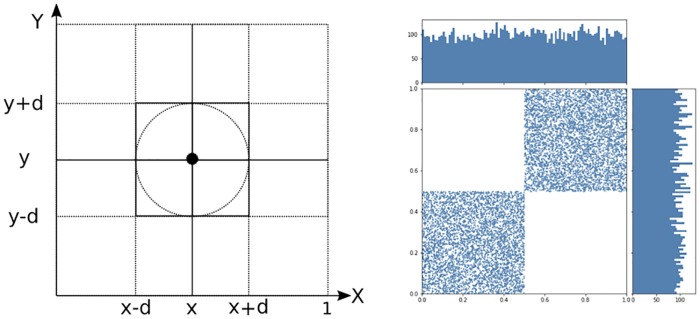
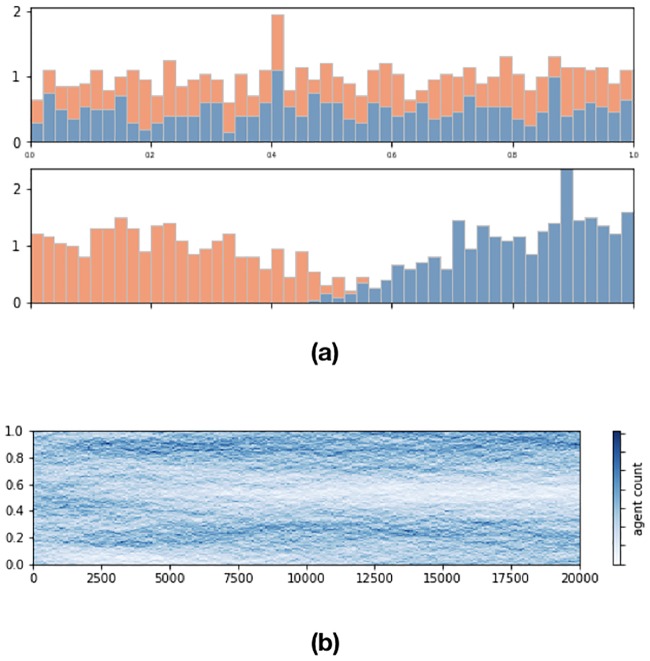
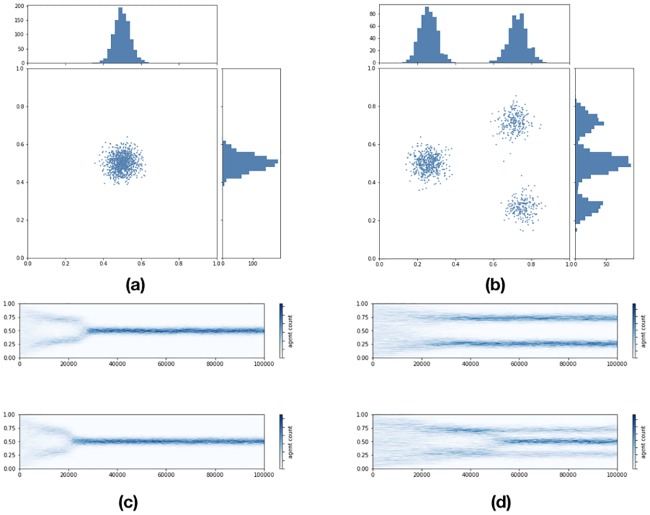
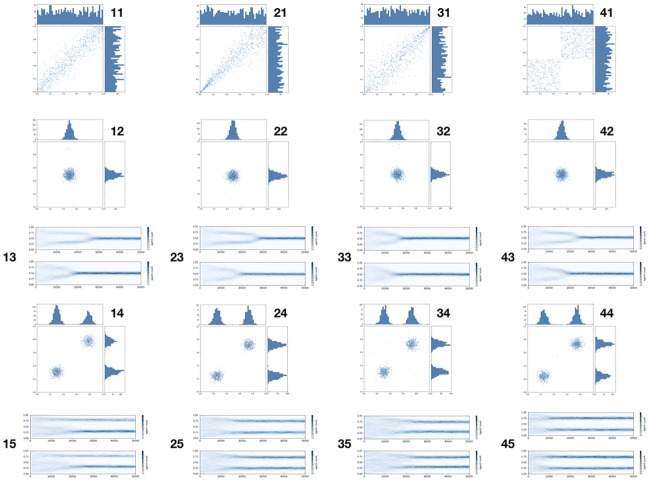
An empirically founded and widely established driving force in opinion dynamics is homophily i.e. the tendency of "birds of a feather" to "flock together". The closer our opinions are the more likely it is that we will interact and converge. Models using these assumptions are called bounded confidence models (BCM) as they assume a tolerance threshold after which interaction is unlikely. They are known to produce one or more clusters, depending on the size of the bound, with more than one cluster being possible only in the deterministic case. Introducing noise, as is likely to happen in a stochastic world, causes BCM to produce consensus which leaves us with the open problem of explaining the emergence and sustainance of opinion clusters and polarisation. We investigate the role of heterogeneous priors in opinion formation, introduce the concept of opinion copulas, argue that it is well supported by findings in Social Psychology and use it to show that the stochastic BCM does indeed produce opinion clustering without the need for extra assumptions.
在观点动态变化中,一个基于经验且广泛确立的驱动力是同质性,即“物以类聚”的倾向。我们的观点越相近,就越有可能进行互动并趋同。使用这些假设的模型被称为有界置信模型(BCM),因为它们假定了一个容忍阈值,超过该阈值后互动就不太可能发生。已知它们会产生一个或多个聚类,这取决于边界的大小,只有在确定性情况下才可能出现多个聚类。引入噪声,这在随机世界中很可能发生,会导致BCM产生共识,这就给我们留下了一个有待解决的问题,即解释观点聚类和两极分化的出现与持续存在。我们研究了异质先验在观点形成中的作用,引入了观点连接函数的概念,认为它得到了社会心理学研究结果的有力支持,并利用它表明随机BCM确实能够产生观点聚类,而无需额外的假设。