Department of Biomedical Engineering, Yale University, New Haven, CT 06511, USA.
Department of Dermatology, Yale University, New Haven, CT 06520, USA.
Biomaterials. 2017 Nov;144:144-154. doi: 10.1016/j.biomaterials.2017.08.029. Epub 2017 Aug 15.
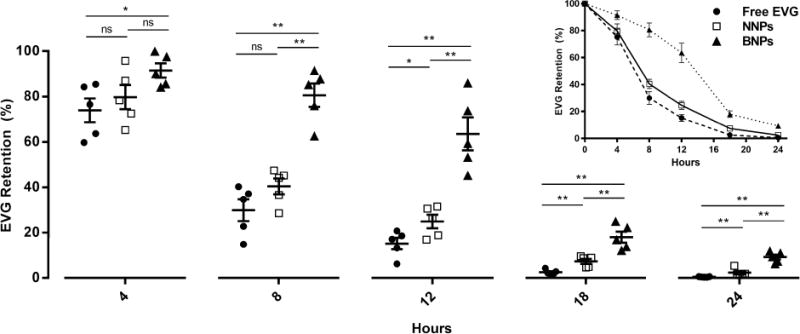
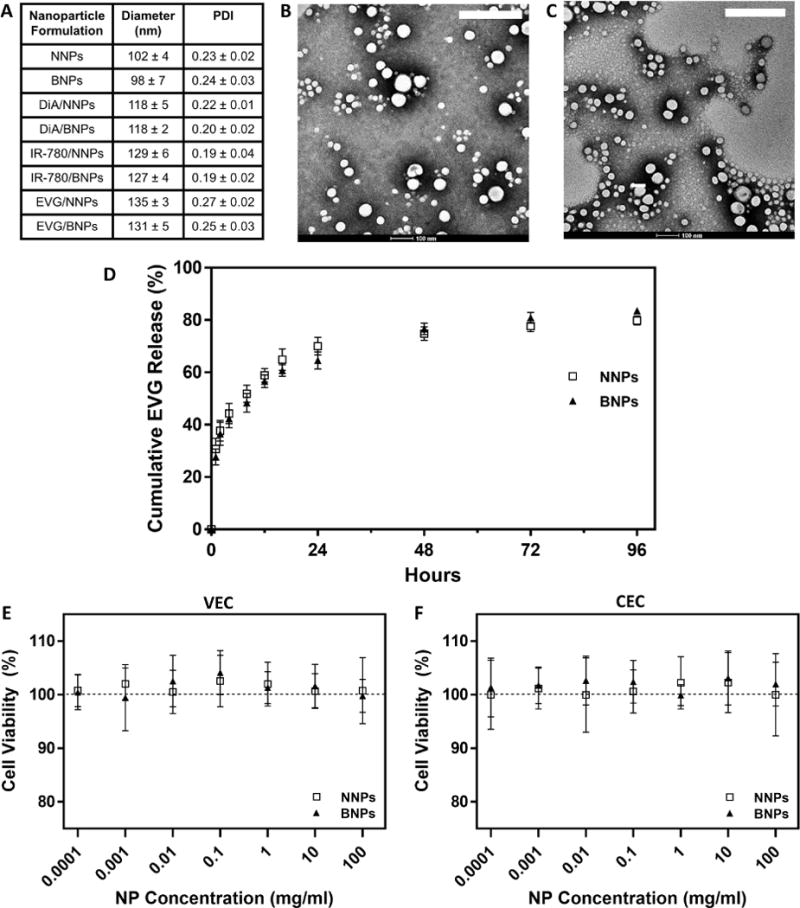
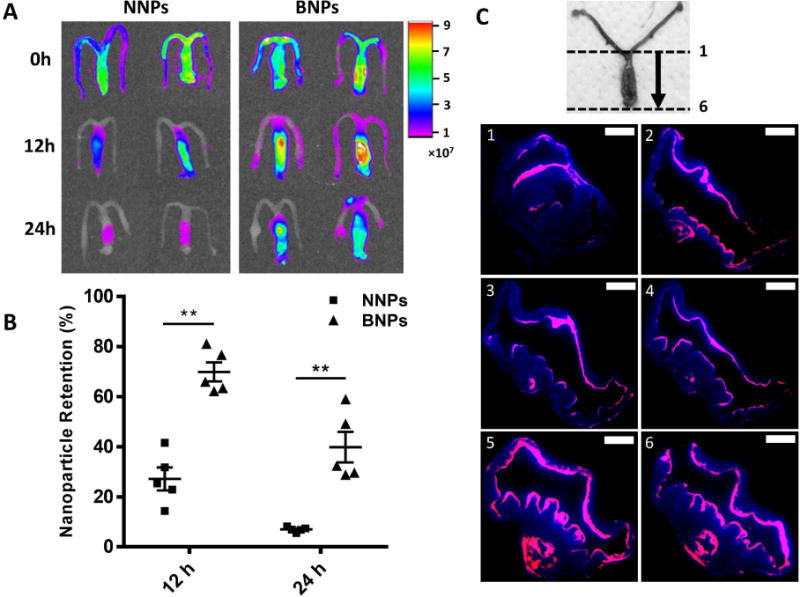
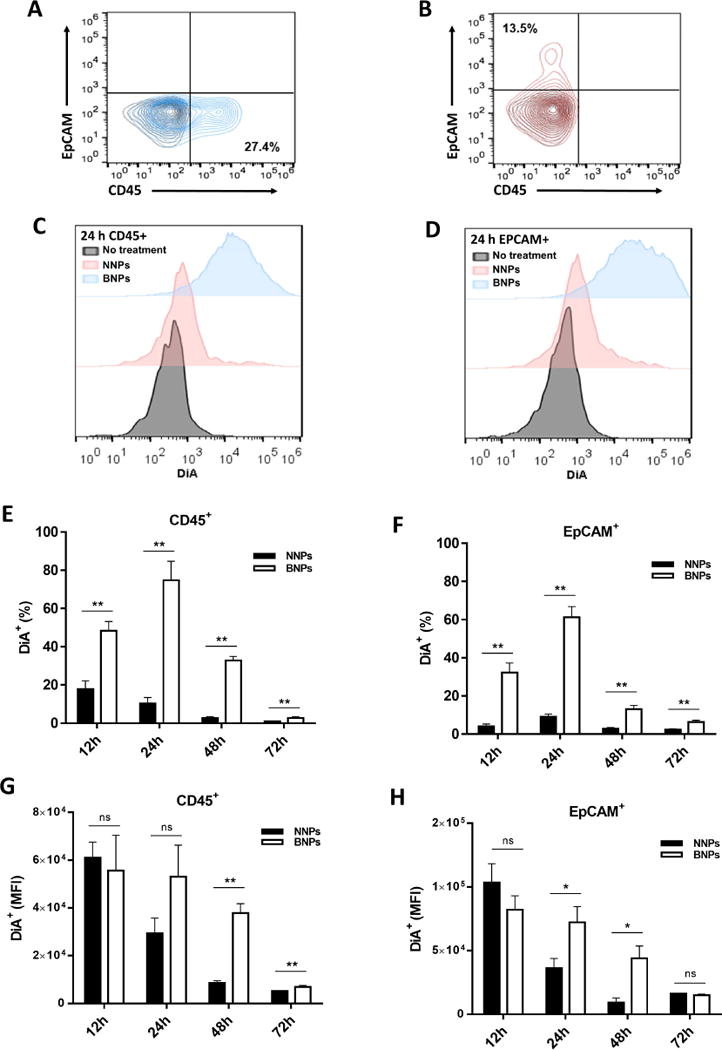
New methods for long-lasting protection against sexually transmitted disease, such as the human immunodeficiency virus (HIV), are needed to help reduce the severity of STD epidemics, especially in developing countries. Intravaginal delivery of therapeutics has emerged as a promising strategy to provide women with local protection, but residence times of such agents are greatly reduced by the protective mucus layer, fluctuating hormone cycle, and complex anatomical structure of the reproductive tract. Polymeric nanoparticles (NPs) capable of encapsulating the desired cargo, penetrating through the mucosal surfaces, and delivering agents to the site of action have been explored. However, prolonged retention of polymer carriers and their enclosed materials may also be needed to ease adherence and confer longer-lasting protection against STDs. Here, we examined the fate of two poly (lactic acid)-hyperbranched polyglycerols (PLA-HPG) NP formulations - 1) nonadhesive PLA-HPG NPs (NNPs) and 2) surface-modified bioadhesive NPs (BNPs) - loaded with the antiretroviral elvitegravir (EVG) after intravaginal administration. BNP distribution was widespread throughout the reproductive tract, and retention was nearly 5 times higher than NNPs after 24 h. Moreover, BNPs were found to be highly associated with submucosal leukocytes and epithelial cell populations for up to 48 h after topical application, and EVG was retained significantly better in the vaginal lumen when delivered with BNPs as opposed to NNPs over a 24 h period. Our results suggest that bioadhesive PLA-HPG NPs can greatly improve and prolong intravaginal delivery of agents, which may hold potential in providing sustained protection over longer durations.
需要新的方法来长期预防性传播疾病,例如人类免疫缺陷病毒 (HIV),以帮助减轻性传播疾病的流行程度,尤其是在发展中国家。经阴道给药已成为为女性提供局部保护的一种有前途的策略,但由于保护性粘液层、波动的激素周期和生殖道的复杂解剖结构,这些制剂的驻留时间大大缩短。已经探索了能够包封所需货物、穿透粘膜表面并将药物递送到作用部位的聚合物纳米颗粒 (NPs)。然而,为了便于粘附并提供更长时间的性传播疾病保护,可能还需要延长聚合物载体及其包封材料的保留时间。在这里,我们研究了两种聚(乳酸)-超支化聚甘油(PLA-HPG)NP 制剂的命运 - 1)非粘附 PLA-HPG NPs(NNPs)和 2)表面修饰的生物粘附 NPs(BNPs)- 负载抗逆转录病毒依维莫司(EVG)经阴道给药后。BNP 分布在整个生殖道中广泛分布,并且在 24 小时后保留率几乎是 NNPs 的 5 倍。此外,研究发现,BNPs 在局部应用后长达 48 小时内与粘膜下白细胞和上皮细胞群高度相关,与 NNPs 相比,BNPs 在阴道腔中保留 EVG 的时间明显更长在 24 小时内。我们的研究结果表明,生物粘附 PLA-HPG NPs 可以大大改善和延长药物的经阴道给药,这在提供更长时间的持续保护方面可能具有潜力。