Chowell Gerardo, Cleaton Julie M, Viboud Cecile
School of Public Health, Georgia State University, Atlanta.
Division of International Epidemiology and Population Studies, Fogarty International Center, National Institutes of Health, Bethesda, Maryland.
J Infect Dis. 2016 Dec 1;214(suppl_4):S421-S426. doi: 10.1093/infdis/jiw356.
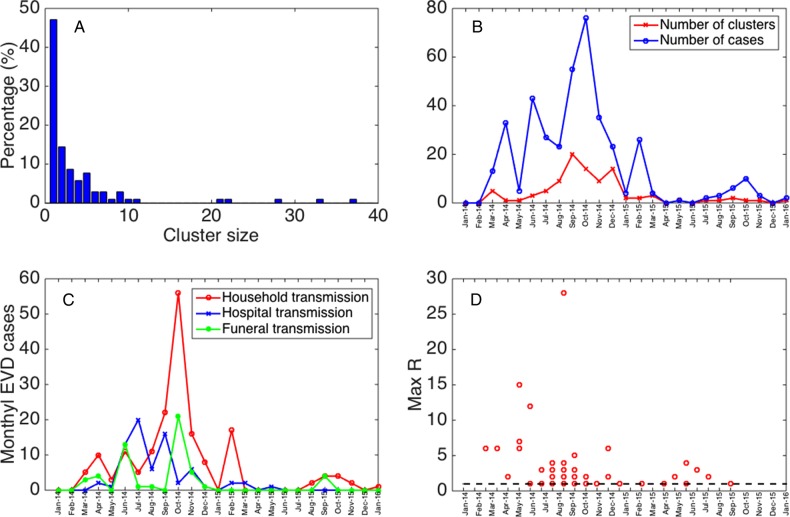
The paucity of traditional epidemiological data during epidemic emergencies calls for alternative data streams to characterize the key features of an outbreak, including the nature of risky exposures, the reproduction number, and transmission heterogeneities. We illustrate the potential of Internet data streams to improve preparedness and response in outbreak situations by drawing from recent work on the 2014-2015 Ebola epidemic in West Africa and the 2015 Middle East respiratory syndrome (MERS) outbreak in South Korea. We show that Internet reports providing detailed accounts of epidemiological clusters are particularly useful to characterize time trends in the reproduction number. Moreover, exposure patterns based on Internet reports align with those derived from epidemiological surveillance data on MERS and Ebola, underscoring the importance of disease amplification in hospitals and during funeral rituals (associated with Ebola), prior to the implementation of control interventions. Finally, we discuss future developments needed to generalize Internet-based approaches to study transmission dynamics.
在疫情紧急情况期间,传统流行病学数据匮乏,因此需要其他数据流来描述疫情的关键特征,包括风险暴露的性质、繁殖数和传播异质性。我们通过借鉴近期关于2014 - 2015年西非埃博拉疫情和2015年韩国中东呼吸综合征(MERS)疫情的研究,阐述了互联网数据流在改善疫情应对准备和响应方面的潜力。我们表明,提供疫情集群详细情况的互联网报告对于描述繁殖数的时间趋势特别有用。此外,基于互联网报告的暴露模式与从MERS和埃博拉的流行病学监测数据得出的模式一致,凸显了在实施控制干预措施之前,医院以及葬礼仪式期间(与埃博拉有关)疾病传播放大的重要性。最后,我们讨论了推广基于互联网的方法来研究传播动态所需的未来发展方向。