Grabowski Jeffrey M, Gulia-Nuss Monika, Kuhn Richard J, Hill Catherine A
Department of Entomology, College of Agriculture, Purdue University, 901 W State Street, West Lafayette, IN, 47907, USA.
Markey Center for Structural Biology, Department of Biological Sciences, College of Science, Purdue University, 915 W State Street, West Lafayette, IN, 47907, USA.
Parasit Vectors. 2017 Jan 13;10(1):24. doi: 10.1186/s13071-016-1944-0.
Tick-borne flaviviruses (TBFs) cause thousands of human cases of encephalitis worldwide each year, with some TBF infections progressing to hemorrhagic fever. TBFs are of medical and veterinary importance and strategies to reduce flavivirus transmission by the tick vector may have significant application. Analyses of the proteome of ISE6 cells derived from the black legged tick, Ixodes scapularis infected with the TBF, Langat virus (LGTV), have provided insights into proteins and cellular processes involved with LGTV infection.
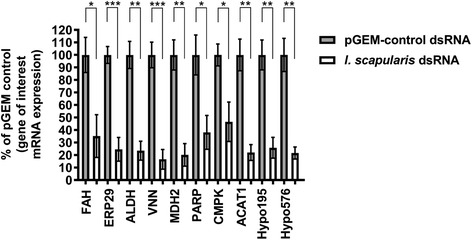
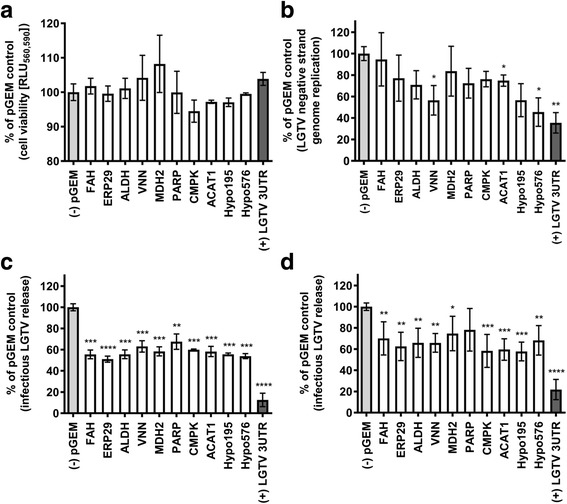
RNA interference (RNAi)-induced knockdown of transcripts was used to investigate the role of ten tick proteins in the LGTV infection cycle in ISE6 cells. LGTV-infected cells were separately transfected with dsRNA corresponding to each gene of interest and the effect on LGTV genome replication and release of infectious virus was assessed by RT-qPCR and plaque assays, respectively.
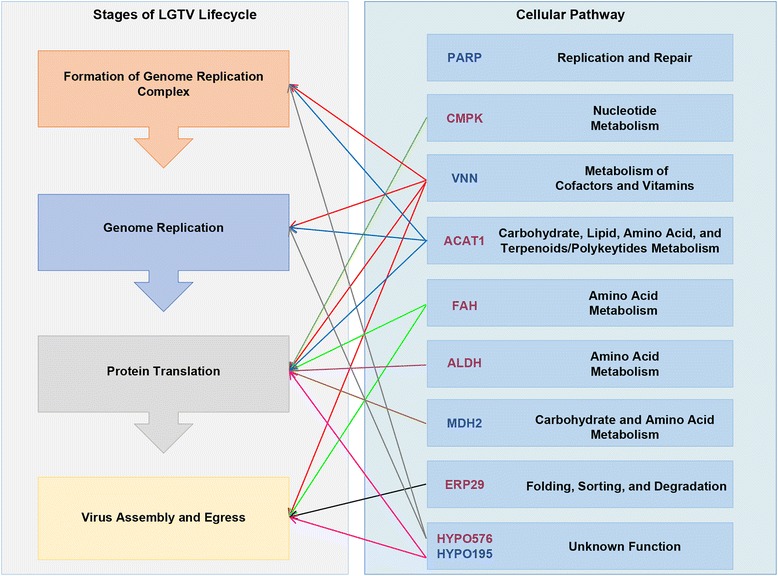
RNAi-induced knockdown of transcripts for two enzymes that likely function in amino acid, carbohydrate, lipid, terpenoid/polykeytide and vitamin metabolism, and a transcript for one protein of unknown function were associated with decreased replication of the LGTV genome and release of infectious virus from cells. The knockdown of transcripts for five enzymes predicted to function in metabolism, a protein likely associated with folding, sorting and degradation, and a protein of unknown function was associated with a decrease only in the amount of infectious LGTV released from cells.
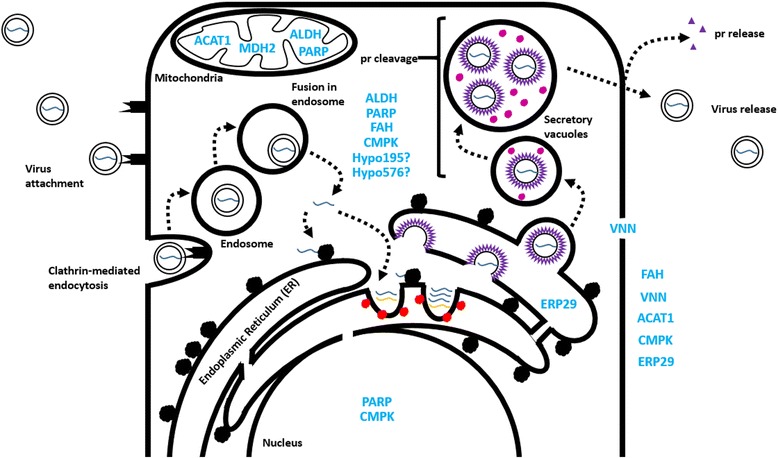
These data suggest tick proteins potentially associated with metabolism and protein processing may be involved in LGTV infection of ISE6 cells. Our study provides information to begin to elucidate the function of these proteins and identify targets for the development of new interventions aimed at controlling the transmission of TBFs.
蜱传黄病毒(TBFs)每年在全球导致数千例人类脑炎病例,一些TBF感染会发展为出血热。TBFs具有医学和兽医学重要性,减少蜱传播黄病毒的策略可能具有重要应用价值。对感染了TBF——兰加特病毒(LGTV)的肩突硬蜱衍生的ISE6细胞的蛋白质组分析,为了解与LGTV感染相关的蛋白质和细胞过程提供了见解。
采用RNA干扰(RNAi)诱导的转录本敲低技术,研究10种蜱蛋白在ISE6细胞LGTV感染周期中的作用。用对应于每个目的基因的dsRNA分别转染感染LGTV的细胞,分别通过RT-qPCR和噬斑试验评估对LGTV基因组复制和感染性病毒释放的影响。
RNAi诱导敲低两种可能在氨基酸、碳水化合物、脂质、萜类/多聚酮和维生素代谢中发挥作用的酶的转录本,以及一种功能未知的蛋白质的转录本,与LGTV基因组复制减少和感染性病毒从细胞中释放减少有关。敲低预测在代谢中发挥作用的5种酶、一种可能与折叠、分选和降解相关的蛋白质以及一种功能未知的蛋白质的转录本,仅与从细胞中释放的感染性LGTV数量减少有关。
这些数据表明,可能与代谢和蛋白质加工相关的蜱蛋白可能参与ISE6细胞的LGTV感染。我们的研究提供了信息,以开始阐明这些蛋白质的功能,并确定旨在控制TBF传播的新干预措施的开发靶点。