de Witt Audra, Cunningham Frances C, Bailie Ross, Bernardes Christina M, Matthews Veronica, Arley Brian, Meiklejohn Judith A, Garvey Gail, Adams Jon, Martin Jennifer H, Walpole Euan T, Williamson Daniel, Valery Patricia C
Menzies School of Health Research, Brisbane, QLD, Australia.
Charles Darwin University, Darwin, NT, Australia.
Front Public Health. 2017 Aug 7;5:199. doi: 10.3389/fpubh.2017.00199. eCollection 2017.
Aboriginal and Torres Strait Islander Australians have poorer cancer outcomes and experience 30% higher mortality rates compared to non-Indigenous Australians. Primary health care (PHC) services are increasingly being recognized as pivotal in improving Indigenous cancer patient outcomes. It is currently unknown whether patient information systems and practices in PHC settings accurately record Indigenous and cancer status. Being able to identify Indigenous cancer patients accessing services in PHC settings is the first step in improving outcomes.
Aboriginal Medical Centres, mainstream (non-Indigenous specific), and government-operated centers in Queensland were contacted and data were collected by telephone during the period from 2014 to 2016. Participants were asked to (i) identify the number of patients diagnosed with cancer attending the service in the previous year; (ii) identify the Indigenous status of these patients and if this information was available; and (iii) advise how this information was obtained.
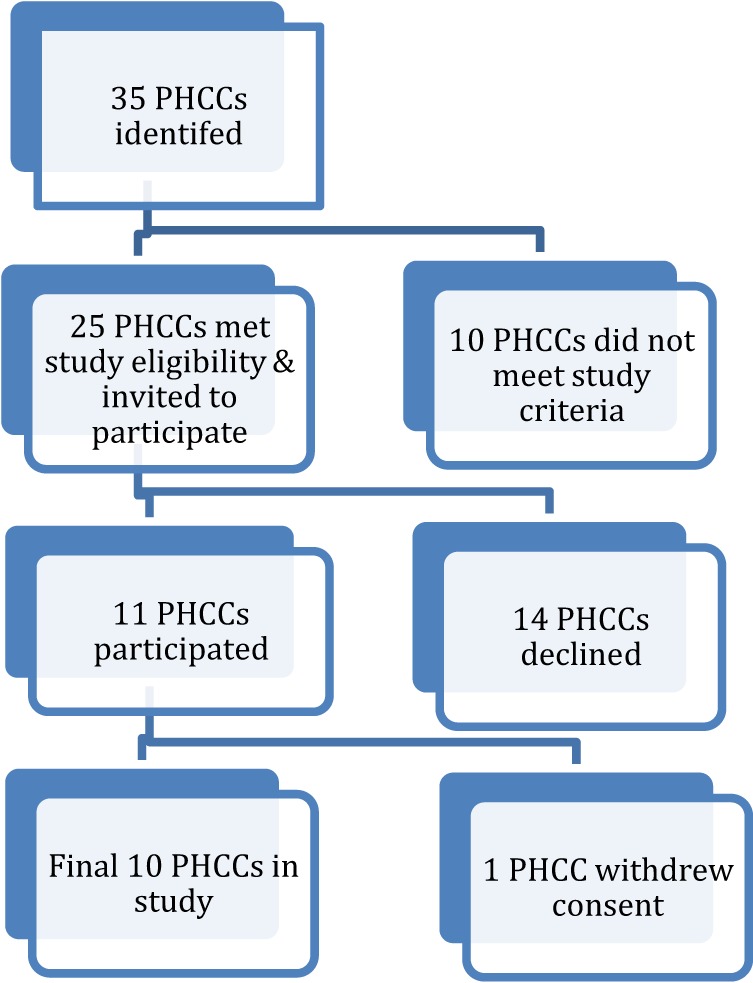
Ten primary health care centers (PHCCs) across Queensland participated in this study. Four centers were located in regional areas, three in remote areas and three in major cities. All participating centers reported ability to identify Indigenous cancer patients attending their service and utilizing electronic Patient Care Information Systems (PCIS) to manage their records; however, not all centers were able to identify Indigenous cancer patients in this way. Indigenous cancer patients were identified by PHCCs using PCIS ( = 8), searching paper records ( = 1), and combination of PCIS and staff recall ( = 1). Six different types of PCIS were being utilized by participating centers. There was no standardized way to identify Indigenous cancer patients across centers. Health service information systems, search functions and capacities of systems, and staff skill in extracting data using PCIS varied between centers.
It is crucial to be able to easily identify Indigenous cancer patients accessing health services in the PHC setting to monitor progress, improve and evaluate care, and ultimately improve Indigenous cancer outcomes. It is also important for PHC staff to receive adequate training and support to utilize PCISs efficiently and effectively.
与非原住民澳大利亚人相比,澳大利亚原住民和托雷斯海峡岛民的癌症治疗结果较差,死亡率高出30%。初级卫生保健(PHC)服务在改善原住民癌症患者治疗结果方面的关键作用日益得到认可。目前尚不清楚初级卫生保健机构中的患者信息系统和做法是否准确记录了原住民身份和癌症状况。能够识别在初级卫生保健机构接受服务的原住民癌症患者是改善治疗结果的第一步。
2014年至2016年期间,研究人员联系了昆士兰州的原住民医疗中心、主流(非特定原住民)和政府运营的中心,并通过电话收集数据。研究人员要求参与者:(i)确定前一年在该机构就诊且被诊断患有癌症的患者数量;(ii)确定这些患者的原住民身份以及该信息是否可得;(iii)说明该信息是如何获得的。
昆士兰州的10家初级卫生保健中心(PHCCs)参与了本研究。4家中心位于地区,3家在偏远地区,3家在主要城市。所有参与的中心都报告称有能力识别前来就诊的原住民癌症患者,并使用电子患者护理信息系统(PCIS)管理他们的记录;然而,并非所有中心都能以这种方式识别原住民癌症患者。PHCCs识别原住民癌症患者的方式有:使用PCIS(=8)、查阅纸质记录(=1)以及PCIS与工作人员回忆相结合(=1)。参与的中心使用了6种不同类型的PCIS。各中心识别原住民癌症患者的方法没有标准化。各中心之间,卫生服务信息系统、系统的搜索功能和能力以及工作人员使用PCIS提取数据的技能各不相同。
能够轻松识别在初级卫生保健机构接受卫生服务的原住民癌症患者对于监测进展、改善和评估护理以及最终改善原住民癌症治疗结果至关重要。初级卫生保健工作人员接受充分培训和支持以有效利用PCIS也很重要。