Wolfe Kate, Stueber Kerstin, McQuillin Andrew, Jichi Fatima, Patch Christine, Flinter Frances, Strydom André, Bass Nick
Division of Psychiatry, University College London, London, UK.
Biostatistics Group, Joint Research Office, University College London, London, UK.
J Appl Res Intellect Disabil. 2018 Mar;31(2):273-284. doi: 10.1111/jar.12391. Epub 2017 Aug 23.
An increasing number of genetic causes of intellectual disabilities (ID) are identifiable by clinical genetic testing, offering the prospect of bespoke patient management. However, little is known about the practices of psychiatrists and their views on genetic testing.
We undertook an online survey of 215 psychiatrists, who were contacted via the Royal College of Psychiatrist's Child and Adolescent and Intellectual Disability Psychiatry mailing lists.
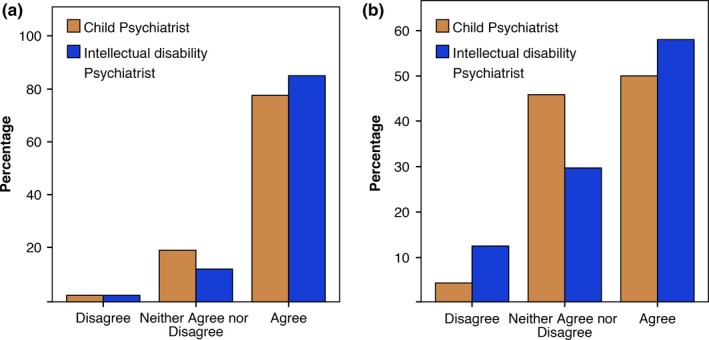
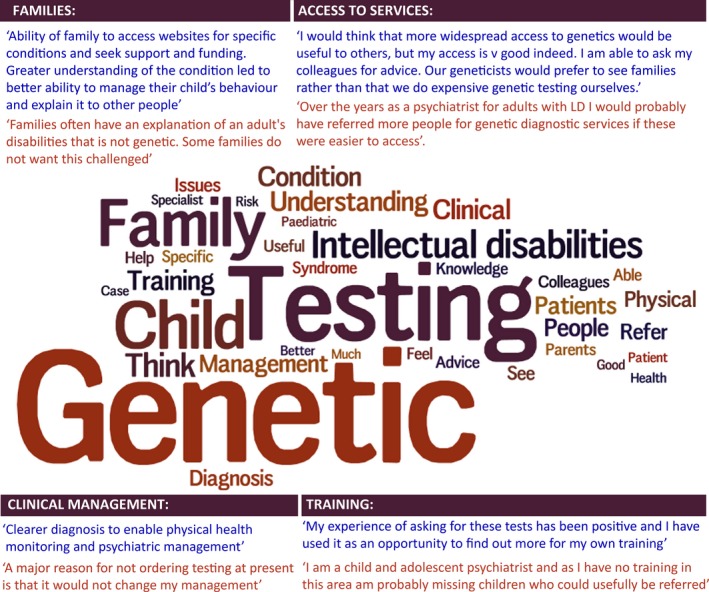
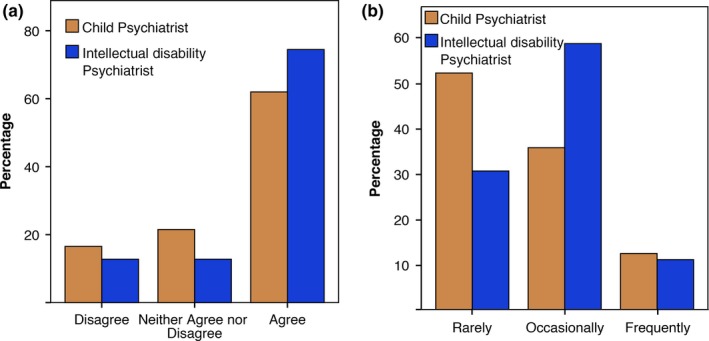
In comparison with child and adolescent psychiatrists, intellectual disability psychiatrists ordered more genetic tests, referred more patients to genetic services, and were overall more confident in the genetic testing process. Respondents tended to agree that genetic diagnoses can help patient management; however, management changes were infrequently found in clinical practice.
Differences are apparent in the existing views and practices of child and adolescent and intellectual disability psychiatrists. Developing training and collaboration with colleagues working in genetic services could help to reduce discrepancies and improve clinical practice.
通过临床基因检测可识别出越来越多导致智力残疾(ID)的遗传原因,这为定制患者管理方案提供了可能。然而,关于精神科医生的做法及其对基因检测的看法,我们所知甚少。
我们通过皇家精神科医学院儿童与青少年及智力残疾精神病学邮件列表,对215名精神科医生进行了在线调查。
与儿童和青少年精神科医生相比,智力残疾精神科医生开出的基因检测更多,将更多患者转诊至基因服务机构,并且总体上对基因检测过程更有信心。受访者倾向于认同基因诊断有助于患者管理;然而,在临床实践中很少发现管理方式有改变。
儿童和青少年精神科医生与智力残疾精神科医生在现有观点和做法上存在明显差异。开展培训并与从事基因服务的同事合作,可能有助于减少差异并改善临床实践。