Department of Pediatrics, Emma Children's Hospital, Amsterdam Gastroenterology Endocrinology Metabolism, Amsterdam UMC Location University of Amsterdam, Amsterdam, The Netherlands.
Emma Center for Personalized Medicine, Amsterdam UMC Location University of Amsterdam, Amsterdam, The Netherlands.
Orphanet J Rare Dis. 2024 Sep 16;19(1):346. doi: 10.1186/s13023-024-03323-6.
Advances in understanding the etiology of intellectual disability (ID) has led to insights in potential (targeted) treatments and personalized care. Implications of ID on health are often complex and require a multidisciplinary approach. The aim was to investigate the reporting of genetic diagnoses in multidisciplinary ID care and to identify associated clinical and demographic factors.
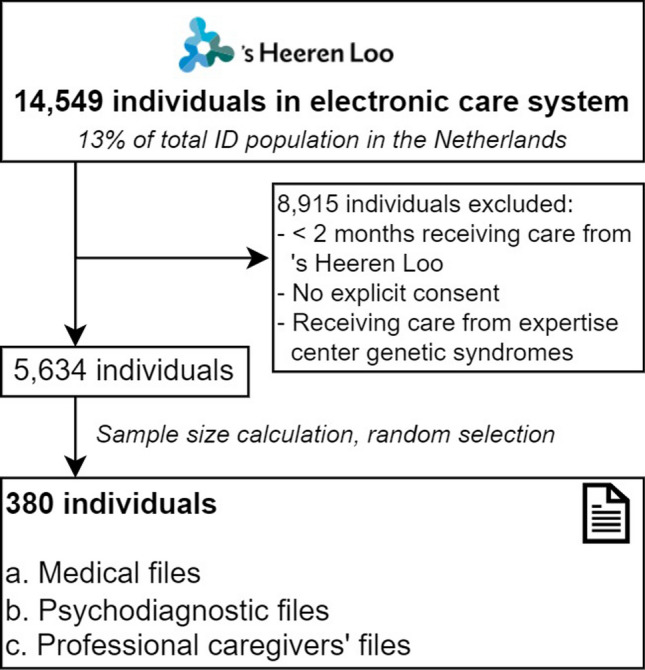
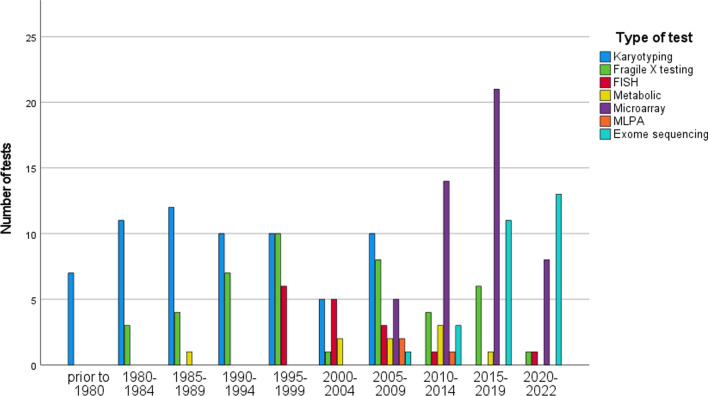
A retrospective chart review was performed on a randomly selected sample of individuals (n = 380) of a large ID care organization in the Netherlands. Data on genetic etiology, including genetic testing and diagnoses, and clinical and demographic characteristics were collected from files held by multidisciplinary team members.
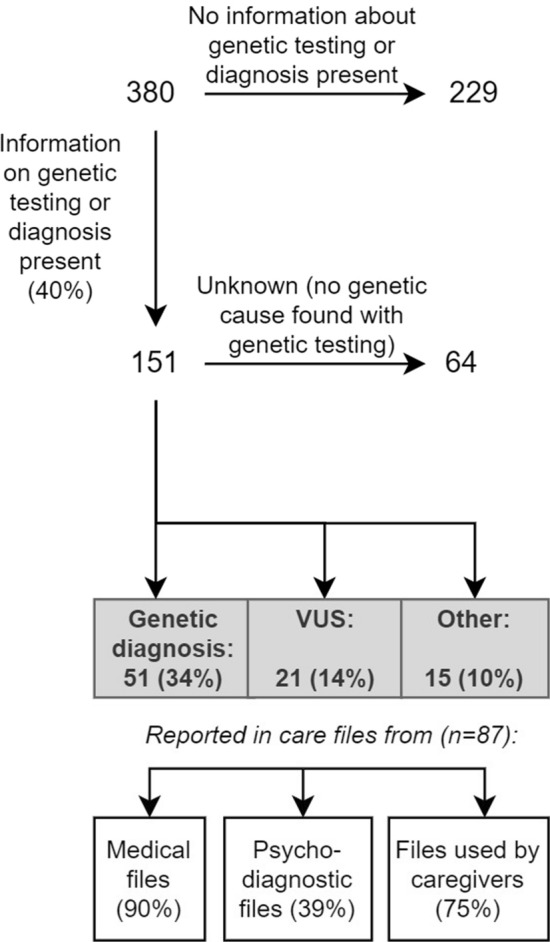
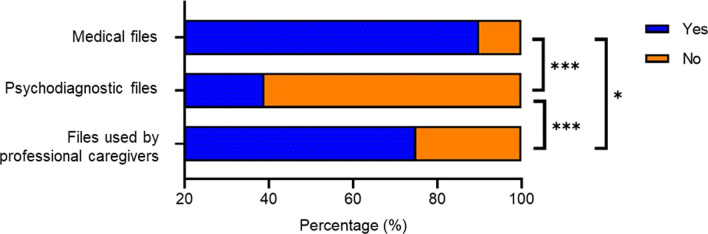
Reports on genetic etiology were available in 40% of the study sample (n = 151), with a genetic diagnosis recorded in 34% (n = 51), which is 13% of the total sample. In those with reported genetic diagnoses, this was reported in 90% of medical, 39% of psychodiagnostic, and 75% of professional caregivers' files. Older age, mild ID, and the legal representative not being a family member were associated with less reported information on genetic etiology.
This study revealed that genetic diagnoses were often not reported in ID care files. Recommendations were formulated to reduce delay in diagnosis, and enable personalized care for individuals with ID.
对智力障碍(ID)病因的深入了解为潜在(靶向)治疗和个性化护理提供了新的思路。ID 对健康的影响往往较为复杂,需要多学科方法。本研究旨在调查多学科 ID 护理中遗传诊断的报告情况,并确定相关的临床和人口统计学因素。
对荷兰一家大型 ID 护理机构的随机选择的个体样本(n=380)进行回顾性图表审查。从多学科团队成员的档案中收集有关遗传病因的数据,包括遗传检测和诊断以及临床和人口统计学特征。
研究样本中 40%(n=151)的报告中提供了遗传病因信息,其中 34%(n=51)记录了遗传诊断,占总样本的 13%。在有报告遗传诊断的患者中,90%的医疗记录、39%的心理诊断记录和 75%的专业护理人员记录中有遗传诊断信息。年龄较大、轻度 ID 以及法定代表不是家庭成员与遗传病因信息报告较少相关。
本研究表明,遗传诊断在 ID 护理档案中经常未被报告。提出了一些建议,以减少诊断延误,并为 ID 患者提供个性化护理。