Mendes Joana, Amaral Teresa F, Borges Nuno, Santos Alejandro, Padrão Patrícia, Moreira Pedro, Afonso Cláudia, Negrão Rita
Department of Biomedicine, Biochemistry Unit, Faculty of Medicine, University of Porto, Rua Dr. Plácido da Costa, 4200-450, Porto, Portugal.
I3S - Institute for Research and Innovation in Health, University of Porto, Rua Alfredo Allen, 208, 4200-135, Porto, Portugal.
BMC Geriatr. 2017 Aug 23;17(1):191. doi: 10.1186/s12877-017-0590-5.
Handgrip strength is used to identify sarcopenia and frailty phenotypes, being a potential predictor of mortality in older adults. However, uniformity is lacking in the reference values. This study aimed to describe handgrip strength values of older population aged ≥65 years in Portugal, considering the possible influence of anthropometric parameters.
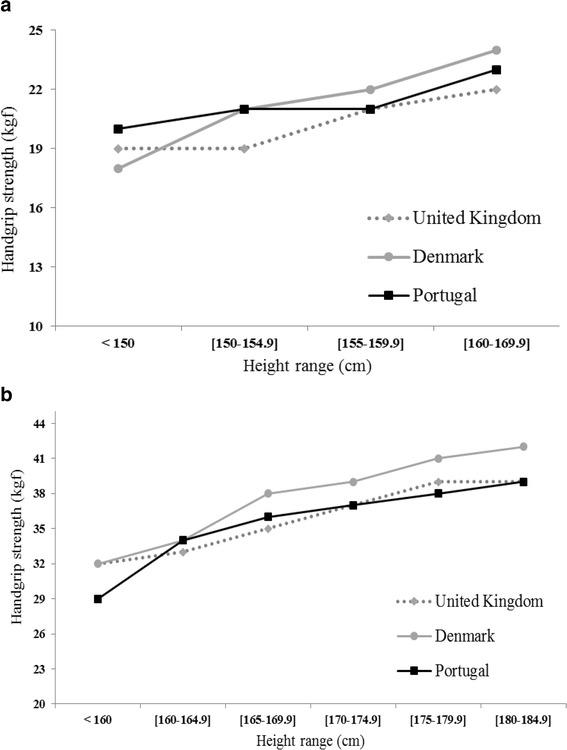
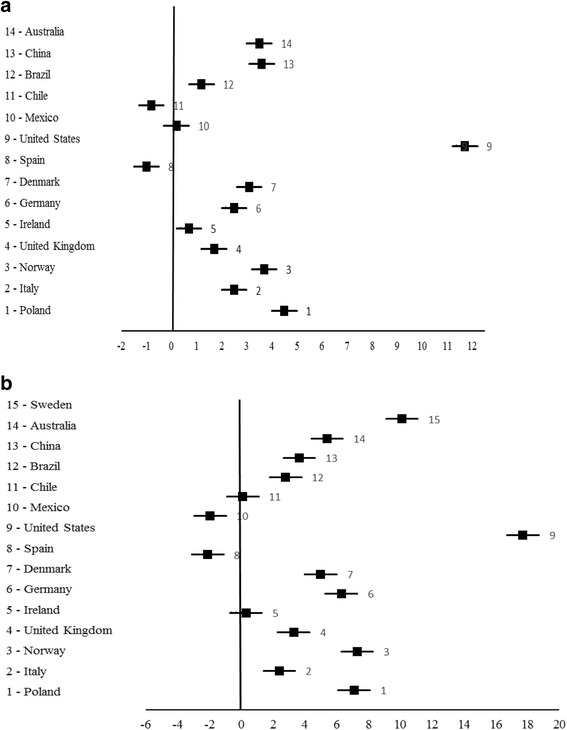
A cross-sectional study was conducted in Portugal, among 1500 older adults aged ≥65 years old, according to "The Nutrition UP 65 Study Protocol". Demographic data were collected and cognitive performance, subjective general health, physical activity, anthropometric parameters and nutritional status were assessed and analysed. Handgrip strength data was obtained with a Jamar dynamometer. A Pubmed/Medline search was carried out to compare handgrip strength data between Portuguese older adults and other older populations.
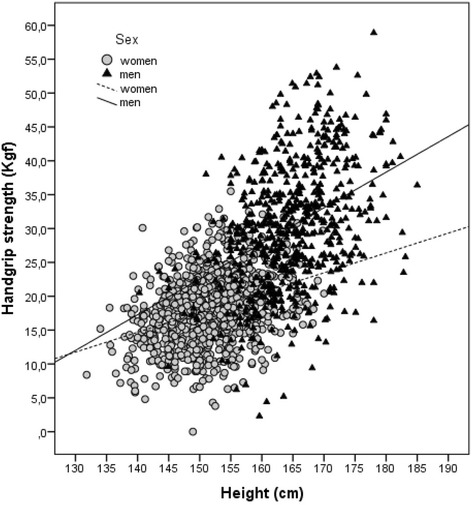
Handgrip strength was higher among men than among women (30.3 ± 9.2 Kgf vs 18 ± 5.4 Kgf, p < 0.001, respectively). In general, handgrip strength values of Portuguese older adults were lower than other older populations. In our sample, age, cognitive and nutritional status, self-reported sitting time and practice of physical activity were significantly correlated with handgrip strength in both sexes. Concerning anthropometric parameters, height was the most significantly correlated with handgrip strength (r = 0.34, p < 0.001, in women and r = 0.40, p < 0.001, in men).
This study described, for the first time, handgrip strength values of Portuguese population aged ≥65 years, according to age and to sex-specific tertiles of height. The definition of handgrip strength reference values in this age group merits further reflection.
握力用于识别肌肉减少症和衰弱表型,是老年人死亡率的潜在预测指标。然而,参考值缺乏统一性。本研究旨在描述葡萄牙≥65岁老年人群的握力值,并考虑人体测量参数可能产生的影响。
根据“65岁以上营养改善研究方案”,在葡萄牙对1500名≥65岁的老年人进行了一项横断面研究。收集人口统计学数据,并对认知能力、主观总体健康状况、身体活动、人体测量参数和营养状况进行评估与分析。使用Jamar握力计获取握力数据。通过PubMed/Medline检索,比较葡萄牙老年人与其他老年人群的握力数据。
男性的握力高于女性(分别为30.3±9.2千克力和18±5.4千克力,p<0.001)。总体而言,葡萄牙老年人的握力值低于其他老年人群。在我们的样本中,年龄、认知和营养状况、自我报告的坐姿时间以及体育活动与两性的握力均显著相关。关于人体测量参数,身高与握力的相关性最为显著(女性中r=0.34,p<0.001;男性中r=0.40,p<0.001)。
本研究首次按年龄和身高的性别特异性三分位数描述了葡萄牙≥65岁人群的握力值。该年龄组握力参考值的定义值得进一步思考。