School of Food Science, Washington State University, Pullman, WA 99164, USA.
School of Food Science, University of Idaho, Moscow, ID 83844, USA.
Open Biol. 2017 Aug;7(8). doi: 10.1098/rsob.170104.
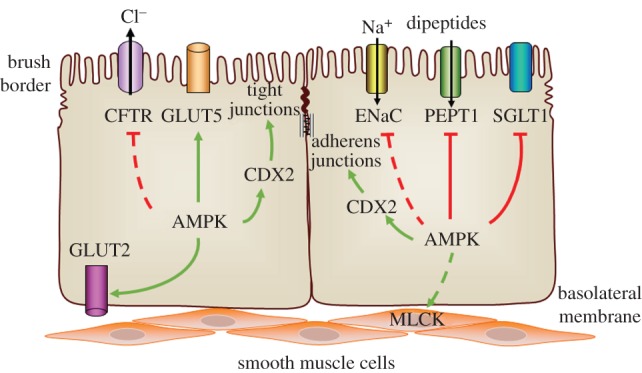
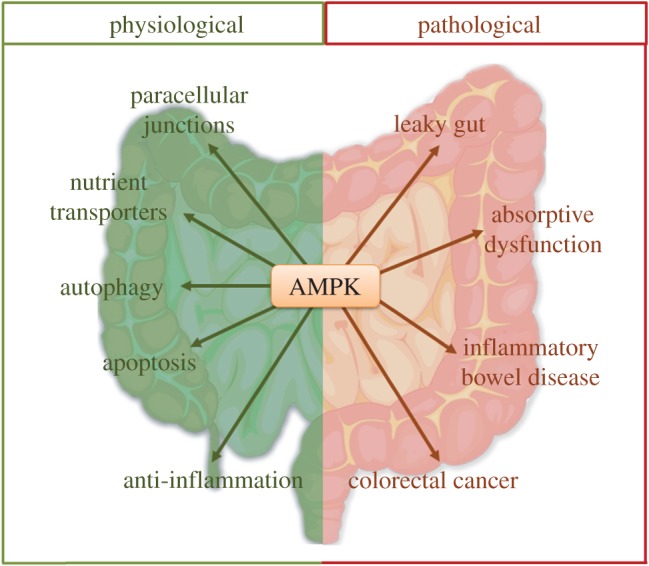
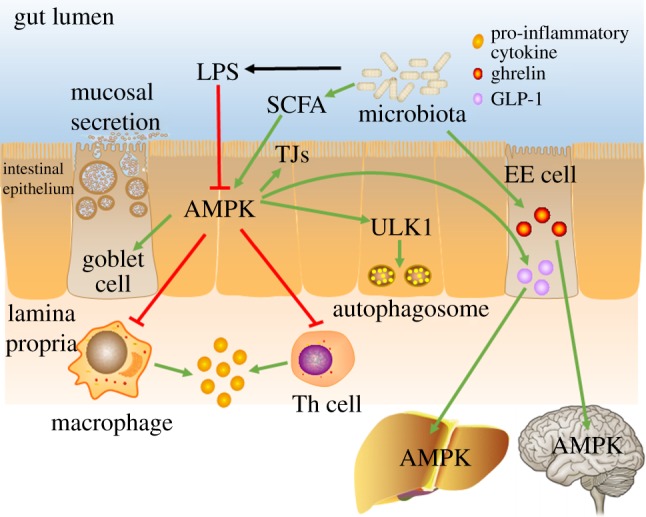
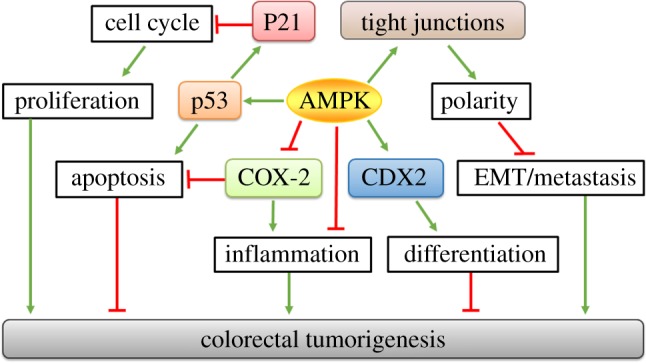
Adenosine monophosphate (AMP)-activated protein kinase (AMPK), a highly conserved energy sensor, has a crucial role in cardiovascular, neurodegenerative and inflammatory diseases, as well as in cancer and metabolic disorders. Accumulating studies have demonstrated that AMPK activation enhances paracellular junctions, nutrient transporters, autophagy and apoptosis, and suppresses inflammation and carcinogenesis in the intestine, indicating an essential role of AMPK in intestinal health. AMPK inactivation is an aetiological factor in intestinal dysfunctions. This review summarizes the favourable outcomes of AMPK activation on intestinal health, and discusses AMPK as a potential therapeutic target for intestinal diseases.
一磷酸腺苷激活的蛋白激酶(AMPK)是一种高度保守的能量感受器,在心血管疾病、神经退行性疾病和炎症性疾病以及癌症和代谢紊乱中具有关键作用。越来越多的研究表明,AMPK 的激活增强了细胞旁连接、营养转运体、自噬和细胞凋亡,并抑制了肠道中的炎症和癌变,这表明 AMPK 在肠道健康中起着重要作用。AMPK 的失活是肠道功能障碍的一个病因因素。本综述总结了 AMPK 激活对肠道健康的有益影响,并讨论了 AMPK 作为肠道疾病潜在治疗靶点的可能性。