Department of Nephrology, Rheumatology, Endocrinology and Metabolism, Okayama University Graduate School of Medicine, Dentistry and Pharmaceutical Sciences, Okayama 700-8558, Japan.
Department of Vascular Biology, Institute of Development, Aging and Cancer, Tohoku University, Sendai 980-8575, Japan.
Biomed Res Int. 2017;2017:5724069. doi: 10.1155/2017/5724069. Epub 2017 Aug 1.
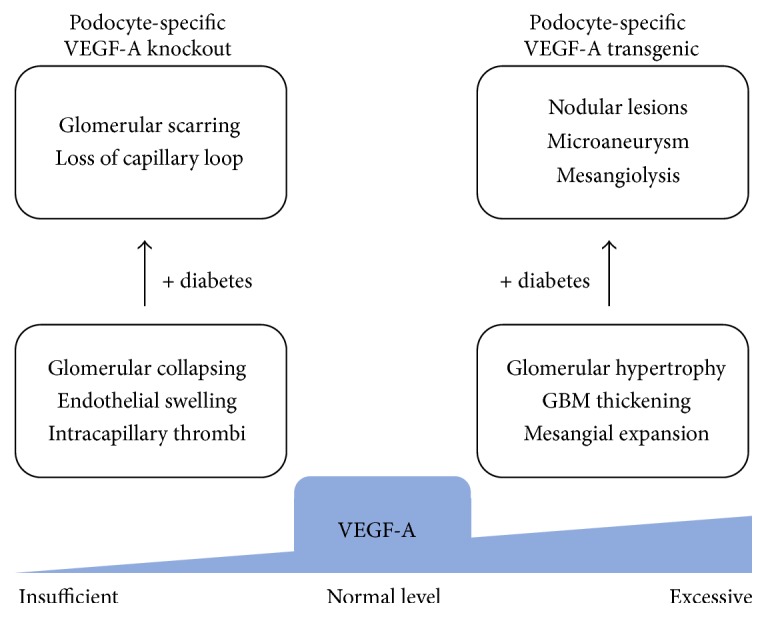
Angiogenesis has been shown to be a potential therapeutic target for early stages of diabetic nephropathy in a number of animal experiments. Vascular endothelial growth factor (VEGF) is the main mediator for abnormal angiogenesis in diabetic glomeruli. Although beneficial effects of anti-VEGF antibodies have previously been demonstrated in diabetic animal experiments, recent basic and clinical evidence has revealed that the blockade of VEGF signaling resulted in proteinuria and renal thrombotic microangiopathy, suggesting the importance of maintaining normal levels of VEGF in the kidneys. Therefore, antiangiogenic therapy for diabetic nephropathy should eliminate excessive glomerular angiogenic response without accelerating endothelial injury. Some endogenous antiangiogenic factors such as endostatin and tumstatin inhibit overactivation of endothelial cells but do not specifically block VEGF signaling. In addition, the novel endothelium-derived antiangiogenic factor vasohibin-1 enhances stress tolerance and survival of the endothelial cells, while inhibiting excess angiogenesis. These factors have been demonstrated to suppress albuminuria and glomerular alterations in a diabetic mouse model. Thus, antiangiogenic therapy with promising candidates will possibly improve renal prognosis in patients with early stages of diabetic nephropathy.
血管生成已被证明是许多动物实验中糖尿病肾病早期阶段的一个潜在治疗靶点。血管内皮生长因子(VEGF)是糖尿病肾小球中异常血管生成的主要介质。尽管抗 VEGF 抗体在糖尿病动物实验中已显示出有益的效果,但最近的基础和临床证据表明,VEGF 信号的阻断导致蛋白尿和肾脏血栓性微血管病,这表明维持肾脏中 VEGF 的正常水平很重要。因此,糖尿病肾病的抗血管生成治疗应该消除肾小球过度的血管生成反应,而不会加速内皮损伤。一些内源性的抗血管生成因子,如内皮抑素和 tumstatin,抑制内皮细胞的过度激活,但并不特异性地阻断 VEGF 信号。此外,新型的内皮衍生的抗血管生成因子血管抑肽-1 增强内皮细胞的应激耐受和存活能力,同时抑制过度的血管生成。这些因子已被证明可抑制糖尿病小鼠模型中的白蛋白尿和肾小球改变。因此,有前景的候选药物的抗血管生成治疗可能会改善早期糖尿病肾病患者的肾脏预后。