Takahashi Yoshifumi, Saga Yasushi, Koyanagi Takahiro, Takei Yuji, Machida Sizuo, Taneichi Akiyo, Mizukami Hiroaki, Sato Yasufumi, Matsubara Shigeki, Fujiwara Hiroyuki
Department of Obstetrics and Gynecology, School of Medicine, Jichi Medical University, Tochigi, Japan.
Division of Genetic Therapeutics, Center for Molecular Medicine, School of Medicine, Jichi Medical University, Tochigi, Japan.
Int J Oncol. 2015 Dec;47(6):2057-63. doi: 10.3892/ijo.2015.3193. Epub 2015 Oct 8.
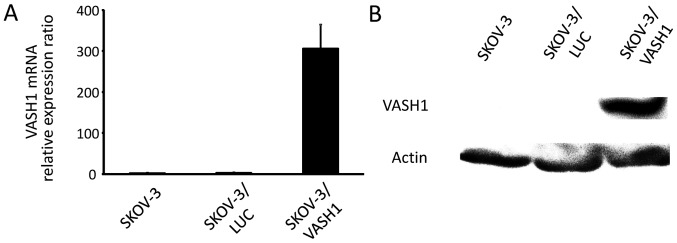
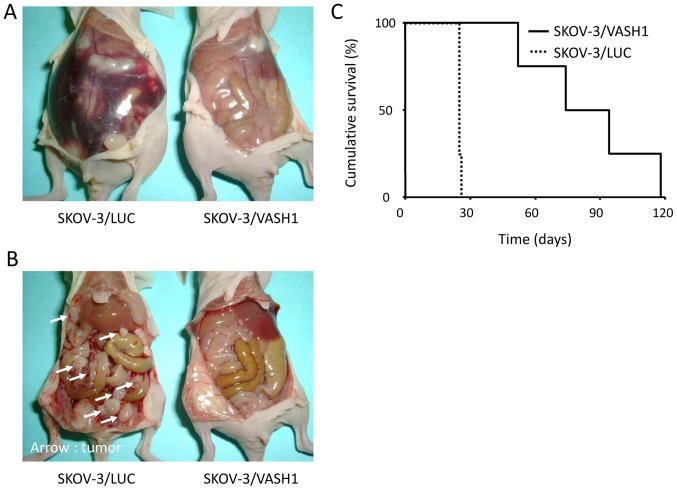
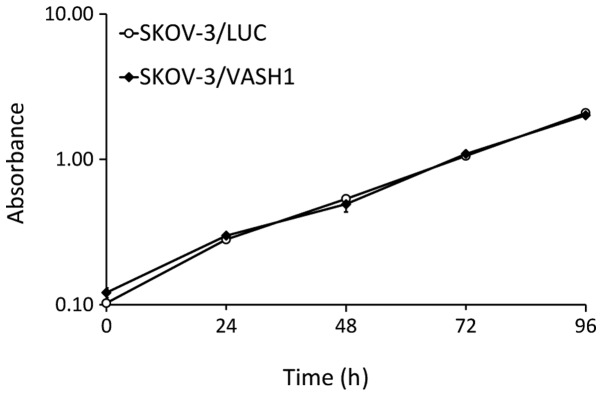
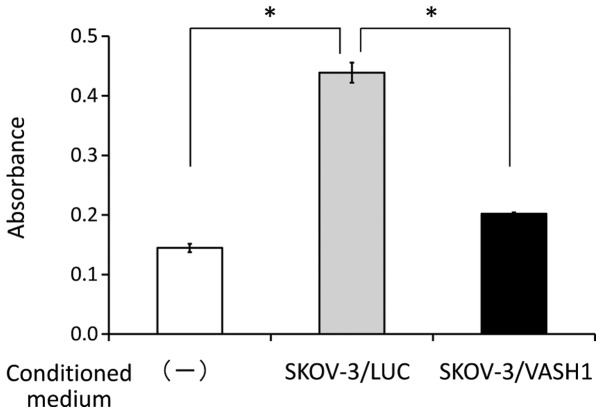
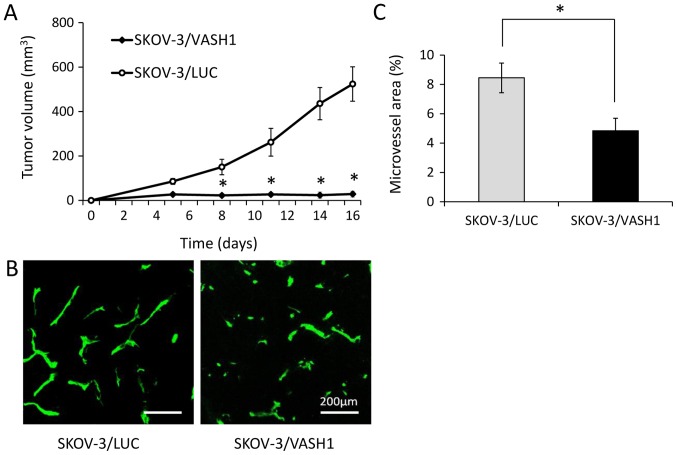
Vasohibin-1 (VASH1) is expressed in vascular endothelial cells stimulated by several angiogenic growth factors and displays autocrine activity to regulate angiogenesis via a negative feedback mechanism. In this study, we investigated the effect of VASH1 on ovarian cancer progression using VASH1-expressing ovarian cancer cells in vitro and in vivo. The growth ability of ovarian cancer cells engineered to express the VASH1 gene remained unchanged in vitro. However, we showed that VASH1 secretion by tumor cells inhibited the growth of human umbilical vein endothelial cells. Further, animal experiments showed that VASH1 expression inhibited tumor angiogenesis and growth. In a murine model of peritoneal dissemination of ovarian cancer cells, VASH1 inhibited peritoneal dissemination and ascites, resulting in significantly prolonged survival in mice. This indicates that VASH1 exerts an antitumor effect on ovarian cancer by inhibiting angiogenesis in the tumor environment. These findings suggest that a novel therapy based on VASH1 could be a useful therapeutic strategy for ovarian cancer.
血管抑制素-1(VASH1)在多种血管生成生长因子刺激的血管内皮细胞中表达,并通过负反馈机制发挥自分泌活性来调节血管生成。在本研究中,我们使用体外和体内表达VASH1的卵巢癌细胞研究了VASH1对卵巢癌进展的影响。经基因工程改造以表达VASH1基因的卵巢癌细胞的生长能力在体外保持不变。然而,我们发现肿瘤细胞分泌的VASH1抑制了人脐静脉内皮细胞的生长。此外,动物实验表明VASH1表达抑制肿瘤血管生成和生长。在卵巢癌细胞腹膜播散的小鼠模型中,VASH1抑制腹膜播散和腹水形成,从而显著延长小鼠生存期。这表明VASH1通过抑制肿瘤环境中的血管生成对卵巢癌发挥抗肿瘤作用。这些发现提示基于VASH1的新型疗法可能是卵巢癌的一种有效治疗策略。