Pepin Kim M, Davis Amy J, Cunningham Fred L, VerCauteren Kurt C, Eckery Doug C
National Wildlife Research Center, USDA, APHIS, Wildlife Services, Fort Collins, Colorado, United States of America.
National Wildlife Research Center, USDA, APHIS, Wildlife Services, Mississippi State, United States of America.
PLoS One. 2017 Aug 24;12(8):e0183441. doi: 10.1371/journal.pone.0183441. eCollection 2017.
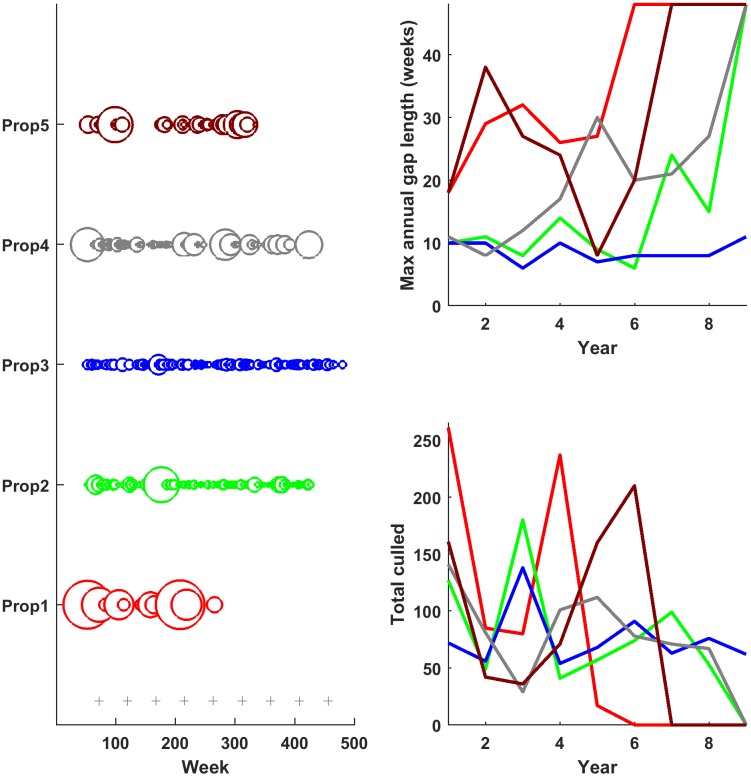
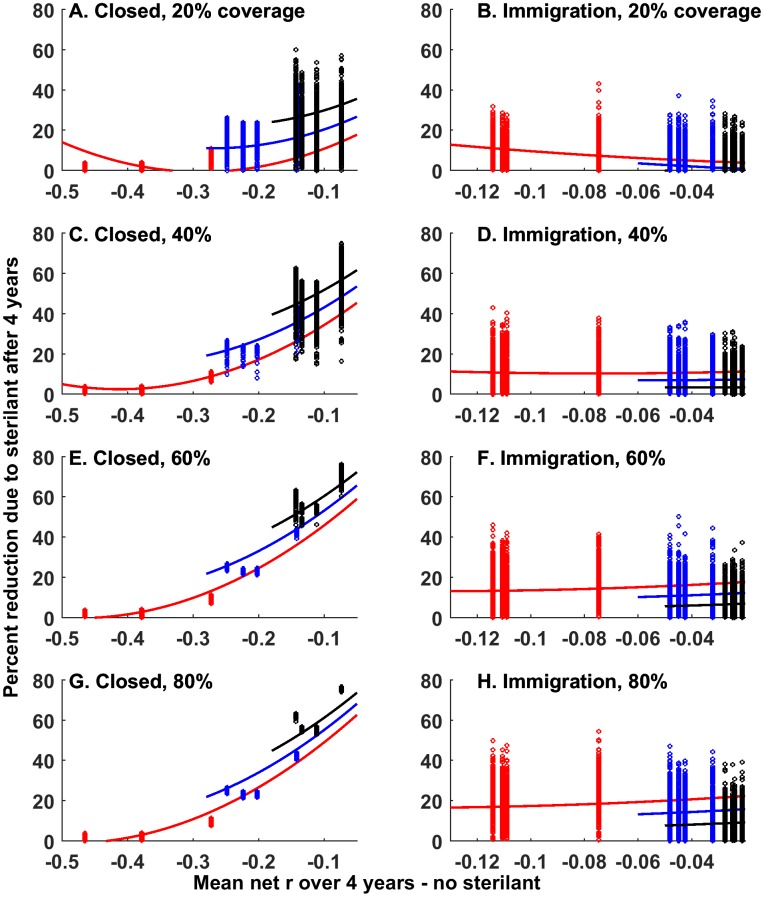
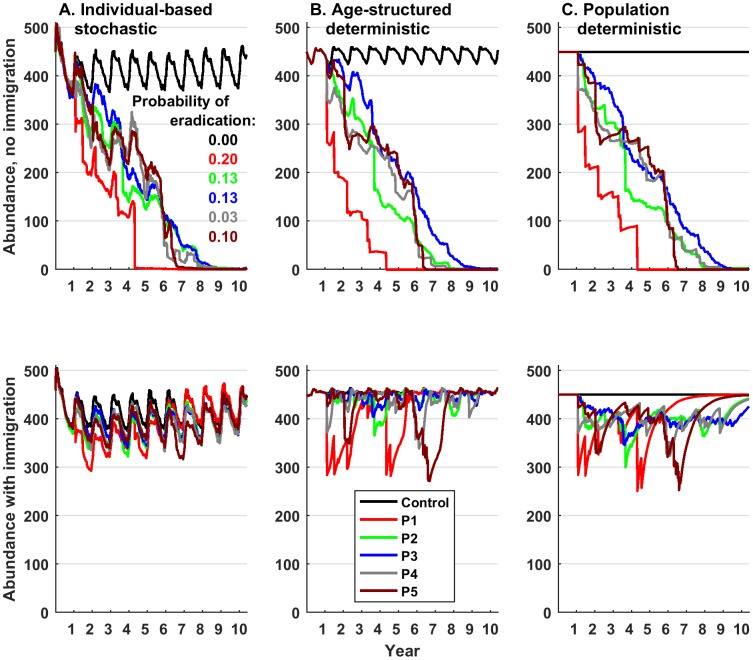
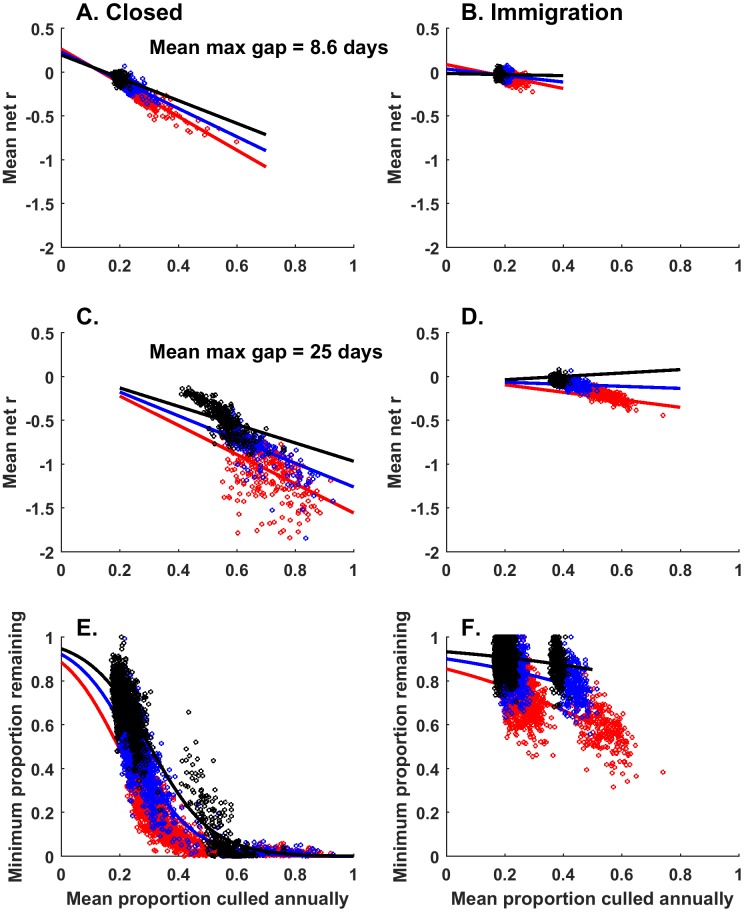
Effective management of widespread invasive species such as wild pigs (Sus scrofa) is limited by resources available to devote to the effort. Better insight of the effectiveness of different management strategies on population dynamics is important for guiding decisions of resource allocation over space and time. Using a dynamic population model, we quantified effects of culling intensities and time between culling events on population dynamics of wild pigs in the USA using empirical culling patterns and data-based demographic parameters. In simulated populations closed to immigration, substantial population declines (50-100%) occurred within 4 years when 20-60% of the population was culled annually, but when immigration from surrounding areas occurred, there was a maximum of 50% reduction, even with the maximum culling intensity of 60%. Incorporating hypothetical levels of fertility control with realistic culling intensities was most effective in reducing populations when they were closed to immigration and when intrinsic population growth rate was too high (> = 1.78) to be controlled by culling alone. However, substantial benefits from fertility control used in conjunction with culling may only occur over a narrow range of net population growth rates (i.e., where net is the result of intrinsic growth rates and culling) that varies depending on intrinsic population growth rate. The management implications are that the decision to use fertility control in conjunction with culling should rely on concurrent consideration of achievable culling intensity, underlying demographic parameters, and costs of culling and fertility control. The addition of fertility control reduced abundance substantially more than culling alone, however the effects of fertility control were weaker than in populations without immigration. Because these populations were not being reduced substantially by culling alone, fertility control could be an especially helpful enhancement to culling for reducing abundance to target levels in areas where immigration can't be prevented.
野猪(Sus scrofa)等广泛分布的入侵物种的有效管理受到用于此项工作的可用资源的限制。更好地了解不同管理策略对种群动态的有效性,对于指导时空资源分配决策至关重要。我们使用动态种群模型,利用实际捕杀模式和基于数据的种群统计学参数,量化了捕杀强度和捕杀事件间隔时间对美国野猪种群动态的影响。在模拟的不允许移民迁入的种群中,当每年捕杀20%-60%的种群时,4年内种群数量大幅下降(50%-100%),但当有来自周边地区的移民时,即使最大捕杀强度达到60%,种群数量最多也只会减少50%。当种群不允许移民迁入且内在种群增长率过高(>=1.78)以至于仅靠捕杀无法控制时,将假设的生育控制水平与实际捕杀强度相结合,在减少种群数量方面最为有效。然而,生育控制与捕杀结合使用所带来的显著益处可能仅出现在净种群增长率的狭窄范围内(即净增长率是内在增长率和捕杀的结果),该范围会因内在种群增长率而异。管理方面的启示是,决定将生育控制与捕杀结合使用时,应同时考虑可实现的捕杀强度、潜在的种群统计学参数以及捕杀和生育控制的成本。生育控制的加入比单独捕杀能更大幅度地降低种群数量,但生育控制的效果在没有移民的种群中比在有移民的种群中要弱。由于这些种群仅靠捕杀无法大幅减少数量,在无法阻止移民的地区,生育控制对于将种群数量减少到目标水平可能是对捕杀的特别有益的补充。