Kesherwani Varun, Shahshahan Hamid R, Mishra Paras K
Department of Cellular and Integrative Physiology, University of Nebraska Medical Center, Omaha, NE, United States of America.
Department of Anesthesiology, University of Nebraska Medical Center, Omaha, NE, United States of America.
PLoS One. 2017 Aug 24;12(8):e0182828. doi: 10.1371/journal.pone.0182828. eCollection 2017.
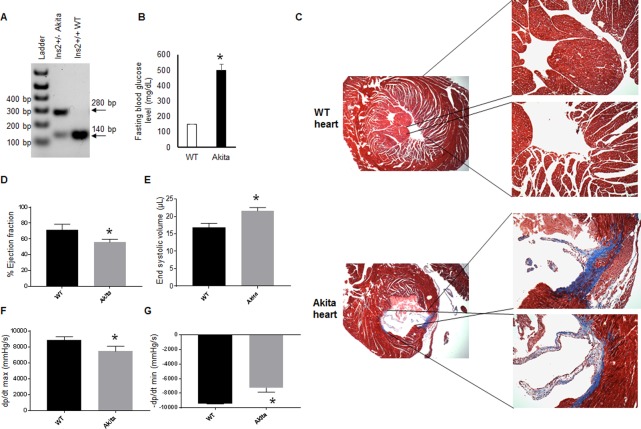
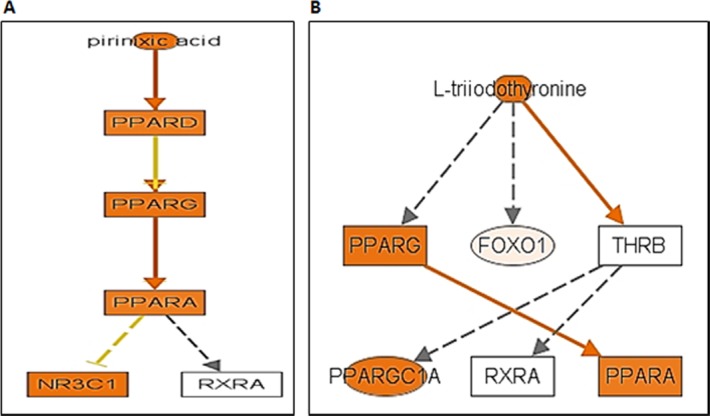
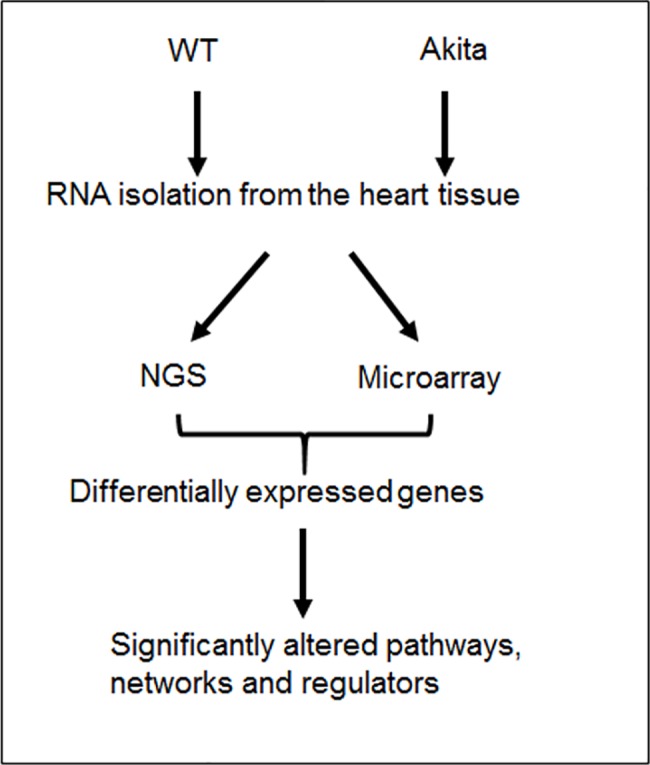
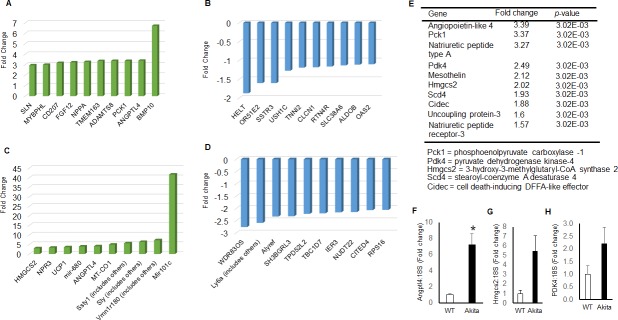
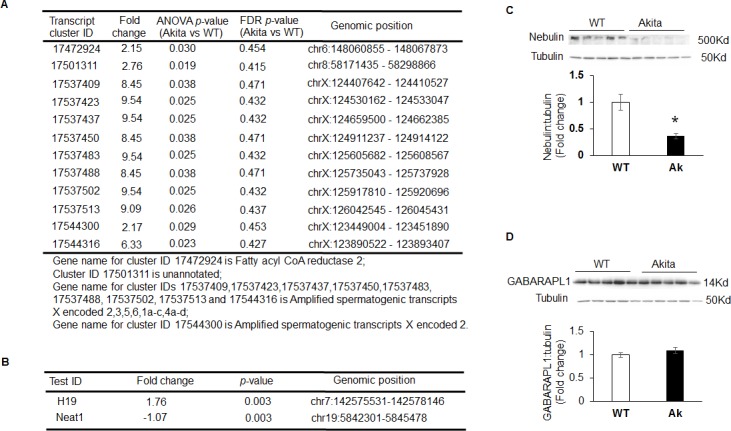
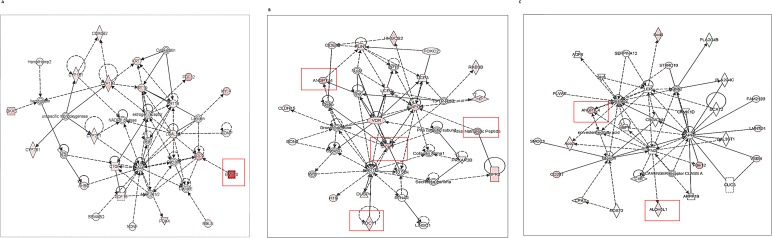
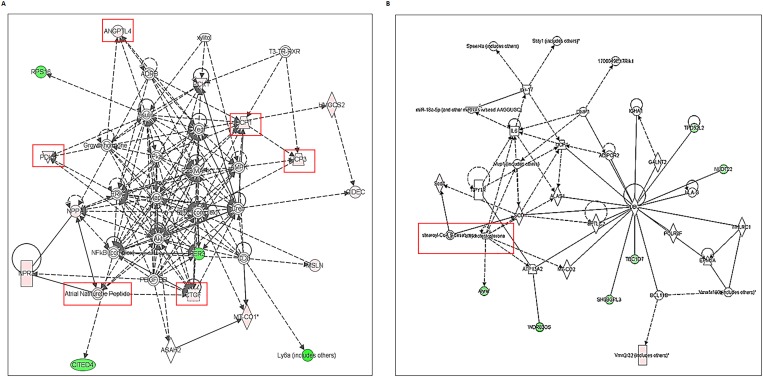
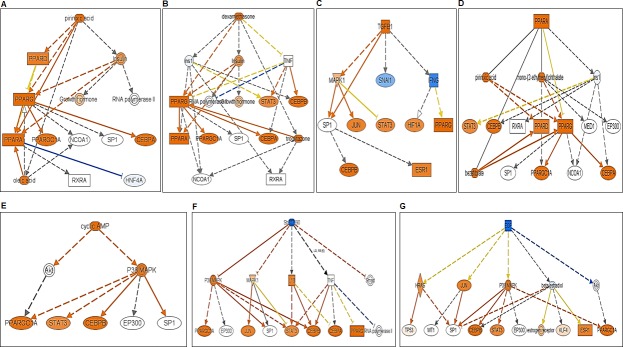
Although diabetes mellitus (DM) causes cardiomyopathy and exacerbates heart failure, the underlying molecular mechanisms for diabetic cardiomyopathy/heart failure are poorly understood. Insulin2 mutant (Ins2+/-) Akita is a mouse model of T1DM, which manifests cardiac dysfunction. However, molecular changes at cardiac transcriptome level that lead to cardiomyopathy remain unclear. To understand the molecular changes in the heart of diabetic Akita mice, we profiled cardiac transcriptome of Ins2+/- Akita and Ins2+/+ control mice using next generation sequencing (NGS) and microarray, and determined the implications of differentially expressed genes on various heart failure signaling pathways using Ingenuity pathway (IPA) analysis. First, we validated hyperglycemia, increased cardiac fibrosis, and cardiac dysfunction in twelve-week male diabetic Akita. Then, we analyzed the transcriptome levels in the heart. NGS analyses on Akita heart revealed 137 differentially expressed transcripts, where Bone Morphogenic Protein-10 (BMP10) was the most upregulated and hairy and enhancer of split-related (HELT) was the most downregulated gene. Moreover, twelve long non-coding RNAs (lncRNAs) were upregulated. The microarray analyses on Akita heart showed 351 differentially expressed transcripts, where vomeronasal-1 receptor-180 (Vmn1r180) was the most upregulated and WD Repeat Domain 83 Opposite Strand (WDR83OS) was the most downregulated gene. Further, miR-101c and H19 lncRNA were upregulated but Neat1 lncRNA was downregulated in Akita heart. Eleven common genes were upregulated in Akita heart in both NGS and microarray analyses. IPA analyses revealed the role of these differentially expressed genes in key signaling pathways involved in diabetic cardiomyopathy. Our results provide a platform to initiate focused future studies by targeting these genes and/or non-coding RNAs, which are differentially expressed in Akita hearts and are involved in diabetic cardiomyopathy.
尽管糖尿病(DM)会引发心肌病并加重心力衰竭,但糖尿病性心肌病/心力衰竭的潜在分子机制仍知之甚少。胰岛素2突变体(Ins2+/-)秋田小鼠是1型糖尿病的小鼠模型,表现出心脏功能障碍。然而,导致心肌病的心脏转录组水平的分子变化仍不清楚。为了了解糖尿病秋田小鼠心脏中的分子变化,我们使用下一代测序(NGS)和微阵列分析了Ins2+/-秋田小鼠和Ins2+/+对照小鼠的心脏转录组,并使用 Ingenuity 通路(IPA)分析确定了差异表达基因对各种心力衰竭信号通路的影响。首先,我们验证了12周龄雄性糖尿病秋田小鼠的高血糖、心脏纤维化增加和心脏功能障碍。然后,我们分析了心脏中的转录组水平。对秋田小鼠心脏的NGS分析揭示了137个差异表达的转录本,其中骨形态发生蛋白10(BMP10)上调最为明显,而毛发和分裂相关增强子(HELT)是下调最为明显的基因。此外,12个长链非编码RNA(lncRNAs)上调。对秋田小鼠心脏的微阵列分析显示351个差异表达的转录本,其中犁鼻器-1受体-180(Vmn1r180)上调最为明显,WD重复结构域83反义链(WDR83OS)是下调最为明显的基因。此外,miR-101c和H19 lncRNA在秋田小鼠心脏中上调,但Neat1 lncRNA下调。在NGS和微阵列分析中,秋田小鼠心脏中有11个共同基因上调。IPA分析揭示了这些差异表达基因在糖尿病性心肌病关键信号通路中的作用。我们的结果提供了一个平台,通过靶向这些在秋田小鼠心脏中差异表达且参与糖尿病性心肌病的基因和/或非编码RNA,来启动未来有针对性的研究。