Nandi Shyam Sundar, Shahshahan Hamid Reza, Shang Quanliang, Kutty Shelby, Boska Michael, Mishra Paras Kumar
Department of Cellular and Integrative Physiology, University of Nebraska Medical Center, Omaha, NE, United States.
Department of Pediatric Cardiology, Children's Hospital, Omaha, NE, United States.
Front Physiol. 2018 Oct 10;9:1275. doi: 10.3389/fphys.2018.01275. eCollection 2018.
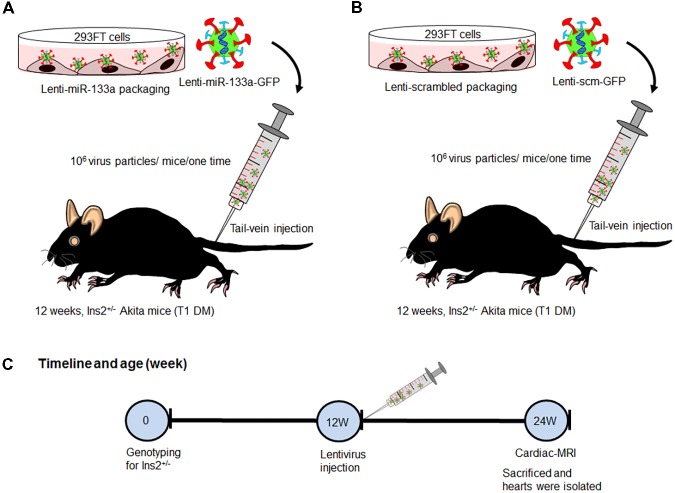
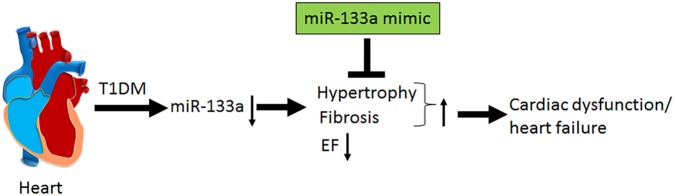
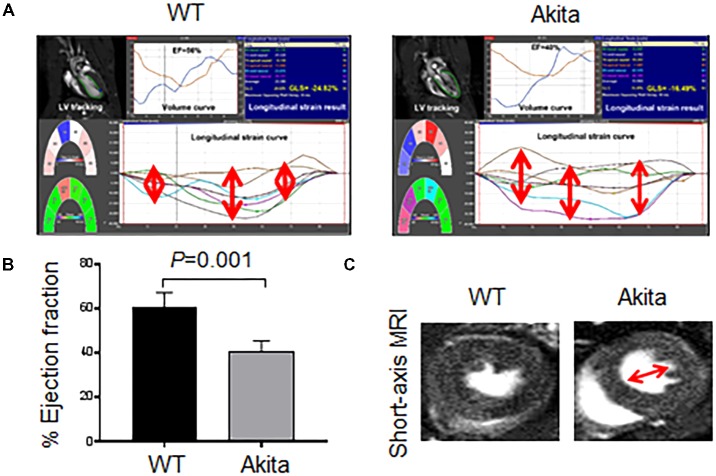
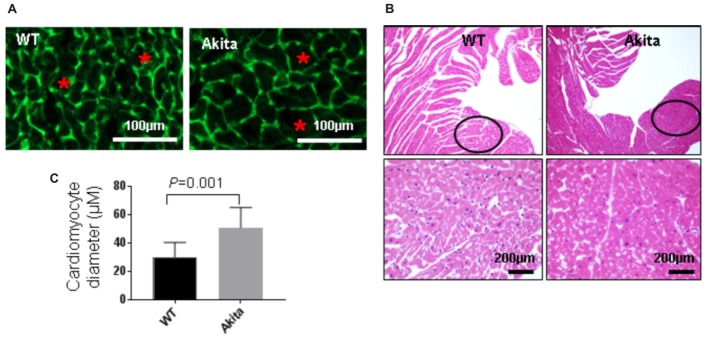
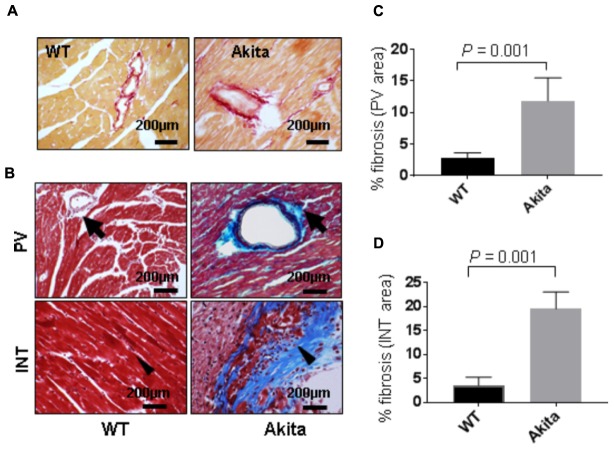
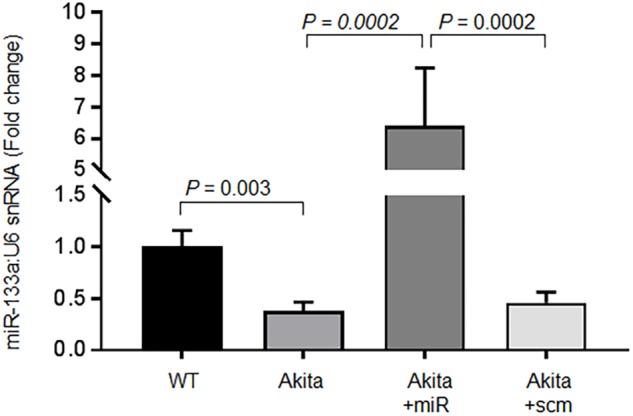
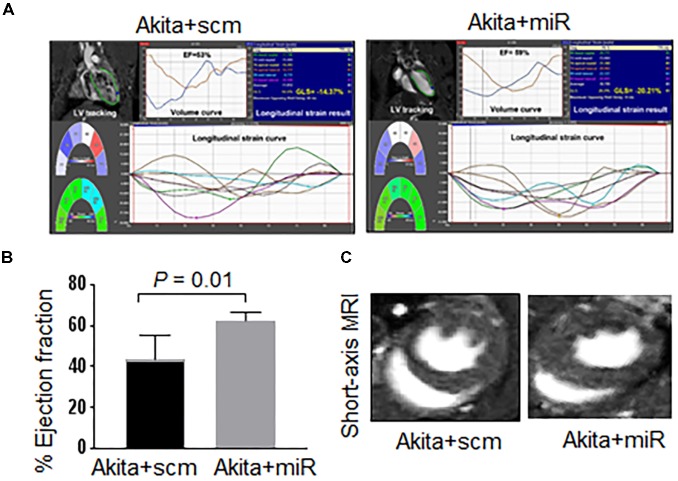
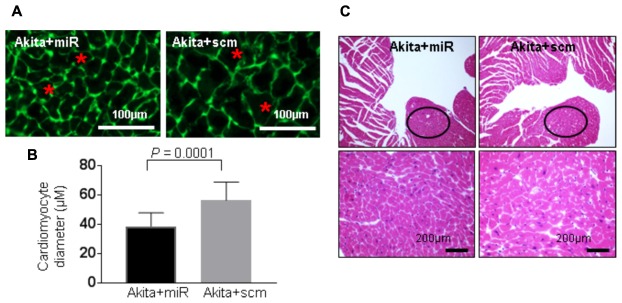
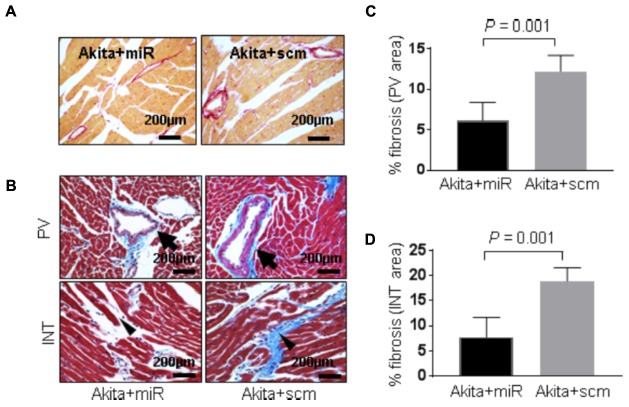
Diabetic cardiomyopathy is a leading cause of heart failure. Developing a novel therapeutic strategy for diabetic cardiomyopathy and characterizing animal models used for diabetes mellitus (DM) are important. Insulin 2 mutant (Ins2) Akita is a spontaneous, genetic, mouse model for T1DM, which is relevant to humans. There are contrasting reports on systolic dysfunction and pathological remodeling (hypertrophy and fibrosis) in Akita heart. Here, we used magnetic resonance imaging (MRI) approach, a gold standard reference for evaluating cardiac function, to measure ejection fraction (indicator of systolic dysfunction) in Akita. Moreover, we performed Wheat Germ Agglutinin (WGA) and hematoxylin and Eosin stainings to determine cardiac hypertrophy, and Masson's Trichrome and picrosirius red stainings to determine cardiac fibrosis in Akita. MiR-133a, an anti-hypertrophy and anti-fibrosis miRNA, is downregulated in Akita heart. We determined if miR-133a mimic treatment could mitigate systolic dysfunction and remodeling in Akita heart. Our MRI results revealed decreased ejection fraction in Akita as compared to WT and increased ejection fraction in miR-133a mimic-treated Akita. We also found that miR-133a mimic treatment mitigates T1DM-induced cardiac hypertrophy and fibrosis in Akita. We conclude that Akita shows cardiac hypertrophy, fibrosis and systolic dysfunction and miR-133a mimic treatment to Akita could ameliorate them.
糖尿病性心肌病是心力衰竭的主要原因。开发针对糖尿病性心肌病的新型治疗策略并对用于糖尿病(DM)的动物模型进行表征具有重要意义。胰岛素2突变体(Ins2)秋田犬是一种与人类相关的1型糖尿病自发遗传小鼠模型。关于秋田犬心脏的收缩功能障碍和病理重塑(肥大和纤维化)有相互矛盾的报道。在这里,我们使用磁共振成像(MRI)方法(评估心脏功能的金标准参考)来测量秋田犬的射血分数(收缩功能障碍的指标)。此外,我们进行了小麦胚芽凝集素(WGA)以及苏木精和伊红染色以确定心脏肥大,并进行了马松三色染色和苦味酸天狼星红染色以确定秋田犬的心脏纤维化。MiR-133a是一种抗肥大和抗纤维化的微小RNA,在秋田犬心脏中表达下调。我们确定了miR-133a模拟物治疗是否可以减轻秋田犬心脏的收缩功能障碍和重塑。我们的MRI结果显示,与野生型相比,秋田犬的射血分数降低,而用miR-133a模拟物治疗的秋田犬射血分数增加。我们还发现,miR-133a模拟物治疗可减轻秋田犬中1型糖尿病诱导的心脏肥大和纤维化。我们得出结论,秋田犬表现出心脏肥大、纤维化和收缩功能障碍,对秋田犬进行miR-133a模拟物治疗可以改善这些情况。