Bejjanki Vikranth R, da Silveira Rava Azeredo, Cohen Jonathan D, Turk-Browne Nicholas B
Department of Psychology, Princeton University, Princeton, NJ, United States of America.
Princeton Neuroscience Institute, Princeton University, Princeton, NJ, United States of America.
PLoS Comput Biol. 2017 Aug 25;13(8):e1005674. doi: 10.1371/journal.pcbi.1005674. eCollection 2017 Aug.
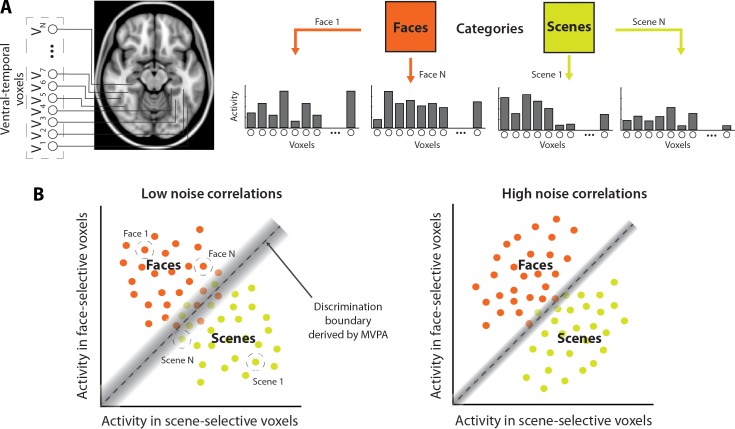
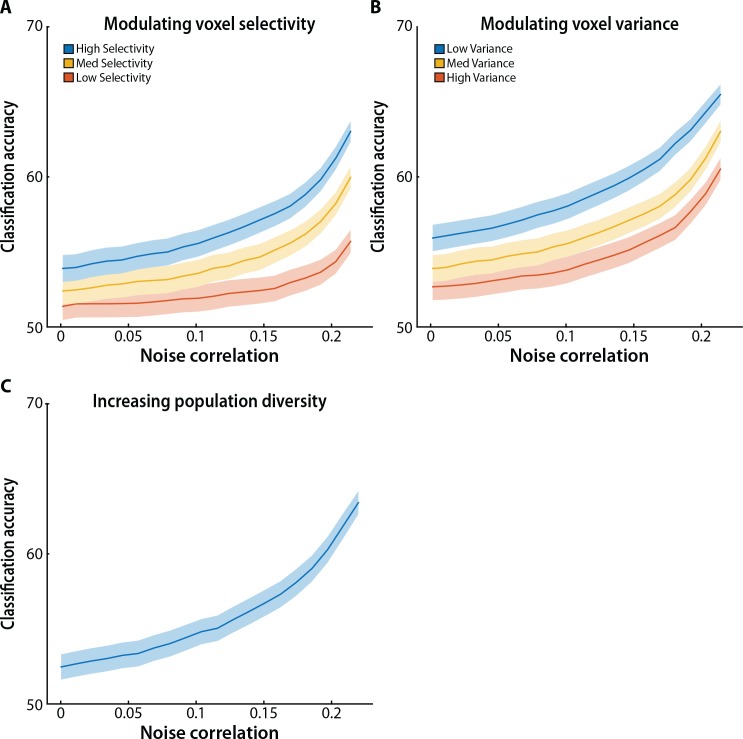
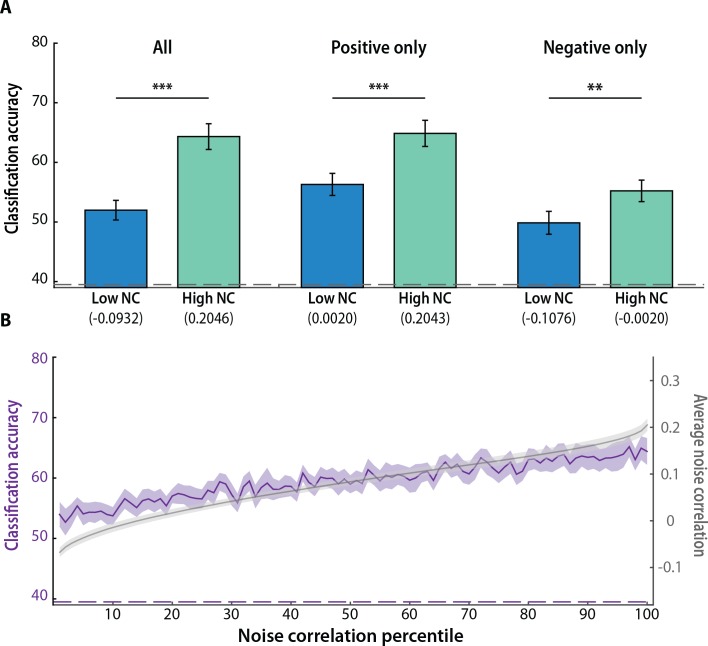
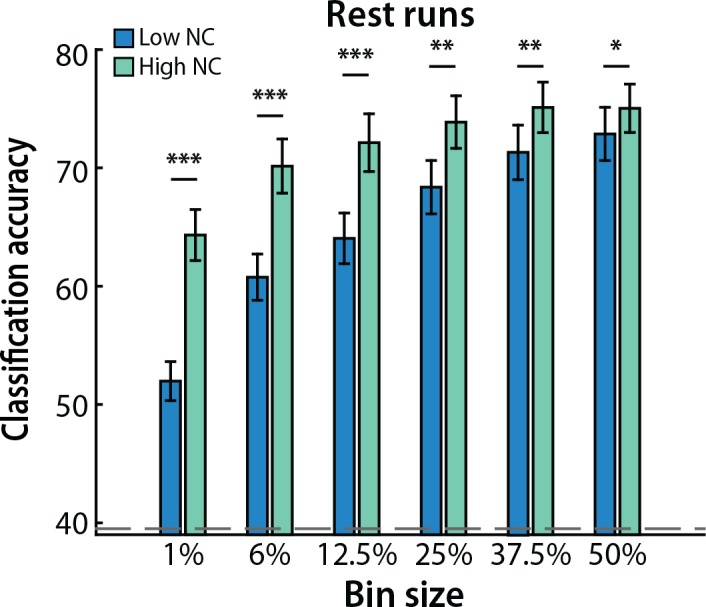
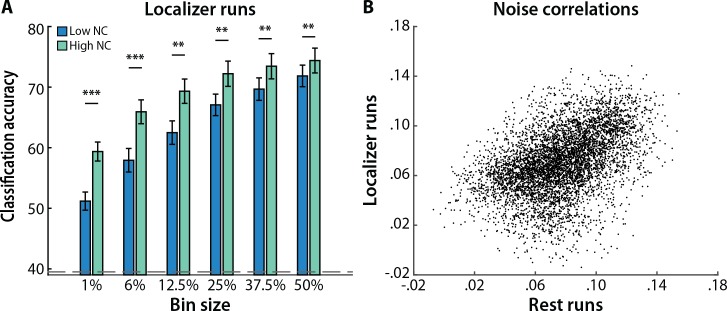
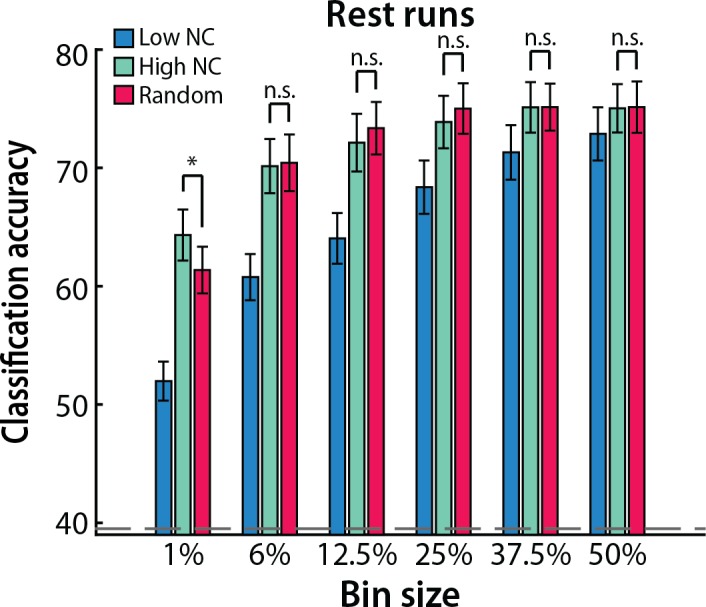
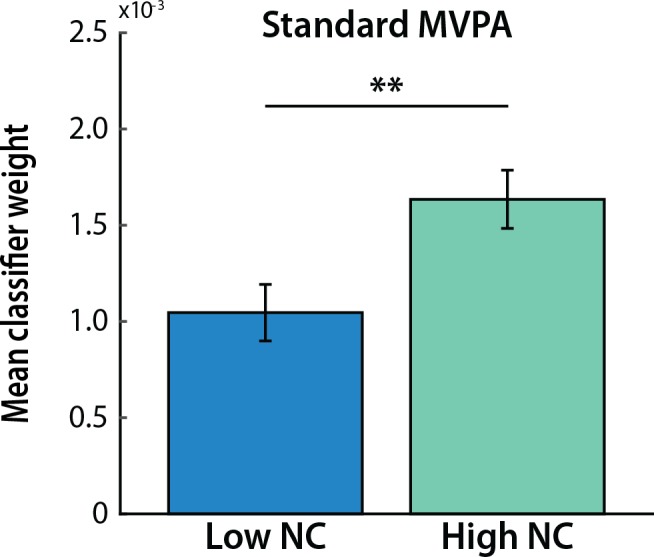
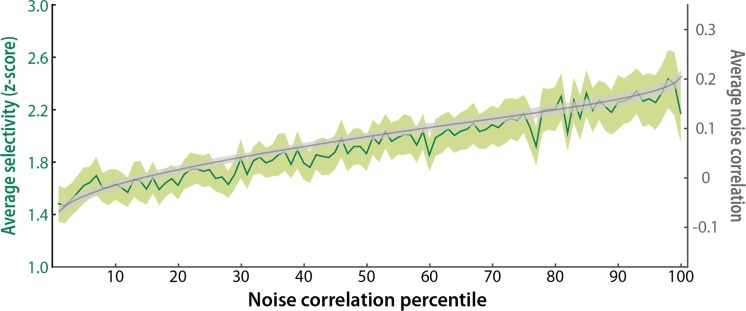
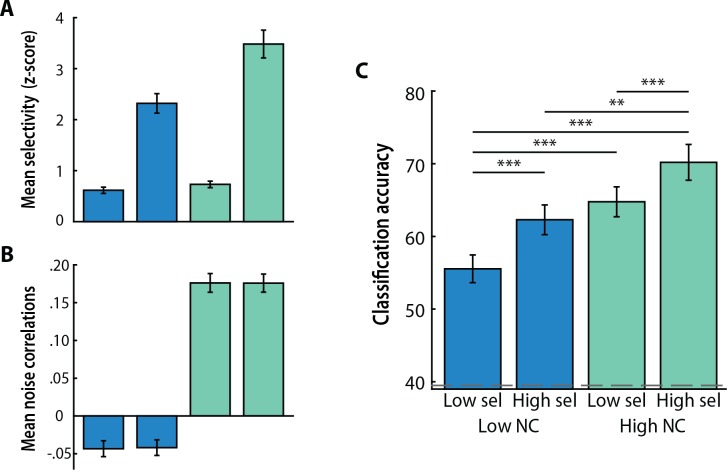
Multivariate decoding methods, such as multivoxel pattern analysis (MVPA), are highly effective at extracting information from brain imaging data. Yet, the precise nature of the information that MVPA draws upon remains controversial. Most current theories emphasize the enhanced sensitivity imparted by aggregating across voxels that have mixed and weak selectivity. However, beyond the selectivity of individual voxels, neural variability is correlated across voxels, and such noise correlations may contribute importantly to accurate decoding. Indeed, a recent computational theory proposed that noise correlations enhance multivariate decoding from heterogeneous neural populations. Here we extend this theory from the scale of neurons to functional magnetic resonance imaging (fMRI) and show that noise correlations between heterogeneous populations of voxels (i.e., voxels selective for different stimulus variables) contribute to the success of MVPA. Specifically, decoding performance is enhanced when voxels with high vs. low noise correlations (measured during rest or in the background of the task) are selected during classifier training. Conversely, voxels that are strongly selective for one class in a GLM or that receive high classification weights in MVPA tend to exhibit high noise correlations with voxels selective for the other class being discriminated against. Furthermore, we use simulations to show that this is a general property of fMRI data and that selectivity and noise correlations can have distinguishable influences on decoding. Taken together, our findings demonstrate that if there is signal in the data, the resulting above-chance classification accuracy is modulated by the magnitude of noise correlations.
多变量解码方法,如多体素模式分析(MVPA),在从脑成像数据中提取信息方面非常有效。然而,MVPA所利用的信息的确切性质仍存在争议。目前大多数理论强调通过对具有混合且较弱选择性的体素进行聚合来提高敏感性。然而,除了单个体素的选择性之外,神经变异性在体素之间是相关的,并且这种噪声相关性可能对准确解码有重要贡献。事实上,最近的一种计算理论提出,噪声相关性增强了来自异质神经群体的多变量解码。在这里,我们将这一理论从神经元尺度扩展到功能磁共振成像(fMRI),并表明异质体素群体(即对不同刺激变量有选择性的体素)之间的噪声相关性有助于MVPA的成功。具体而言,当在分类器训练期间选择具有高噪声相关性与低噪声相关性的体素(在静息状态或任务背景下测量)时,解码性能会增强。相反,在广义线性模型(GLM)中对一类有强烈选择性或在MVPA中获得高分类权重的体素,往往与对被区分的另一类有选择性的体素表现出高噪声相关性。此外,我们通过模拟表明这是fMRI数据的一个普遍特性,并且选择性和噪声相关性对解码可能有不同的影响。综上所述,我们的研究结果表明,如果数据中有信号,那么由此产生的高于机会水平的分类准确率会受到噪声相关性大小的调节。