Wang Junling, Pavlyk Iuliia, Vedula Pavan, Sterling Stephanie, Leu N Adrian, Dong Dawei W, Kashina Anna
University of Pennsylvania, School of Veterinary Medicine, Philadelphia, PA 19104, United States.
Institute for Biomedical Informatics, Perelman School of Medicine, University of Pennsylvania, Philadelphia, PA 19104, United States.
Dev Biol. 2017 Oct 1;430(1):41-51. doi: 10.1016/j.ydbio.2017.08.027. Epub 2017 Aug 26.
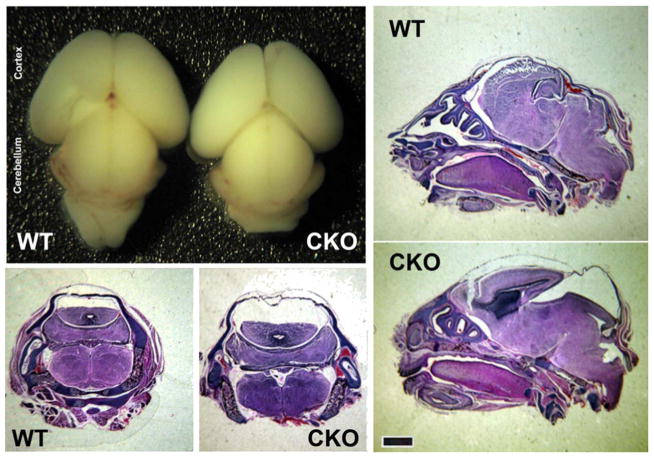
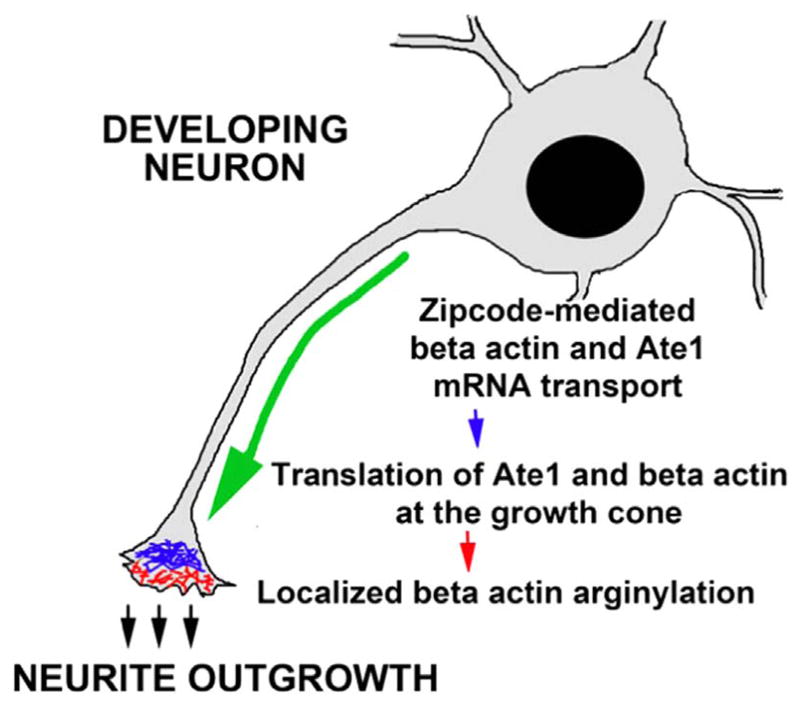
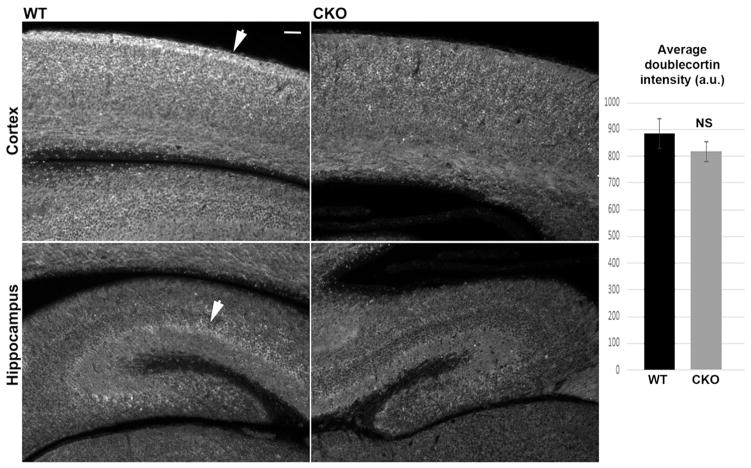
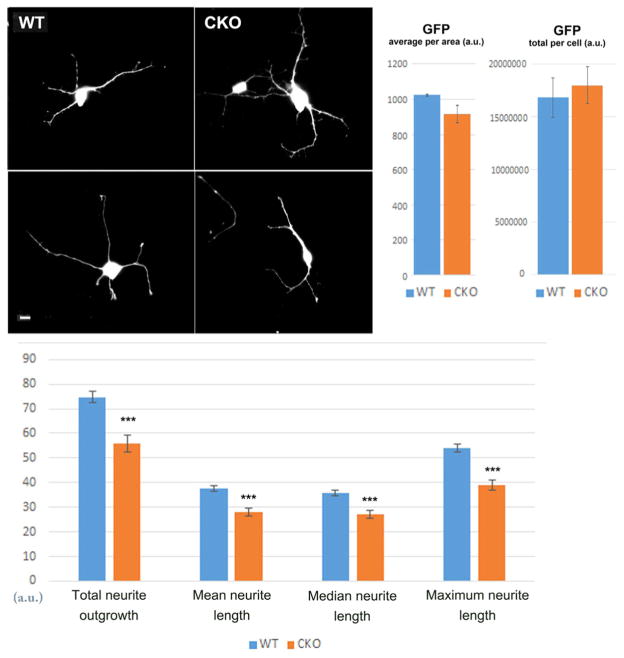
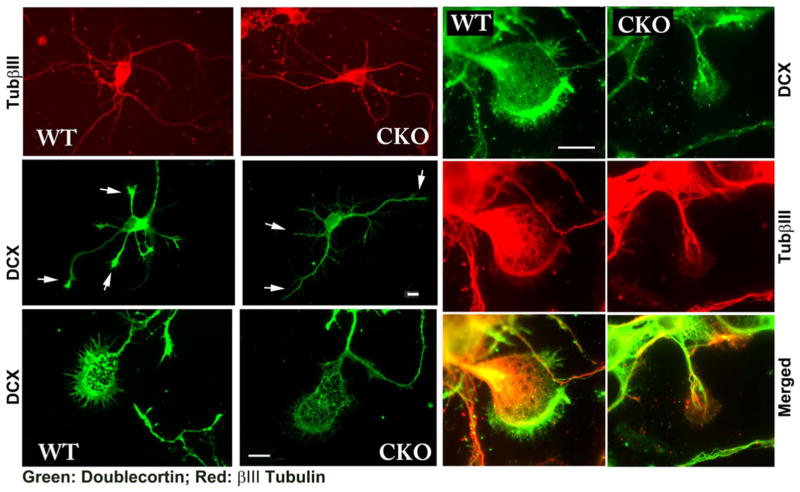
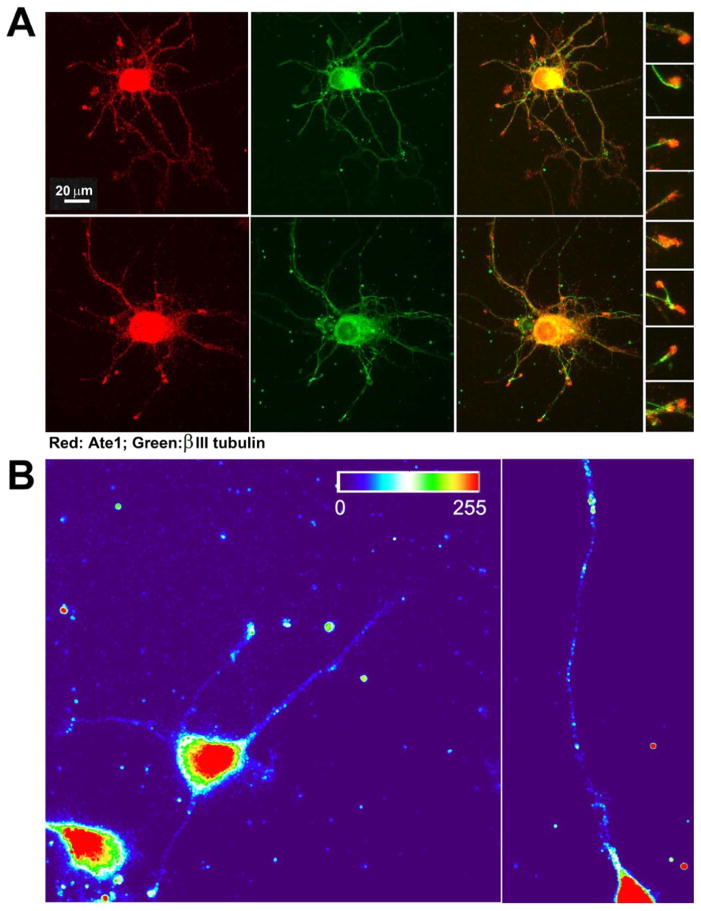
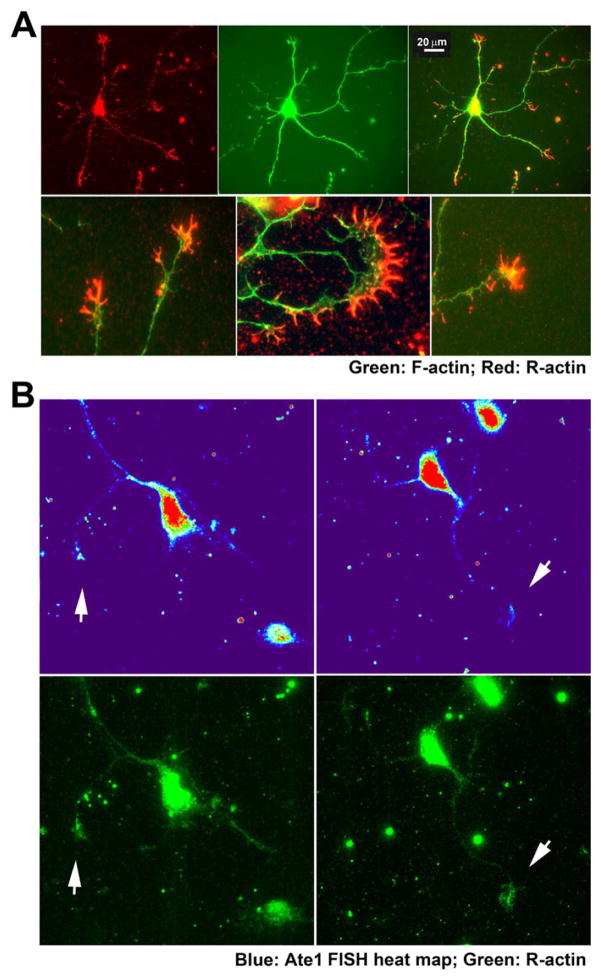
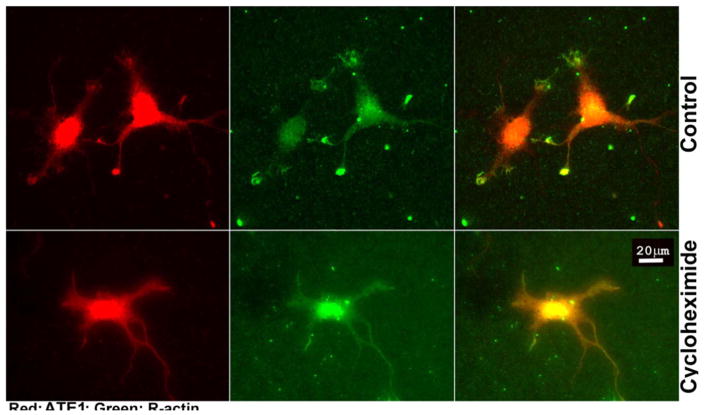
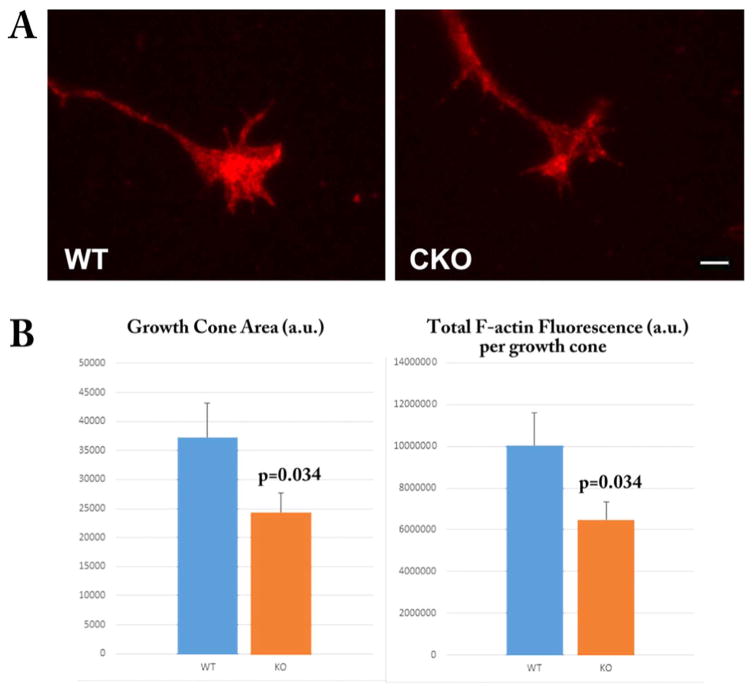
Arginylation is an emerging protein modification mediated by arginyltransferase ATE1, shown to regulate embryogenesis and actin cytoskeleton, however its functions in different physiological systems are not well understood. Here we analyzed the role of ATE1 in brain development and neuronal growth by producing a conditional mouse knockout with Ate1 deletion in the nervous system driven by Nestin promoter (Nes-Ate1 mice). These mice were weaker than wild type, resulting in low postnatal survival rates, and had abnormalities in the brain that suggested defects in neuronal migration. Cultured Ate1 knockout neurons showed a reduction in the neurite outgrowth and the levels of doublecortin and F-actin in the growth cones. In wild type, ATE1 prominently localized to the growth cones, in addition to the cell bodies. Examination of the Ate1 mRNA sequence reveals the existence of putative zipcode-binding sequences involved in mRNA targeting to the cell periphery and local translation at the growth cones. Fluorescence in situ hybridization showed that Ate1 mRNA localized to the tips of the growth cones, likely due to zipcode-mediated targeting, and this localization coincided with spots of localization of arginylated β-actin, which disappeared in the presence of protein synthesis inhibitors. We propose that zipcode-mediated co-targeting of Ate1 and β-actin mRNA leads to localized co-translational arginylation of β-actin that drives the growth cone migration and neurite outgrowth.
精氨酰化是一种由精氨酰转移酶ATE1介导的新兴蛋白质修饰,已证明其可调节胚胎发育和肌动蛋白细胞骨架,然而其在不同生理系统中的功能尚未完全明确。在此,我们通过构建一种条件性小鼠基因敲除模型(Nes-Ate1小鼠)来分析ATE1在大脑发育和神经元生长中的作用,该模型中由巢蛋白启动子驱动神经系统中Ate1基因缺失。这些小鼠比野生型小鼠更虚弱,导致出生后存活率较低,并且大脑存在异常,提示神经元迁移存在缺陷。培养的Ate1基因敲除神经元的神经突生长以及生长锥中双皮质素和F-肌动蛋白水平均降低。在野生型中,除了细胞体,ATE1主要定位于生长锥。对Ate1 mRNA序列的检查揭示了存在假定的zipcode结合序列,这些序列参与mRNA靶向细胞周边以及在生长锥处的局部翻译。荧光原位杂交显示Ate1 mRNA定位于生长锥尖端,可能是由于zipcode介导的靶向作用,并且这种定位与精氨酰化β-肌动蛋白的定位点重合,在存在蛋白质合成抑制剂的情况下这种定位点消失。我们提出zipcode介导的Ate1和β-肌动蛋白mRNA共靶向作用导致β-肌动蛋白的局部共翻译精氨酰化,从而驱动生长锥迁移和神经突生长。