Daneshzand Mohammad, Faezipour Miad, Barkana Buket D
D-BEST Lab, Departments of Computer Science and Engineering and Biomedical Engineering, University of BridgeportBridgeport, CT, United States.
Department of Electrical Engineering, University of BridgeportBridgeport, CT, United States.
Front Comput Neurosci. 2017 Aug 8;11:73. doi: 10.3389/fncom.2017.00073. eCollection 2017.
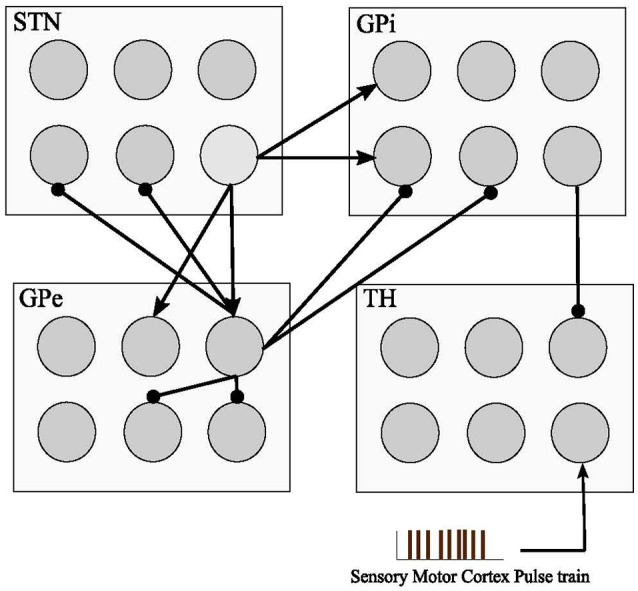
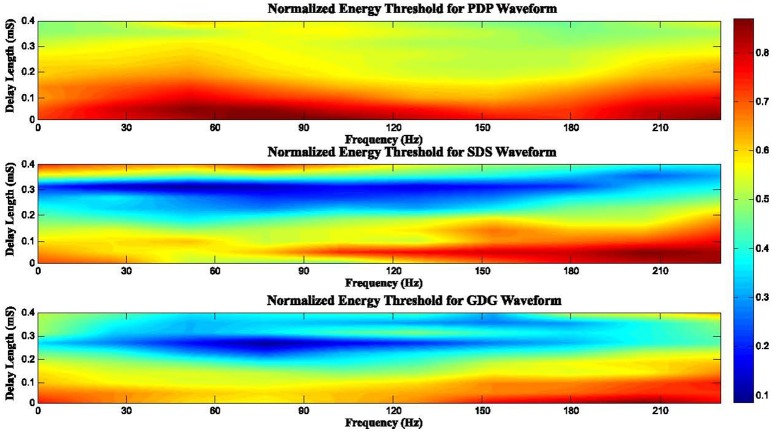
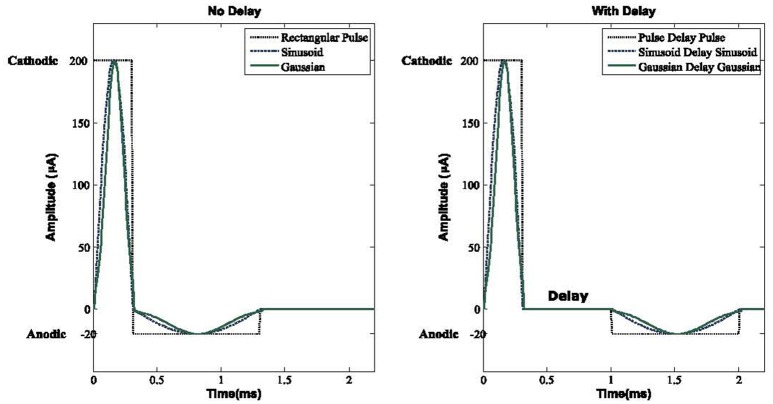
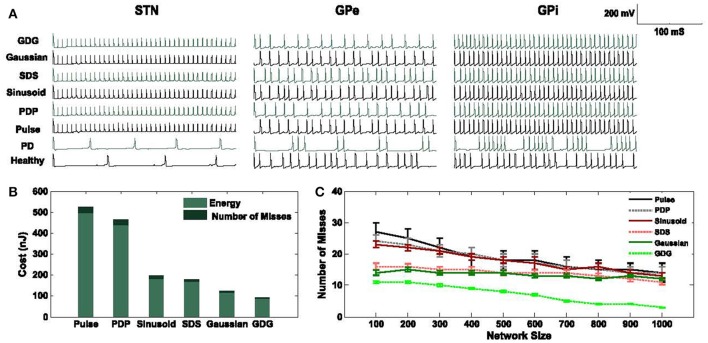
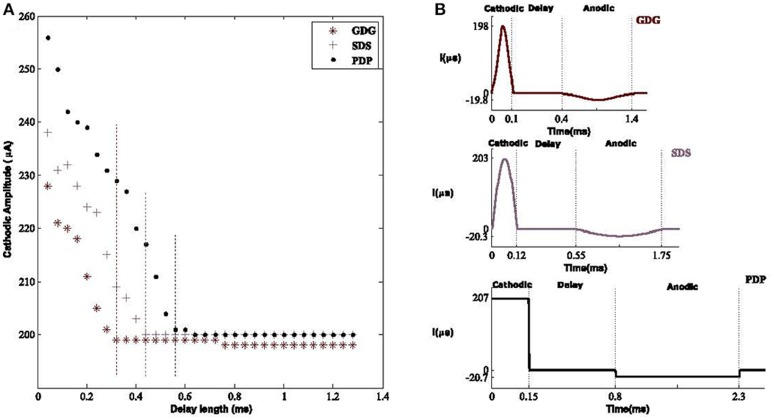
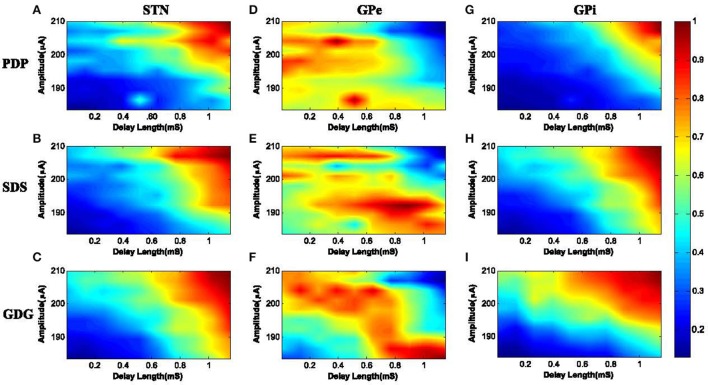
Deep brain stimulation (DBS) has compelling results in the desynchronization of the basal ganglia neuronal activities and thus, is used in treating the motor symptoms of Parkinson's disease (PD). Accurate definition of DBS waveform parameters could avert tissue or electrode damage, increase the neuronal activity and reduce energy cost which will prolong the battery life, hence avoiding device replacement surgeries. This study considers the use of a charge balanced Gaussian waveform pattern as a method to disrupt the firing patterns of neuronal cell activity. A computational model was created to simulate ganglia cells and their interactions with thalamic neurons. From the model, we investigated the effects of modified DBS pulse shapes and proposed a delay period between the cathodic and anodic parts of the charge balanced Gaussian waveform to desynchronize the firing patterns of the GPe and GPi cells. The results of the proposed Gaussian waveform with delay outperformed that of rectangular DBS waveforms used in experiments. The Gaussian Delay Gaussian (GDG) waveforms achieved lower number of misses in eliciting action potential while having a lower amplitude and shorter length of delay compared to numerous different pulse shapes. The amount of energy consumed in the basal ganglia network due to GDG waveforms was dropped by 22% in comparison with charge balanced Gaussian waveforms without any delay between the cathodic and anodic parts and was also 60% lower than a rectangular charged balanced pulse with a delay between the cathodic and anodic parts of the waveform. Furthermore, by defining a Synchronization Level metric, we observed that the GDG waveform was able to reduce the synchronization of GPi neurons more effectively than any other waveform. The promising results of GDG waveforms in terms of eliciting action potential, desynchronization of the basal ganglia neurons and reduction of energy consumption can potentially enhance the performance of DBS devices.
深部脑刺激(DBS)在使基底神经节神经元活动去同步化方面取得了令人瞩目的成果,因此被用于治疗帕金森病(PD)的运动症状。准确界定DBS波形参数可以避免组织或电极损伤,增强神经元活动并降低能量消耗,从而延长电池寿命,进而避免设备更换手术。本研究考虑使用电荷平衡高斯波形模式作为一种扰乱神经元细胞活动放电模式的方法。创建了一个计算模型来模拟神经节细胞及其与丘脑神经元的相互作用。从该模型中,我们研究了改良的DBS脉冲形状的影响,并提出了电荷平衡高斯波形阴极和阳极部分之间的延迟期,以使苍白球外部(GPe)和苍白球内部(GPi)细胞的放电模式去同步化。所提出的带延迟高斯波形的结果优于实验中使用的矩形DBS波形。与众多不同的脉冲形状相比,高斯延迟高斯(GDG)波形在引发动作电位时漏失次数更少,同时具有更低的幅度和更短的延迟长度。与阴极和阳极部分之间没有任何延迟的电荷平衡高斯波形相比,由于GDG波形在基底神经节网络中消耗的能量减少了22%,并且也比波形阴极和阳极部分之间有延迟的矩形电荷平衡脉冲低60%。此外,通过定义一个同步水平指标,我们观察到GDG波形比任何其他波形都能更有效地降低GPi神经元的同步性。GDG波形在引发动作电位、使基底神经节神经元去同步化和降低能量消耗方面的 promising 结果可能会提高DBS设备的性能。