State Key Laboratory of Ophthalmology, Zhongshan Ophthalmic Center, Sun Yat‑sen University, Guangzhou, Guangdong 510060, P.R. China.
Int J Mol Med. 2017 Oct;40(4):1009-1018. doi: 10.3892/ijmm.2017.3103. Epub 2017 Aug 18.
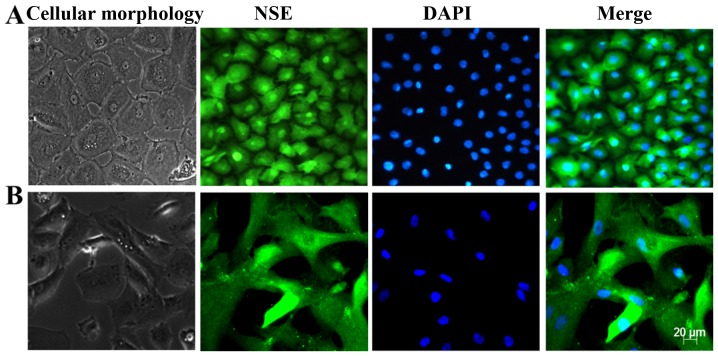
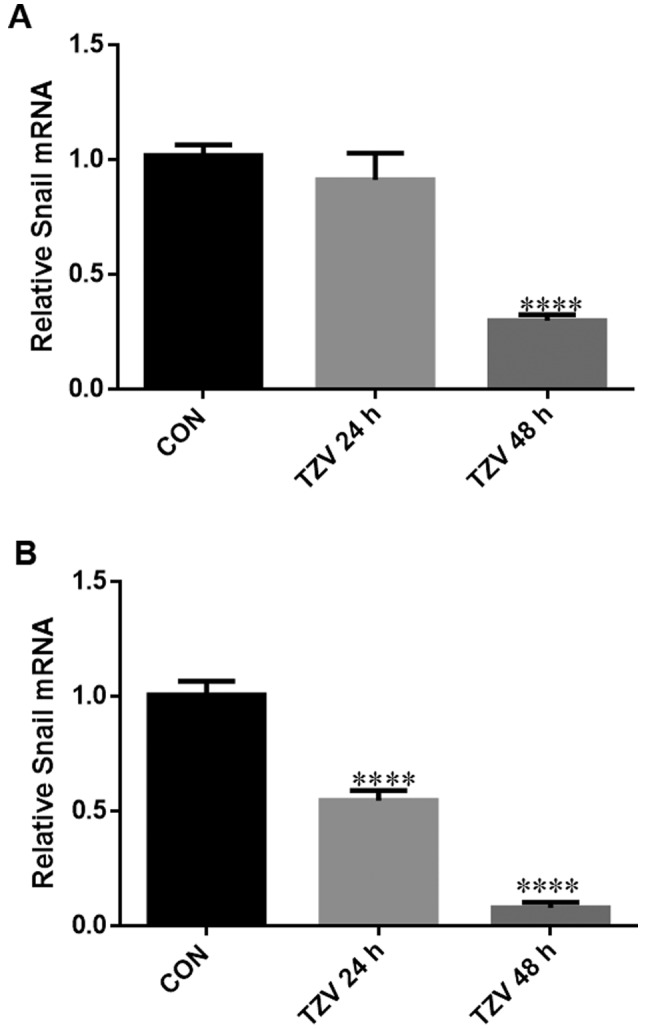
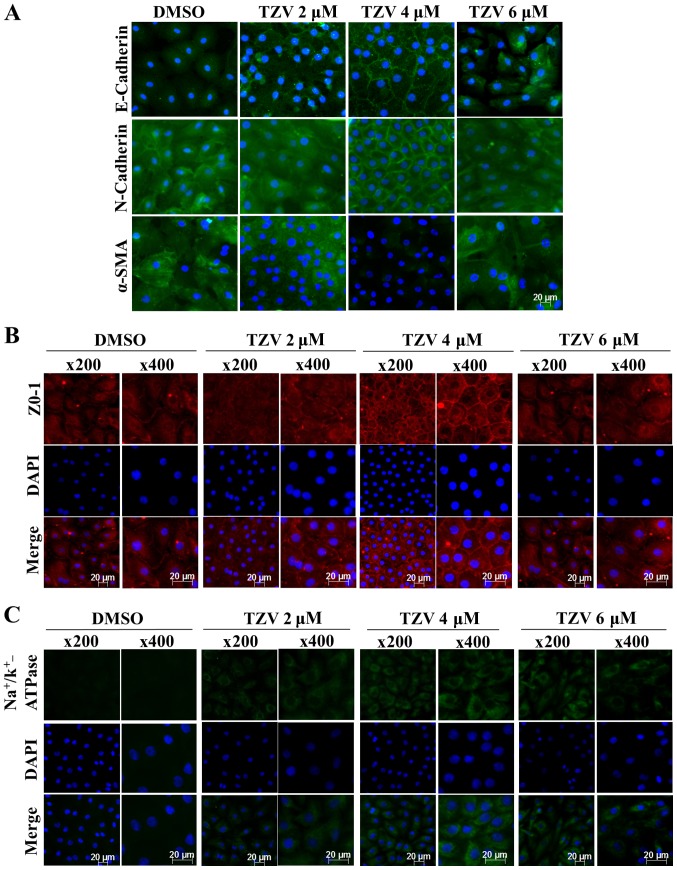
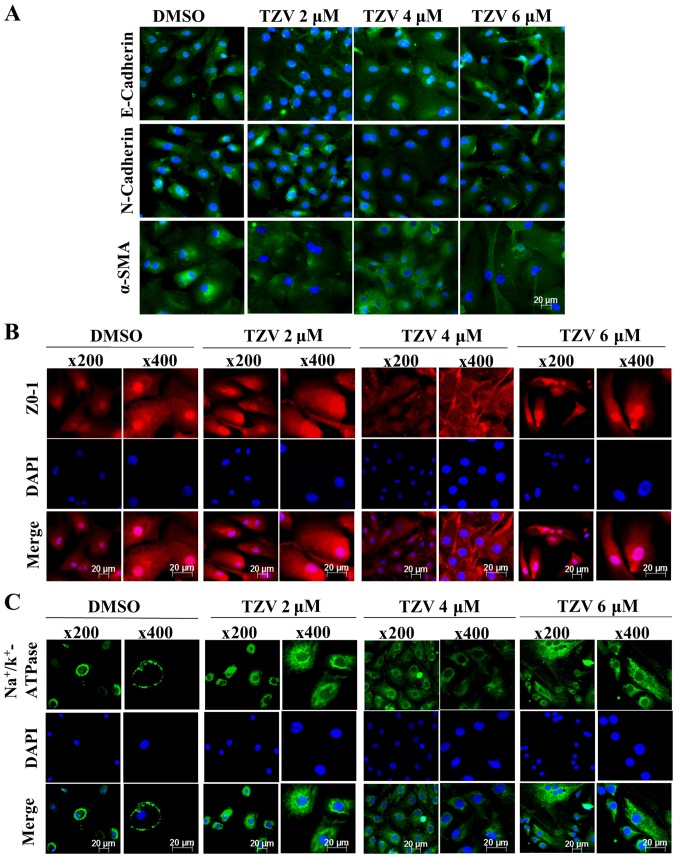
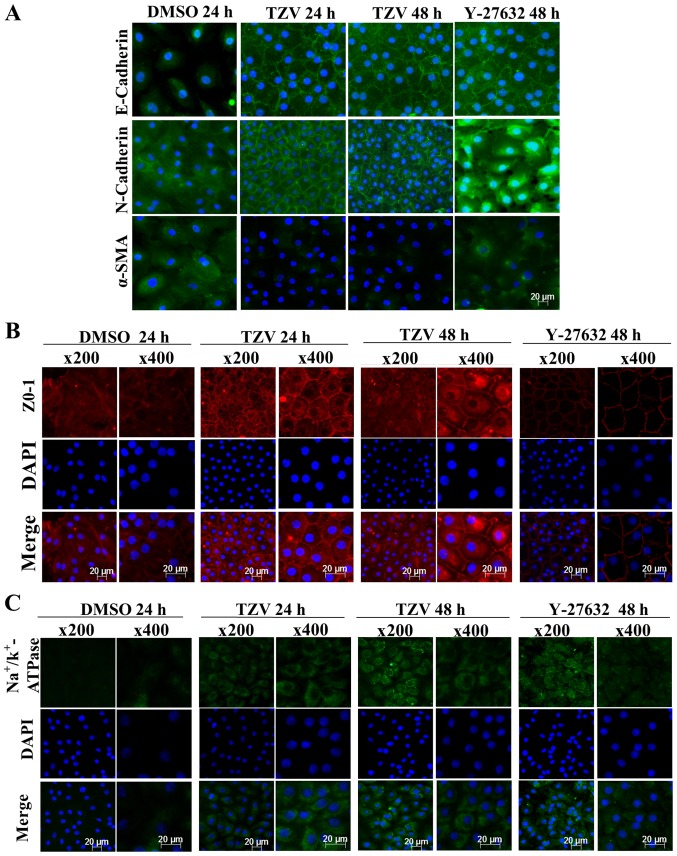
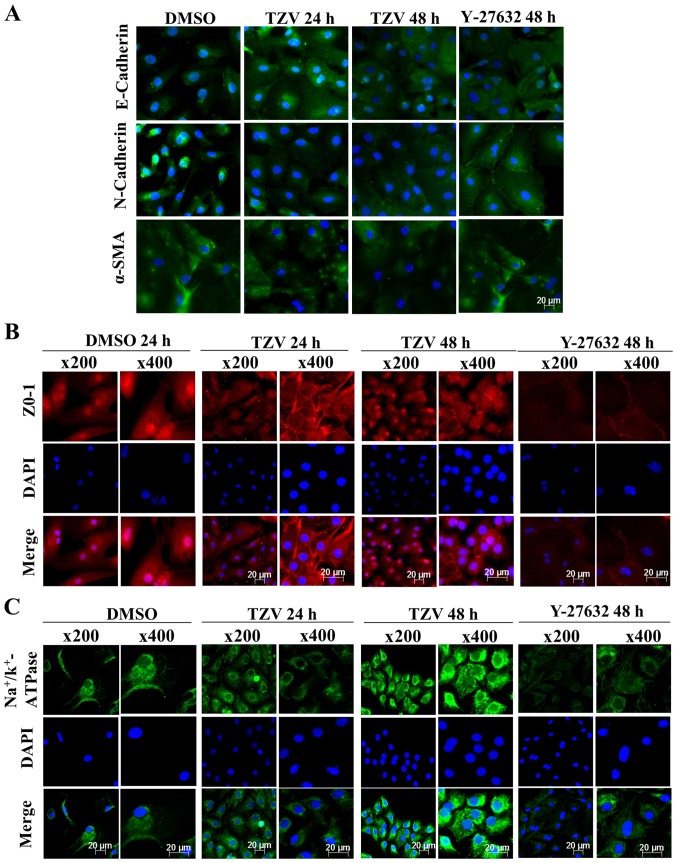
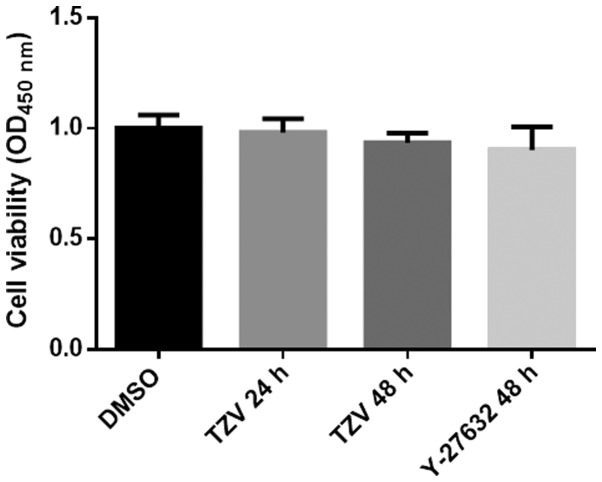
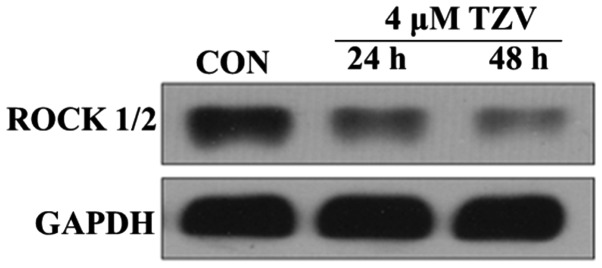
Corneal diseases exhibit a high prevalence and are prone to cause blindness; furthermore, maintaining the morphology and ionic transporter expression in corneal endothelial cells (CECs) is crucial for treatment of these diseases. This study aimed to investigate the effects of the novel Rho associated coiled-coil containing protein kinase (ROCK) inhibitor, thiazovivin (2,4‑disubstituted thiazole, TZV), on human corneal endothelial‑to‑mesenchymal transition/epithelial‑to‑mesenchymal transition (EndMT/EMT), cell morphology, junction proteins and ionic transporter expression in human CECs (HCECs) in vitro and then to clarify the mechanisms of action of TZV. In the present study, primary HCECs were cultured in vitro and passaged. The expression levels of adhesion proteins (E‑cadherin and N‑cadherin), the EndMT/EMT marker, α smooth muscle actin (α‑SMA), the tight junction protein, Zonula occludens-1 (ZO‑1), and the ionic transporter, Na+/K+‑ATPase, were detected by immunofluorescence. The proliferative ability of the HCECs was determined by CCK-8 assay. The mRNA expression of the EndMT/EMT‑inducing gene, Snail, was examined by RT‑PCR. The protein expression levels of ROCK1/2 were evaluated by western blot analysis. The HCECs were cultured with TZV at various concentrations (2, 4, or 6 µM) for different periods of time (24 or 48 h). We found that the the cell states of the HCECs co‑cultured with 4 µM TZV for 48 h reached the optimum, and corneal EndMT/EMT was inhibited, as evidenced by the significantly upregulated expression of ZO‑1 and E‑cadherin, and the markedly downregulated expression of N‑cadherin and α‑SMA. Furthermore, the cells exhibited a normal, tightly connected hexagonal or pentagonal morphology. Additionally, the protein expression of ROCK1/2 and the mRNA expression of Snail were significantly decreased. However, there was no significant difference between the TZV‑treated and the control groups as regards HCEC proliferative ability. These findings suggested that the ROCK inhibitor, TZV (4 µM), was effective in improving the morphology, cell junctions and ionic transporter expression of HCECs by inhibiting EndMT/EMT, but had no effect on HCEC proliferation.
角膜疾病发病率高,容易导致失明;此外,维持角膜内皮细胞(CECs)的形态和离子转运体表达对于这些疾病的治疗至关重要。本研究旨在探讨新型 Rho 相关卷曲螺旋蛋白激酶(ROCK)抑制剂噻唑维(2,4-二取代噻唑,TZV)对体外人角膜内皮细胞向间充质转化/上皮间充质转化(EndMT/EMT)、细胞形态、连接蛋白和离子转运体表达的影响,并阐明 TZV 的作用机制。在本研究中,体外培养原代 HCEC 并传代。通过免疫荧光法检测黏附蛋白(E-钙黏蛋白和 N-钙黏蛋白)、EndMT/EMT 标志物α平滑肌肌动蛋白(α-SMA)、紧密连接蛋白 Zonula occludens-1(ZO-1)和离子转运体 Na+/K+-ATPase 的表达水平。通过 CCK-8 测定法检测 HCEC 的增殖能力。通过 RT-PCR 检测 EndMT/EMT 诱导基因 Snail 的 mRNA 表达水平。通过 Western blot 分析评估 ROCK1/2 的蛋白表达水平。将 HCEC 分别用不同浓度(2、4 或 6μM)的 TZV 培养不同时间(24 或 48h)。我们发现,与 4μM TZV 共培养 48h 的 HCEC 细胞状态达到最佳,角膜 EndMT/EMT 受到抑制,表现为 ZO-1 和 E-钙黏蛋白表达显著上调,N-钙黏蛋白和α-SMA 表达显著下调。此外,细胞呈正常的紧密连接的六边形或五边形形态。此外,ROCK1/2 蛋白表达和 Snail mRNA 表达明显降低。然而,TZV 处理组与对照组的 HCEC 增殖能力无显著差异。这些发现表明,ROCK 抑制剂 TZV(4μM)通过抑制 EndMT/EMT 有效改善 HCEC 的形态、细胞连接和离子转运体表达,但对 HCEC 增殖无影响。