Monti Paola, Ghiorzo Paola, Menichini Paola, Foggetti Giorgia, Queirolo Paola, Izzotti Alberto, Fronza Gilberto
UOC Mutagenesis, Ospedale Policlinico San Martino, I-16132 Genova, Italy.
Department of Internal Medicine and Medical Specialties, University of Genova, I-16132 Genova, Italy.
Oncol Rep. 2017 Oct;38(4):1985-1994. doi: 10.3892/or.2017.5903. Epub 2017 Aug 14.
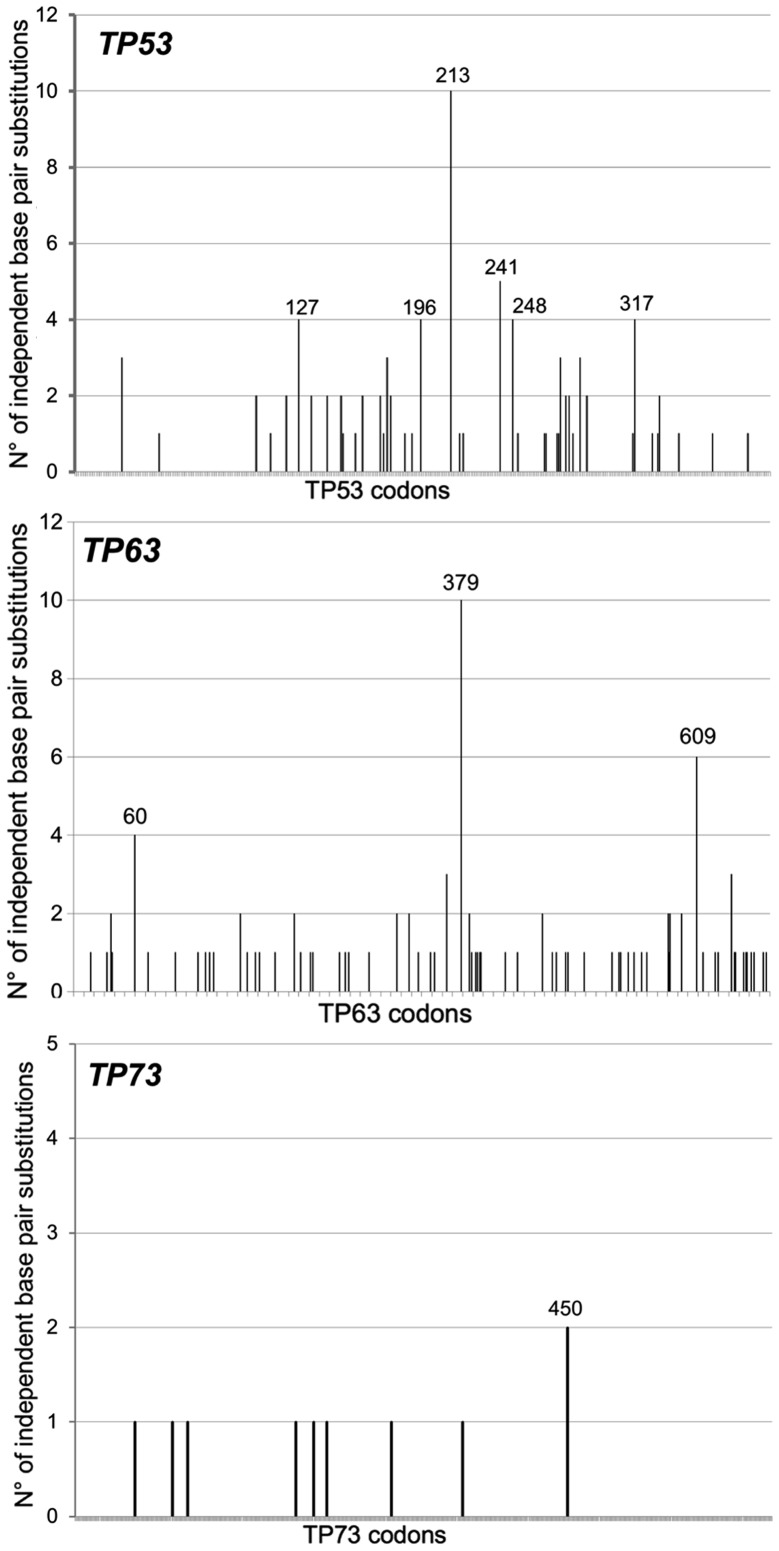
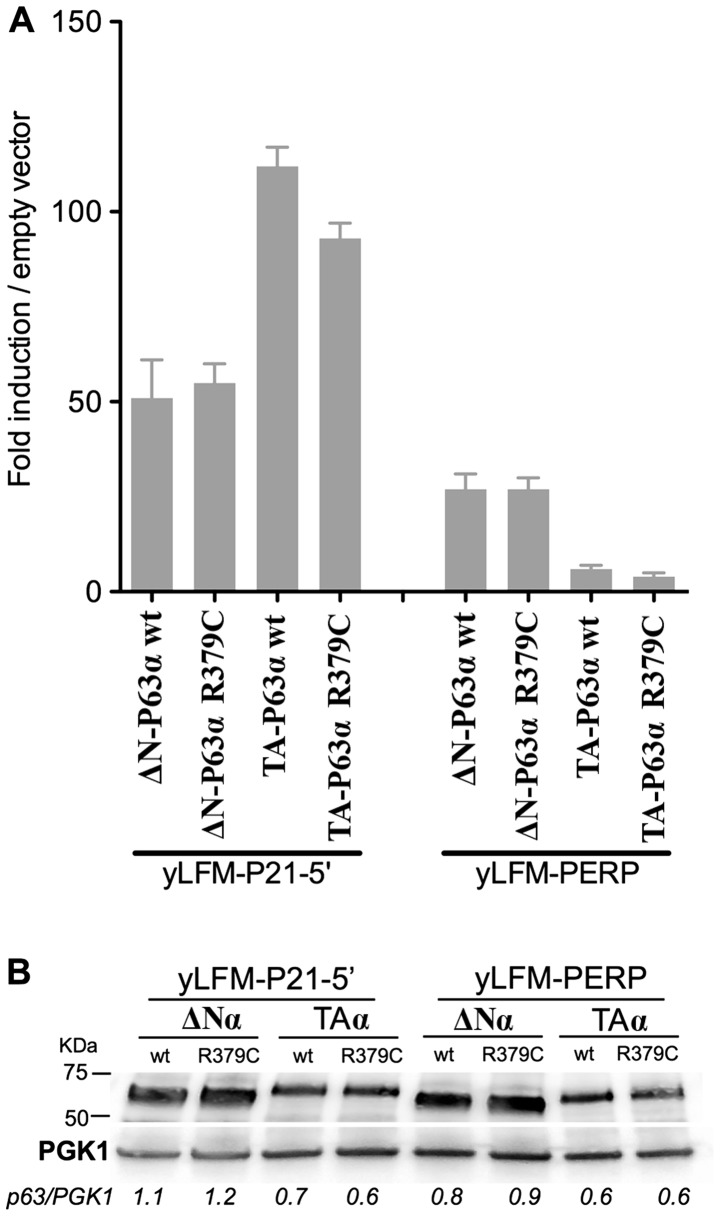
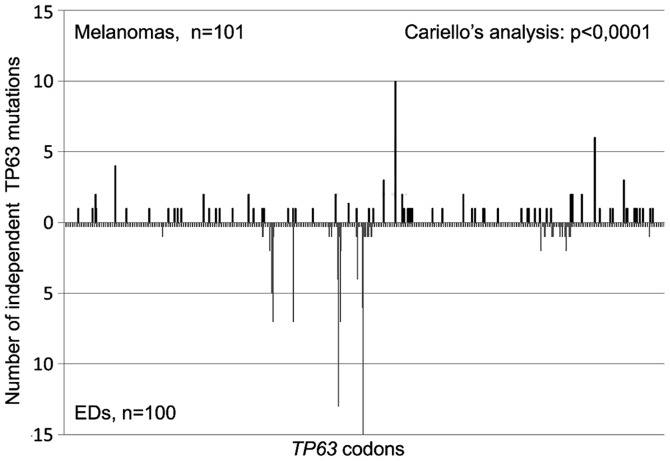
In contrast to TP53, cancer development is rarely associated with mutations in the TP63 and TP73 genes. Recently, next generation sequencing analysis revealed that TP63 mutations are frequent, specifically in cutaneous melanomas. Cutaneous melanoma represents 4% of skin cancers but it is responsible for 80% of skin cancer related deaths. In the present study, we first determined whether all three members of the P53 family of transcription factors were found mutated in cutaneous melanomas by retrieving all TP53, TP63 and TP73 mutations from cBioPortal (http://www.cbioportal.org/). TP53 and TP63 were frequently mutated [15.0% (91/605) and 14.7% (89/605), respectively], while TP73 [1.5% (9/605)] was more rarely mutated (p<0.0001). A UV-mutation fingerprint was recognized for TP63 and TP73 genes. Then, we tried to evaluate the potential role of TP63 mutations as drivers or passengers in the tumorigenic process. In the former case, the amino acid substitutions should cause significant functional consequences on the main biochemical activity of the P63 protein, namely transactivation. The predicted effects of specific amino acid substitutions by two bioinformatics tools were rather different. Using a yeast-based functional assay, the observed hotspot mutant R379CP63 protein exhibited a substantial residual activity compared to the wild-type (>70%). This result does not support a major role of the mutant P63 protein in melanomagenesis while it is still consistent with the TP63 gene being a recorder of UV exposure. The TP63 mutation spectrum from cutaneous melanomas, when compared with that observed at the germinal level in patients affected by P63-associated diseases [ectodermal dysplasia syndromes, (EDs)], revealed significant differences. The TP63 mutations were more frequent at CpGs sites (p<0.0001) in EDs and at PyPy sites (p<0.0001) in cutaneous melanomas. The two spectra differed significantly (p<0.0001). We conclude that TP63 mutations are frequent in cutaneous melanoma, support UV etiology, but their role in melanomagenesis is unclear.
与TP53不同,癌症发展很少与TP63和TP73基因的突变相关。最近,下一代测序分析显示TP63突变很常见,特别是在皮肤黑色素瘤中。皮肤黑色素瘤占皮肤癌的4%,但却导致了80%的皮肤癌相关死亡。在本研究中,我们首先通过从cBioPortal(http://www.cbioportal.org/)检索所有TP53、TP63和TP73突变,来确定转录因子P53家族的所有三个成员是否在皮肤黑色素瘤中发生突变。TP53和TP63经常发生突变[分别为15.0%(91/605)和14.7%(89/605)],而TP73[1.5%(9/605)]较少发生突变(p<0.0001)。TP63和TP73基因存在紫外线突变特征。然后,我们试图评估TP63突变在肿瘤发生过程中作为驱动因素或乘客的潜在作用。在前一种情况下,氨基酸替换应对P63蛋白的主要生化活性即反式激活产生显著的功能影响。两种生物信息学工具对特定氨基酸替换的预测效果差异很大。使用基于酵母的功能测定法,与野生型相比,观察到热点突变体R379C P63蛋白表现出相当大的残余活性(>70%)。这一结果不支持突变型P63蛋白在黑色素瘤发生中起主要作用,尽管这仍与TP63基因作为紫外线暴露的记录器一致。与在P63相关疾病(外胚层发育不良综合征,EDs)患者的生殖细胞水平观察到的情况相比,皮肤黑色素瘤的TP63突变谱显示出显著差异。在EDs中,TP63突变在CpG位点更常见(p<0.0001),而在皮肤黑色素瘤中在PyPy位点更常见(p<0.0001)。这两种谱有显著差异(p<0.0001)。我们得出结论,TP63突变在皮肤黑色素瘤中很常见,支持紫外线病因,但它们在黑色素瘤发生中的作用尚不清楚。