Cryer Byron, Drossman Douglas A, Chey William D, Webster Lynn, Habibi Sepideh, Wang Martin
Internal Medicine, Veterans Affairs North Texas Health Care System, University of Texas Southwestern Medical School, 5323 Harry Hines Blvd, Dallas, TX, 75390, USA.
UNC Center for Functional GI and Motility Disorders, University of North Carolina at Chapel Hill, 55 Vilcom Center Drive, Suite 110, Chapel Hill, NC, 27514, USA.
Dig Dis Sci. 2017 Dec;62(12):3568-3578. doi: 10.1007/s10620-017-4680-1. Epub 2017 Aug 28.
Lubiprostone is a ClC-2 chloride channel activator approved for the treatment of chronic idiopathic constipation (CIC) and opioid-induced constipation (OIC) in adults and irritable bowel syndrome with constipation (IBS-C) in women. Lubiprostone is generally well tolerated, with nausea being the most common adverse event.
To characterize nausea with lubiprostone using pooled results from clinical studies in patients with CIC, OIC, or IBS-C.
Data from three 3- and 4-week placebo-controlled studies and three long-term open-label studies were pooled for the CIC analysis. The OIC and IBS-C analyses each used pooled data from three 12-week placebo-controlled studies and one 36-week open-label extension study.
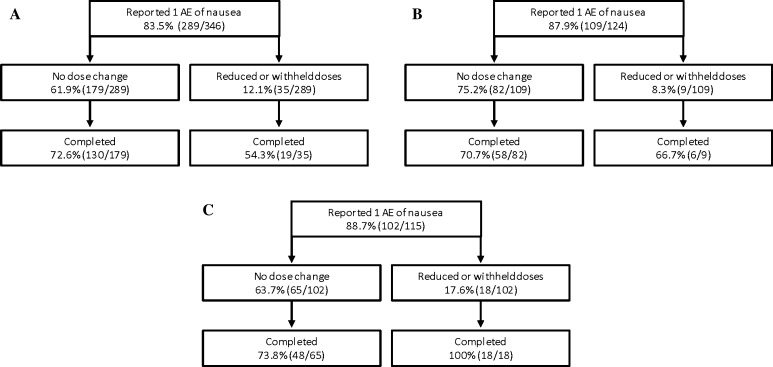
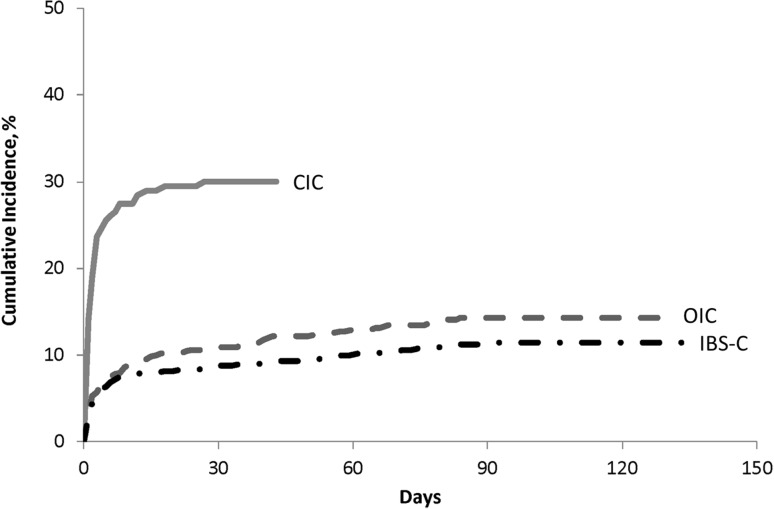
The populations included the following numbers of patients: CIC, 316 (placebo) and 1113 (lubiprostone 24 mcg twice daily [BID]); OIC, 652 (placebo) and 889 (lubiprostone 24 mcg BID); and IBS-C, 435 (placebo) and 1011 (lubiprostone 8 mcg BID). The incidence of nausea in lubiprostone-treated patients ranged from 11.4 to 31.1%, with the highest incidence in patients with CIC. Among patients with any nausea, most reported only mild or moderate severity (96.5-99.1% across indications) and only one event (83.6-88.7%); most events occurred within the first 5 days of treatment.
Nausea was the most common adverse event following the treatment with lubiprostone. Event rates varied by indication and dose, and the majority of nausea adverse events were mild to moderate in severity. Nausea events predominantly occurred early in the treatment period in all of the pooled study populations.
鲁比前列酮是一种氯离子通道蛋白2(ClC-2)激活剂,已被批准用于治疗成人慢性特发性便秘(CIC)、阿片类药物引起的便秘(OIC)以及女性便秘型肠易激综合征(IBS-C)。鲁比前列酮总体耐受性良好,恶心是最常见的不良事件。
利用CIC、OIC或IBS-C患者临床研究的汇总结果,描述使用鲁比前列酮后的恶心情况。
三项3周和4周的安慰剂对照研究以及三项长期开放标签研究的数据被汇总用于CIC分析。OIC和IBS-C分析分别使用了三项12周安慰剂对照研究和一项36周开放标签扩展研究的汇总数据。
各研究人群中的患者数量如下:CIC,316例(安慰剂组)和1113例(鲁比前列酮24微克,每日两次[BID]);OIC,652例(安慰剂组)和889例(鲁比前列酮24微克,BID);IBS-C,435例(安慰剂组)和1011例(鲁比前列酮8微克,BID)。接受鲁比前列酮治疗的患者中恶心的发生率在11.4%至31.1%之间,CIC患者中的发生率最高。在出现任何恶心症状的患者中,大多数报告症状仅为轻度或中度(各适应症患者中为96.5 - 99.1%),且只有一次发作(83.6 - 88.7%);大多数发作发生在治疗的前5天内。
恶心是使用鲁比前列酮治疗后最常见的不良事件。事件发生率因适应症和剂量而异,且大多数恶心不良事件的严重程度为轻度至中度。在所有汇总研究人群中,恶心事件主要发生在治疗早期。