Research Laboratory in Applied Metabolic Engineering, Department of Chemical Engineering, École Polytechnique de Montréal, Montréal, Quebéc, Canada.
Sci Rep. 2017 Aug 29;7(1):9850. doi: 10.1038/s41598-017-10464-1.
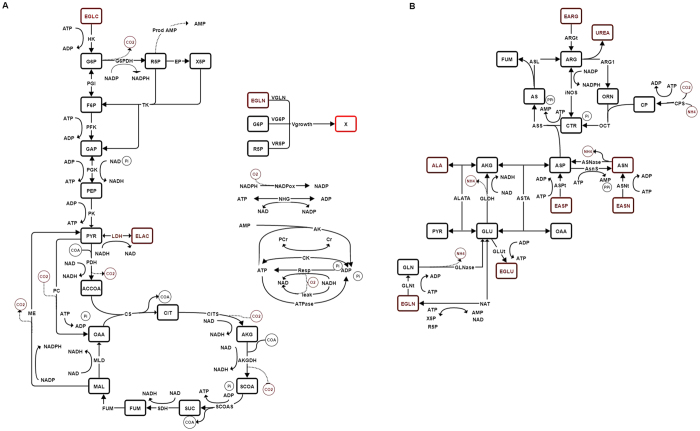
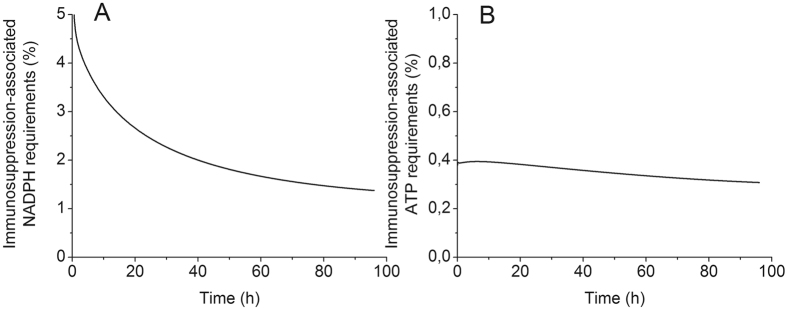
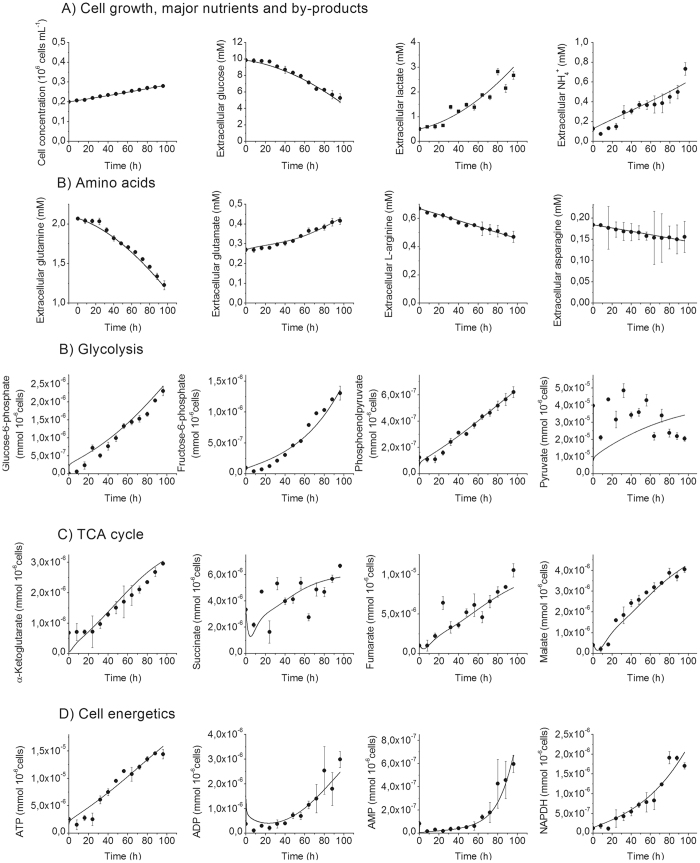
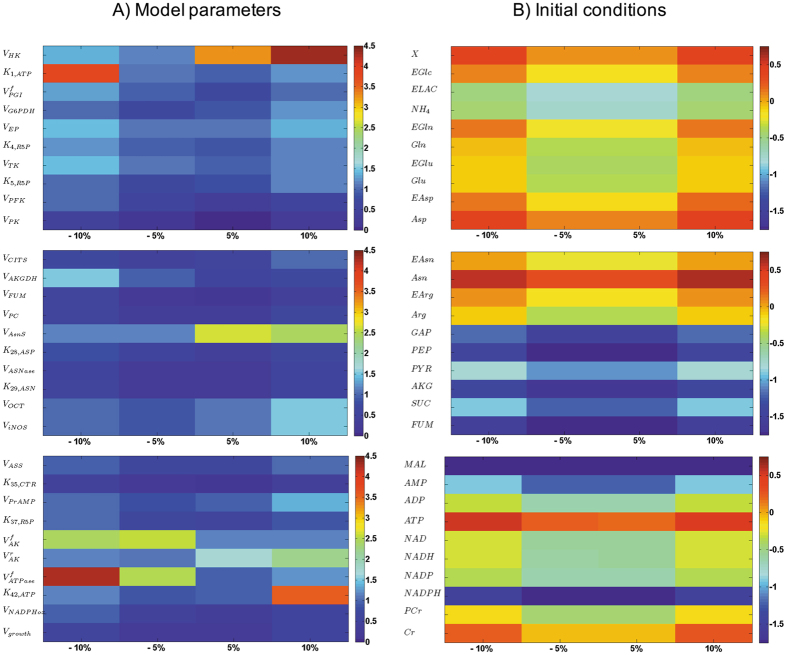
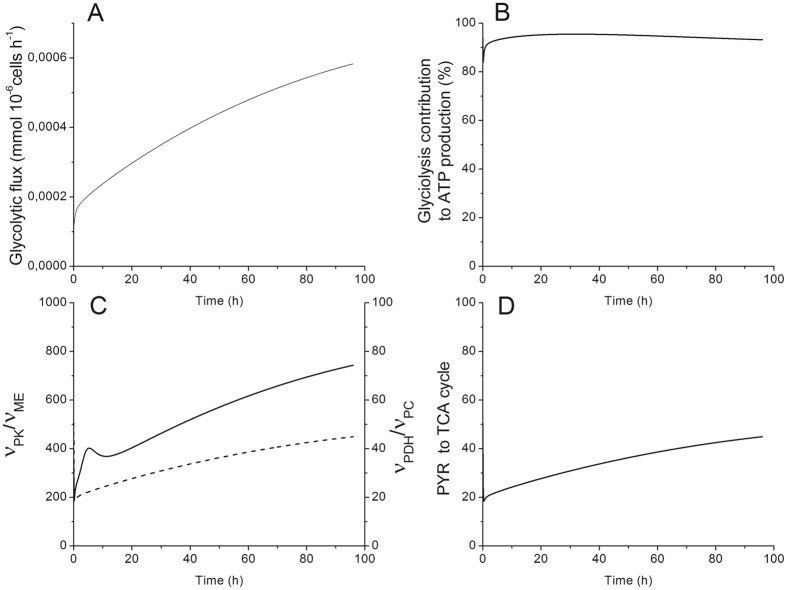
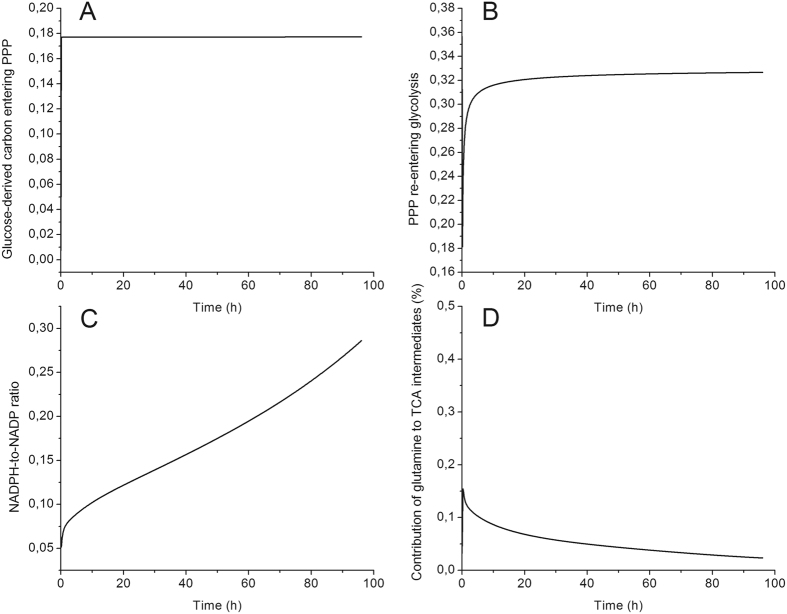
Recent years have witnessed an increasing interest at understanding the role of myeloid-derived suppressor cells (MDSCs) in cancer-induced immunosuppression, with efforts to inhibit their maturation and/or their activity. We have thus modelled MDSCs central carbon metabolism and bioenergetics dynamic, calibrating the model using experimental data on in vitro matured mice bone marrow cells into MDSCs. The model was then used to probe the cells metabolic state and dynamics, performing a dynamic metabolic flux analysis (dMFA) study. Indeed, MDSCs maturation correlates with a high glycolytic flux contributing to up to 95% of the global ATP turnover rate, while most of the glucose-derived carbon enters the TCA cycle. Model simulations also reveal that pentose phosphate pathway and oxidative phosphorylation activities were kept at minimal levels to ensure NADPH production and anabolic precursors synthesis. Surprisingly, MDSCs immunosuppressive activity, i.e. L-arginine uptake, metabolism and endogenous synthesis, only consumes sparse quantities of energy-rich nucleotides (ATP and NADPH). Therefore, model simulations suggest that MDSCs exhibit a heterogeous metabolic profile similar to tumour cells. This behavior is probably an indirect immunosuppressive mechanism where MDSCs reduce the availability of carbon sources in the tumour periphery microenvironment, which could explain the dysfuntion and death of immune effector cells.
近年来,人们越来越关注髓系来源的抑制性细胞(MDSCs)在癌症引起的免疫抑制中的作用,并努力抑制其成熟和/或活性。因此,我们模拟了 MDSCs 的中心碳代谢和生物能量动态,使用体外成熟的小鼠骨髓细胞向 MDSCs 模型校准了模型。然后,该模型用于探测细胞的代谢状态和动态,进行动态代谢通量分析(dMFA)研究。事实上,MDSCs 的成熟与高糖酵解通量相关,该通量对全球 ATP 周转率的贡献高达 95%,而大部分葡萄糖衍生的碳进入 TCA 循环。模型模拟还表明,磷酸戊糖途径和氧化磷酸化活性保持在最低水平,以确保 NADPH 的产生和合成前体。令人惊讶的是,MDSCs 的免疫抑制活性,即 L-精氨酸摄取、代谢和内源性合成,只消耗少量的高能核苷酸(ATP 和 NADPH)。因此,模型模拟表明 MDSCs 表现出与肿瘤细胞相似的异质代谢特征。这种行为可能是一种间接的免疫抑制机制,其中 MDSCs 减少肿瘤周围微环境中碳源的可用性,这可以解释免疫效应细胞的功能障碍和死亡。