Schram Alison M, Chang Matthew T, Jonsson Philip, Drilon Alexander
Department of Medicine 1275 York Avenue, New York, New York 10065, USA.
Human Oncology and Pathogenesis Program, Memorial Sloan Kettering Cancer Center, 1275 York Avenue, New York, New York 10065, USA.
Nat Rev Clin Oncol. 2017 Dec;14(12):735-748. doi: 10.1038/nrclinonc.2017.127. Epub 2017 Aug 31.
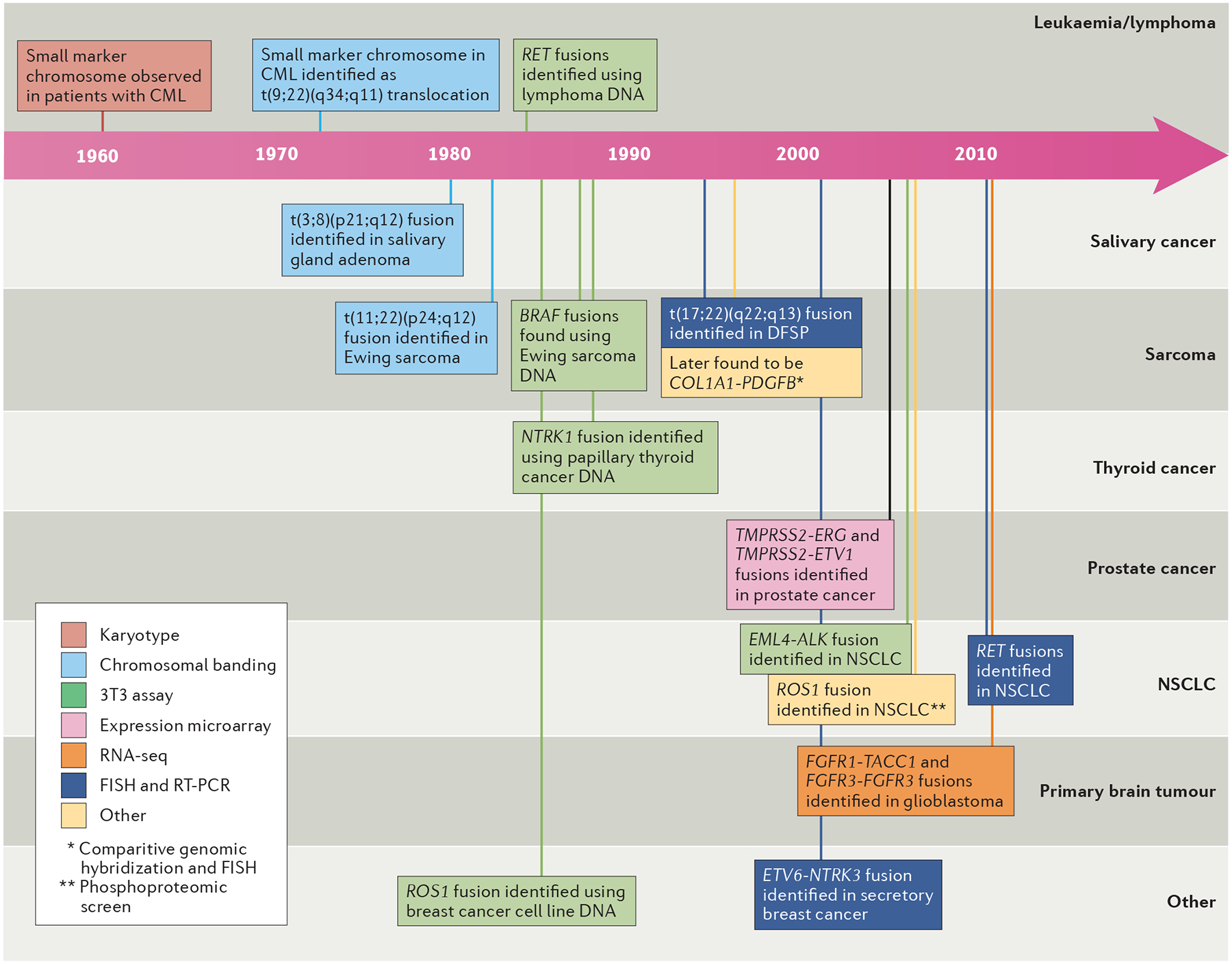
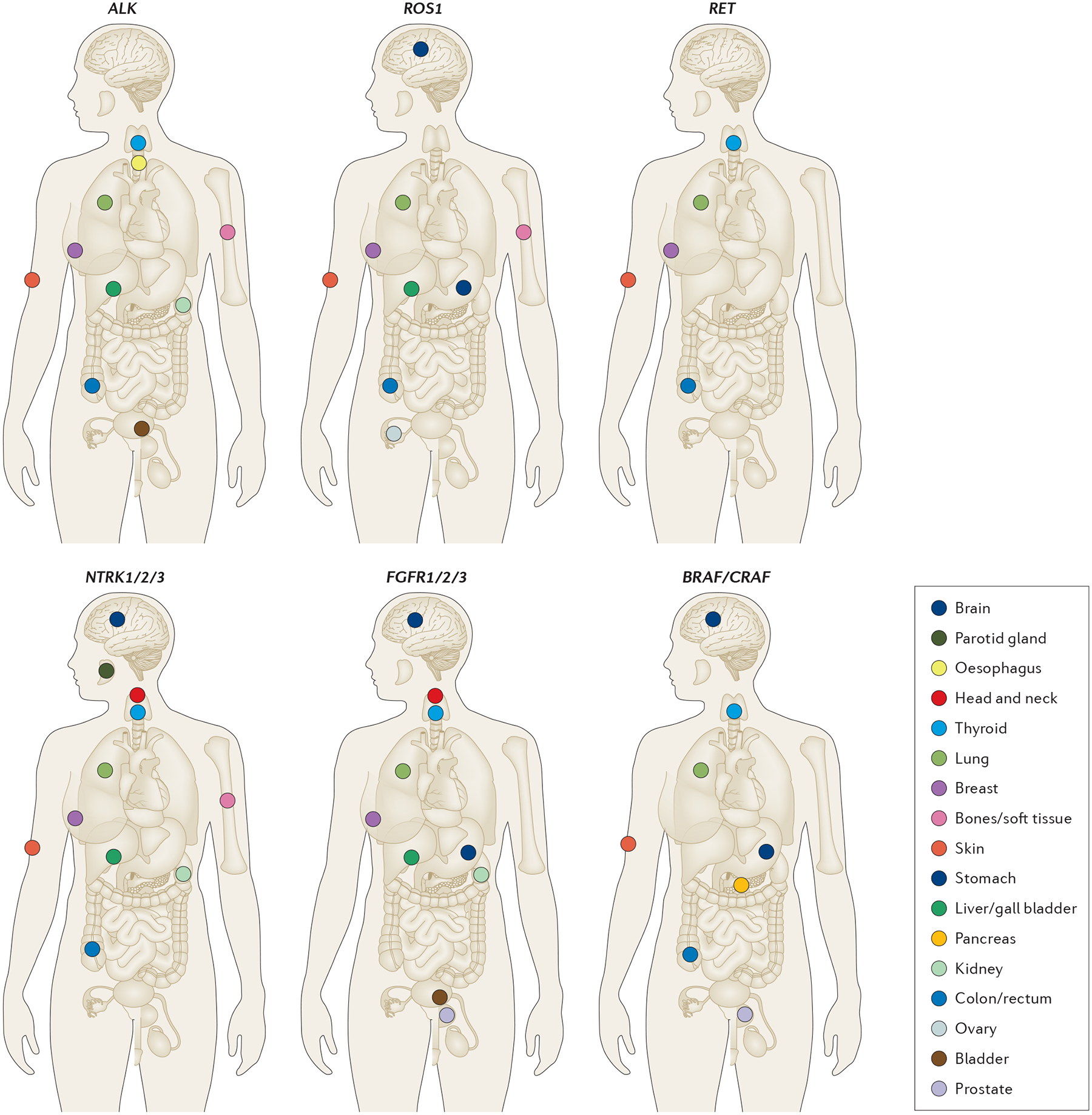
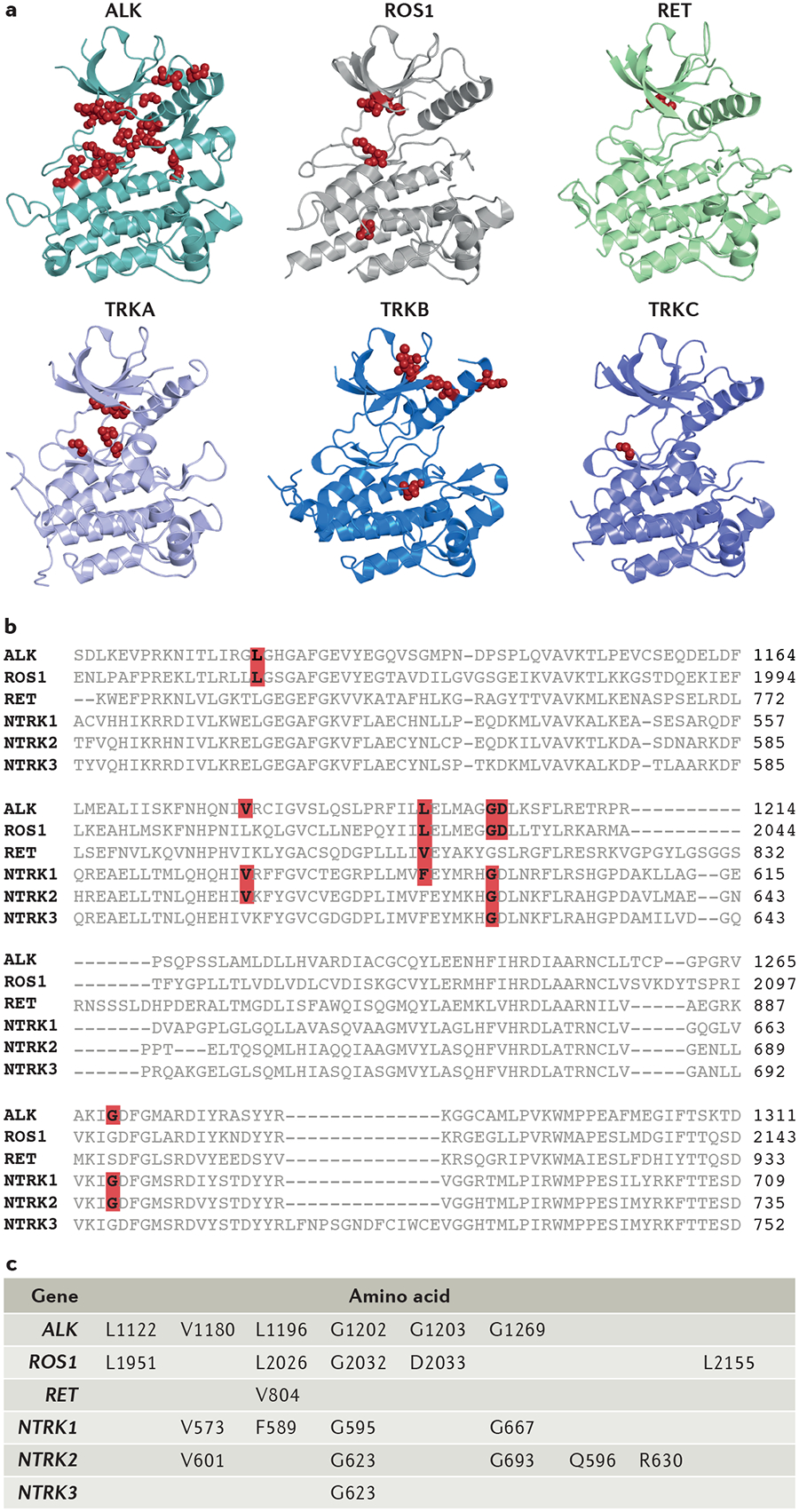
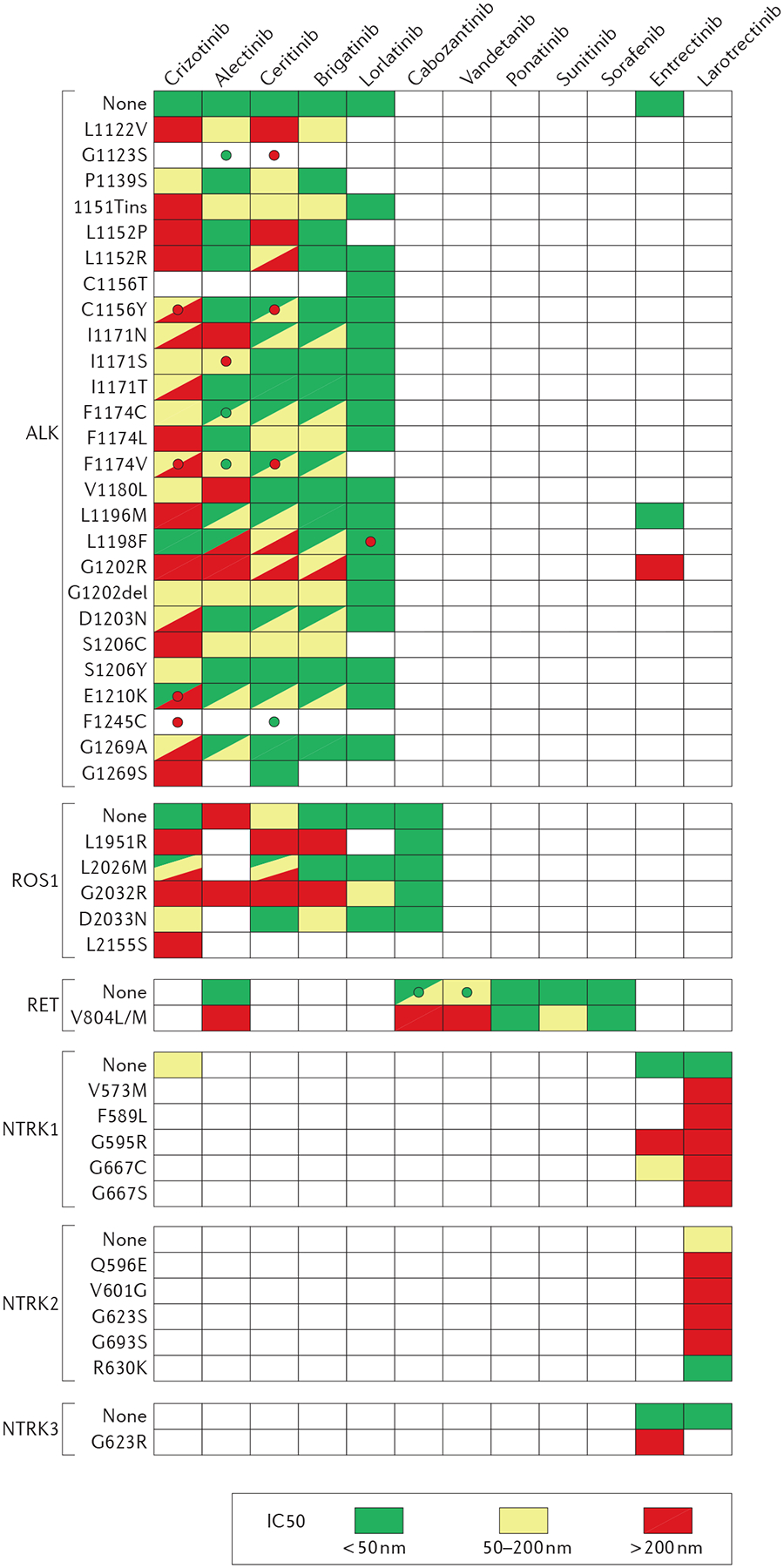
Structural gene rearrangements resulting in gene fusions are frequent events in solid tumours. The identification of certain activating fusions can aid in the diagnosis and effective treatment of patients with tumours harbouring these alterations. Advances in the techniques used to identify fusions have enabled physicians to detect these alterations in the clinic. Targeted therapies directed at constitutively activated oncogenic tyrosine kinases have proven remarkably effective against cancers with fusions involving ALK, ROS1, or PDGFB, and the efficacy of this approach continues to be explored in malignancies with RET, NTRK1/2/3, FGFR1/2/3, and BRAF/CRAF fusions. Nevertheless, prolonged treatment with such tyrosine-kinase inhibitors (TKIs) leads to the development of acquired resistance to therapy. This resistance can be mediated by mutations that alter drug binding, or by the activation of bypass pathways. Second-generation and third-generation TKIs have been developed to overcome resistance, and have variable levels of activity against tumours harbouring individual mutations that confer resistance to first-generation TKIs. The rational sequential administration of different inhibitors is emerging as a new treatment paradigm for patients with tumours that retain continued dependency on the downstream kinase of interest.
导致基因融合的结构基因重排是实体瘤中的常见事件。某些激活融合的鉴定有助于对携带这些改变的肿瘤患者进行诊断和有效治疗。用于鉴定融合的技术进展使医生能够在临床中检测到这些改变。针对组成性激活的致癌酪氨酸激酶的靶向治疗已被证明对具有涉及ALK、ROS1或PDGFB融合的癌症非常有效,并且这种方法的疗效仍在具有RET、NTRK1/2/3、FGFR1/2/3和BRAF/CRAF融合的恶性肿瘤中进行探索。然而,用此类酪氨酸激酶抑制剂(TKIs)进行长期治疗会导致获得性耐药。这种耐药可由改变药物结合的突变介导,或由旁路途径的激活介导。已开发出第二代和第三代TKIs来克服耐药性,并且它们对携带赋予对第一代TKIs耐药性的个别突变的肿瘤具有不同水平的活性。对于仍然持续依赖相关下游激酶的肿瘤患者,合理序贯使用不同抑制剂正在成为一种新的治疗模式。