Faculty of Psychology and Neuroscience, Maastricht University, Maastricht, Netherlands.
Ernst Strüngmann Institute (ESI) for Neuroscience in Cooperation with Max Planck Society, Frankfurt, Germany.
Elife. 2017 Aug 31;6:e26642. doi: 10.7554/eLife.26642.
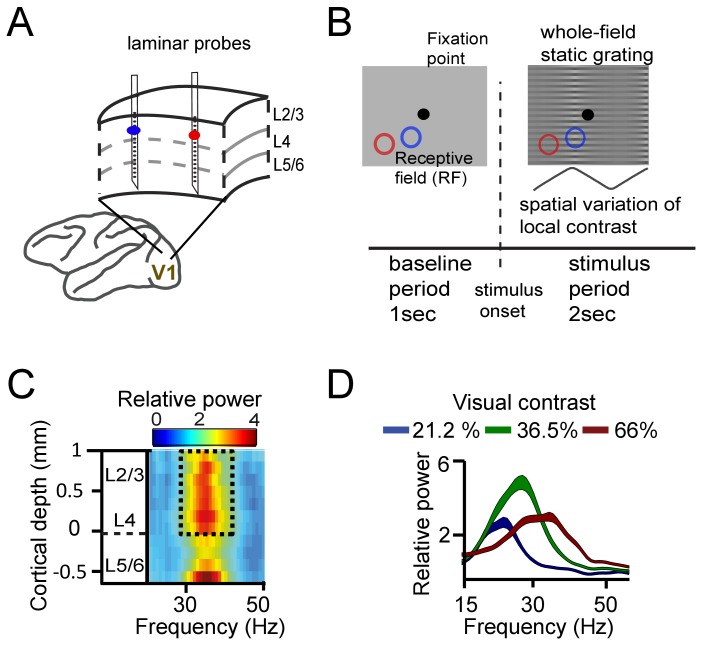
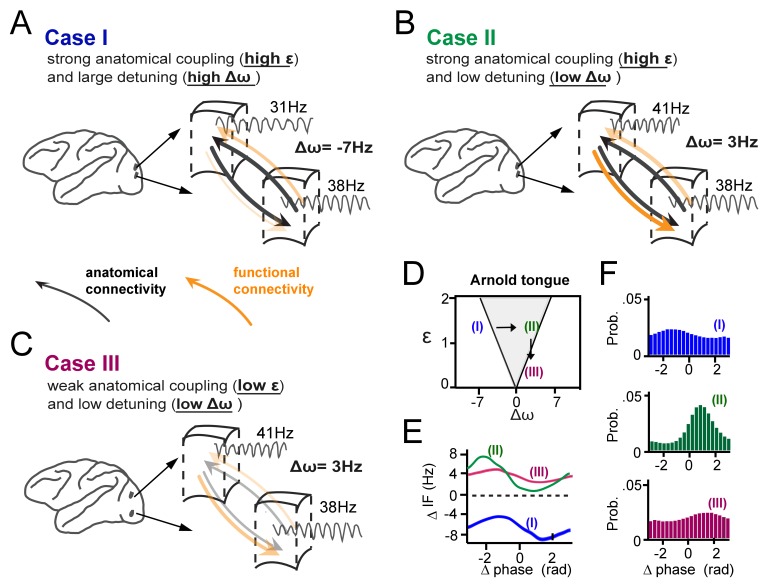
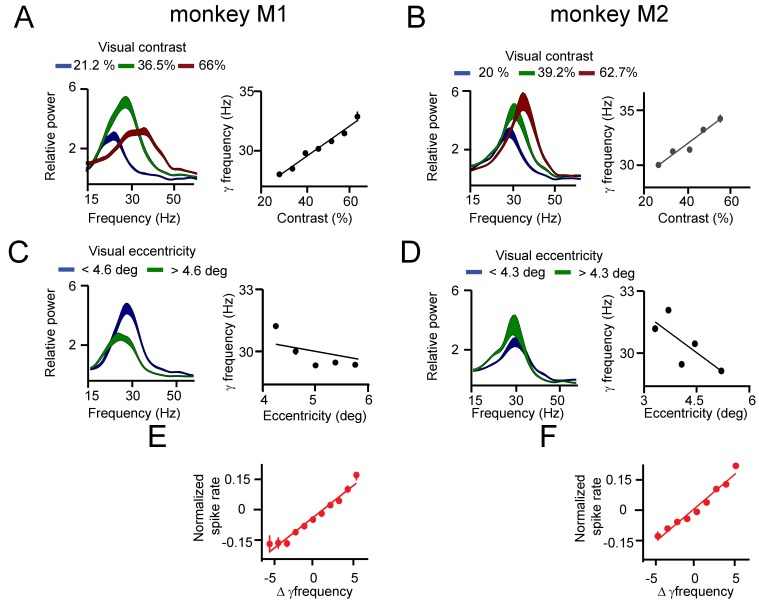
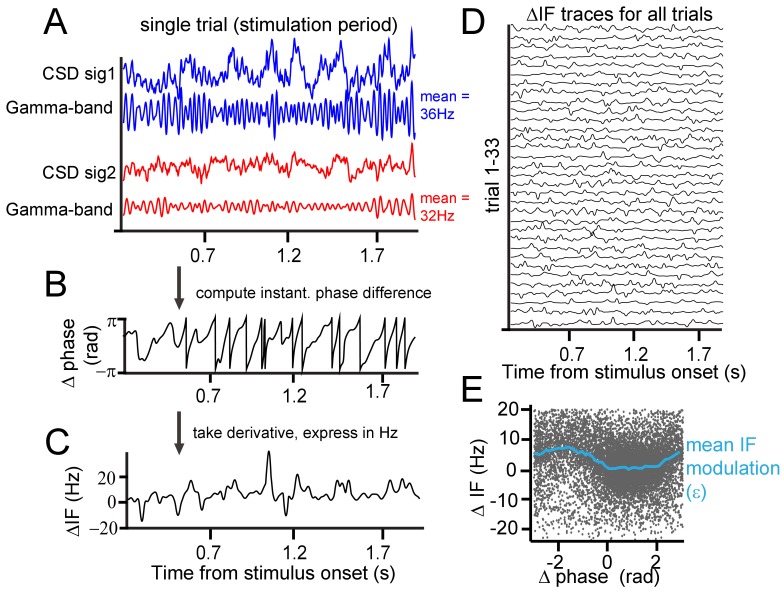
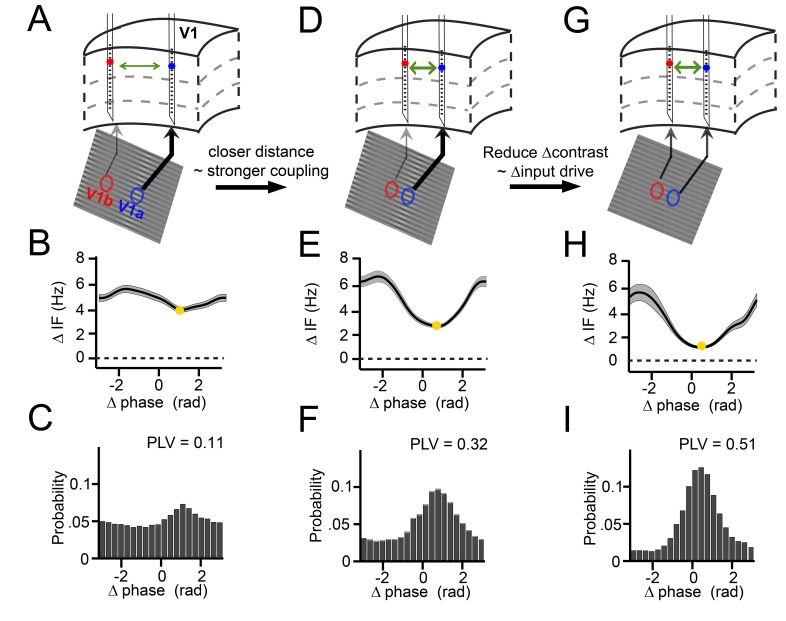
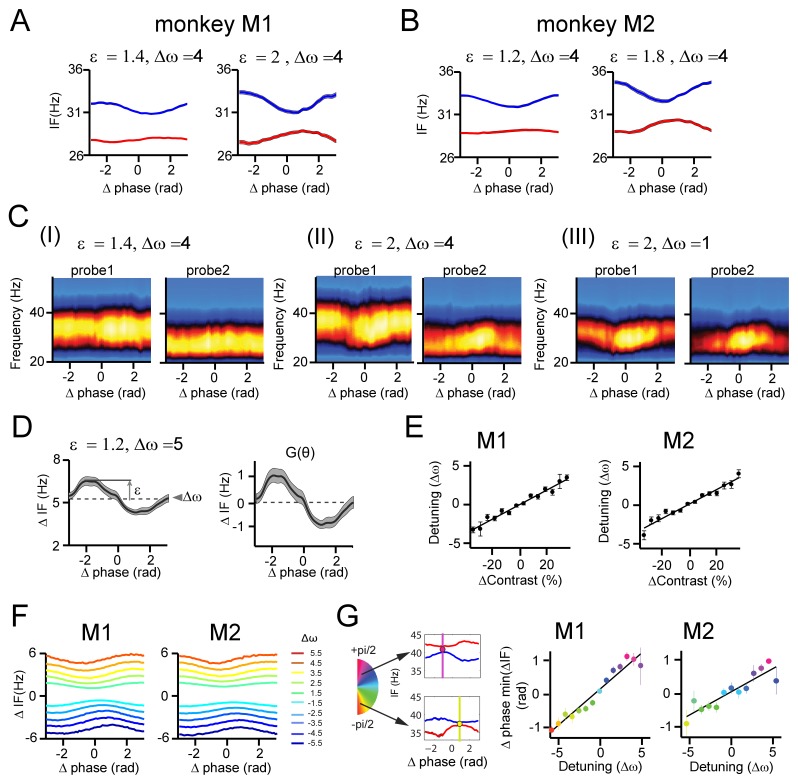
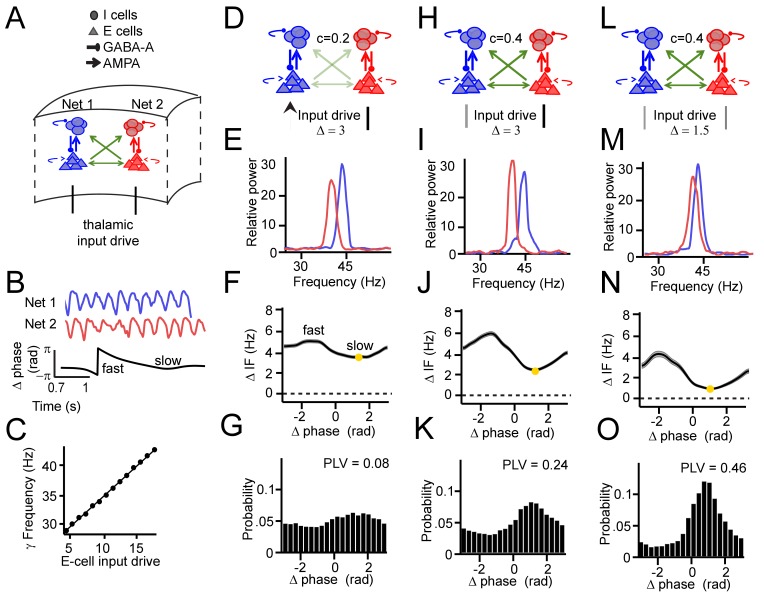
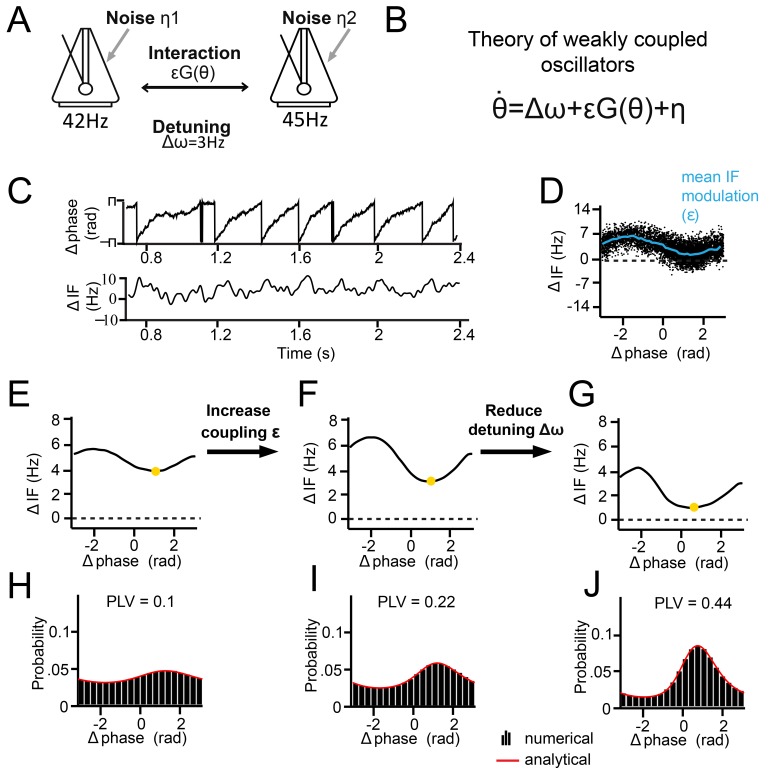
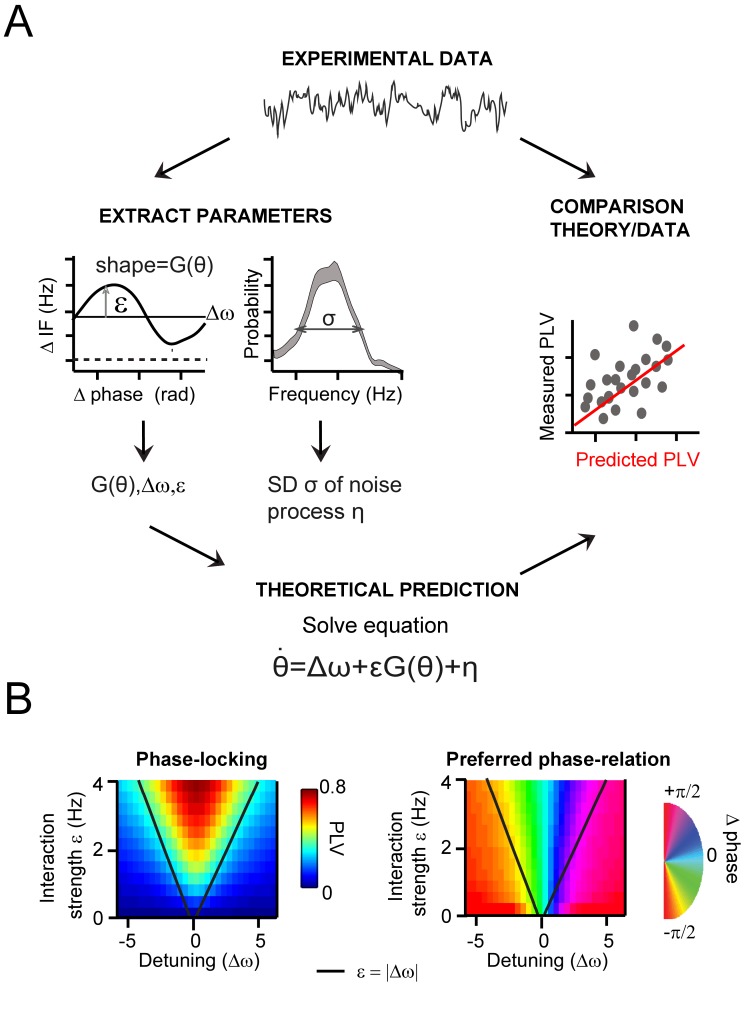
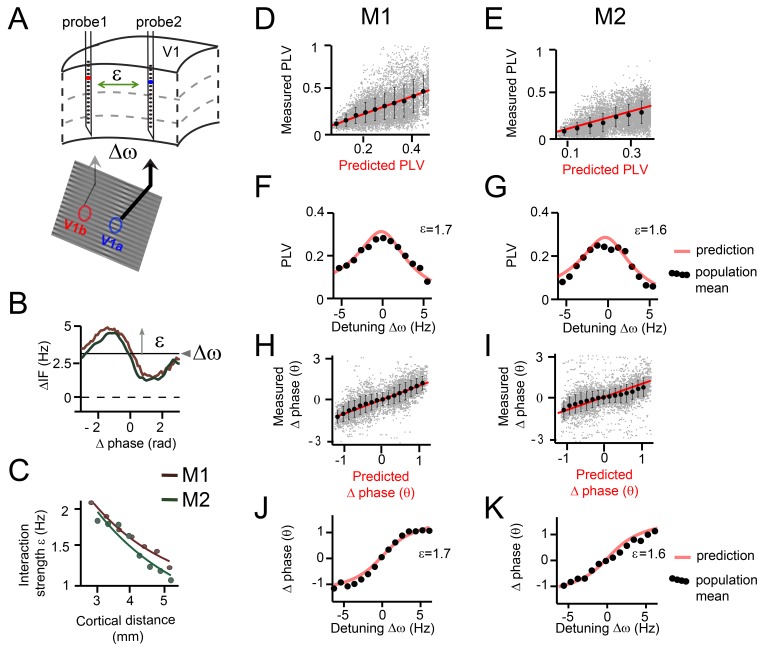
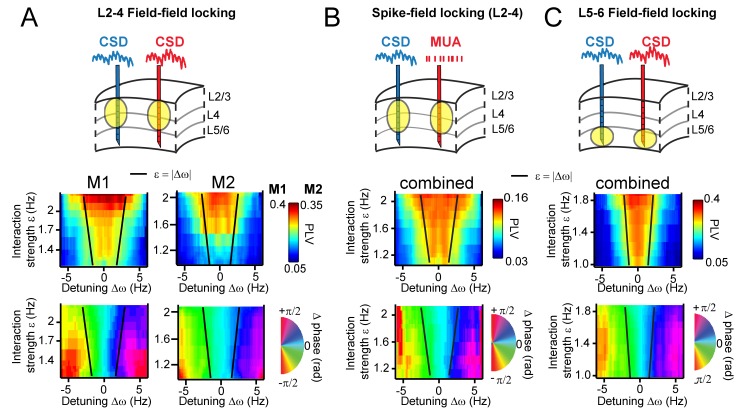
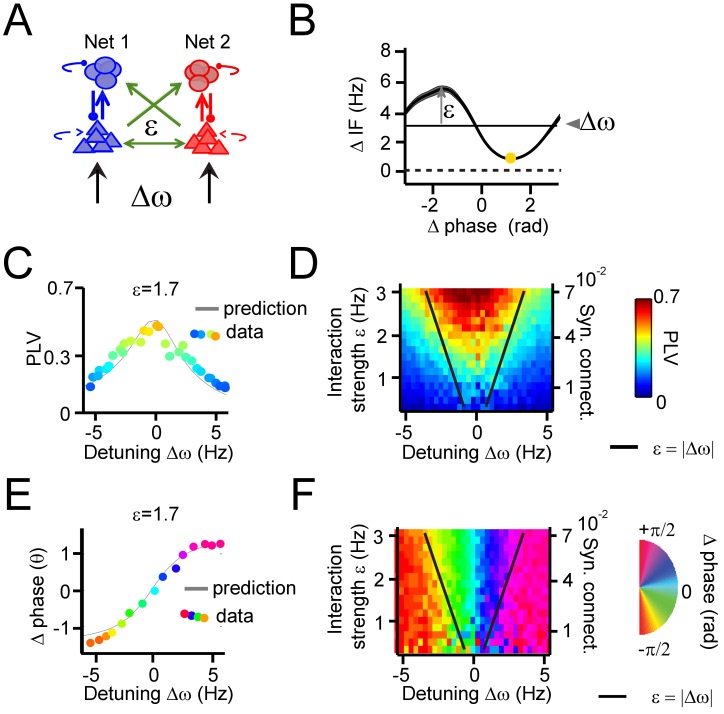
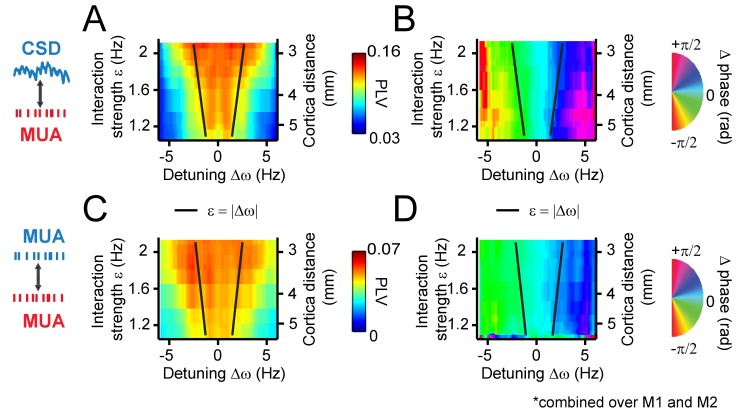
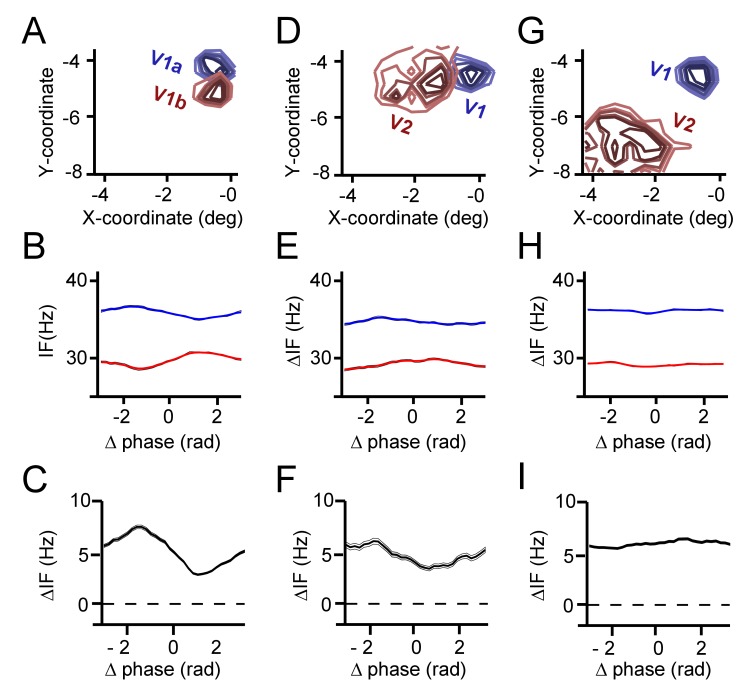
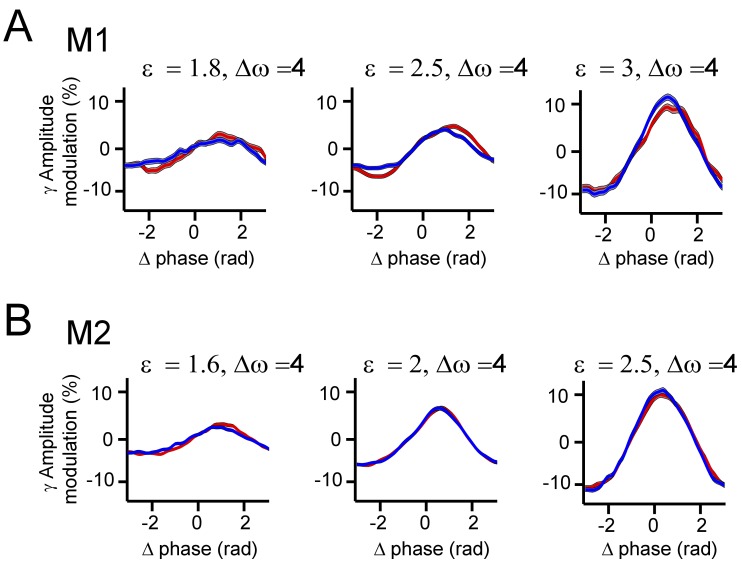
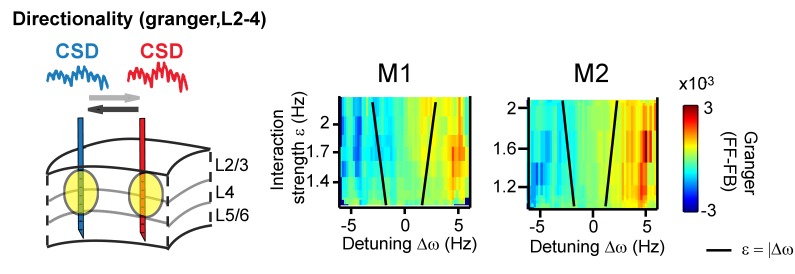
Gamma-band synchronization coordinates brief periods of excitability in oscillating neuronal populations to optimize information transmission during sensation and cognition. Commonly, a stable, shared frequency over time is considered a condition for functional neural synchronization. Here, we demonstrate the opposite: instantaneous frequency modulations are critical to regulate phase relations and synchronization. In monkey visual area V1, nearby local populations driven by different visual stimulation showed different gamma frequencies. When similar enough, these frequencies continually attracted and repulsed each other, which enabled preferred phase relations to be maintained in periods of minimized frequency difference. Crucially, the precise dynamics of frequencies and phases across a wide range of stimulus conditions was predicted from a physics theory that describes how weakly coupled oscillators influence each other's phase relations. Hence, the fundamental mathematical principle of synchronization through instantaneous frequency modulations applies to gamma in V1 and is likely generalizable to other brain regions and rhythms.
Gamma 波段同步协调振荡神经元群体的短暂兴奋期,以优化感觉和认知过程中的信息传递。通常,随着时间的推移,稳定的共享频率被认为是功能神经同步的条件。在这里,我们证明了相反的情况:瞬时频率调制对于调节相位关系和同步至关重要。在猴子的视觉区域 V1 中,由不同视觉刺激驱动的附近局部群体表现出不同的 gamma 频率。当它们足够相似时,这些频率会不断地相互吸引和排斥,从而使相位关系在最小频率差异的时期得以维持。至关重要的是,通过描述弱耦合振荡器如何影响彼此相位关系的物理理论,可以预测在广泛的刺激条件下频率和相位的精确动态。因此,通过瞬时频率调制实现同步的基本数学原理适用于 V1 中的 gamma 波段,并且可能适用于其他脑区和节律。