Koy T, Ganse B, Zange J, Rittweger J, Pohle-Fröhlich R, Fings-Meuthen P, Johannes B, Felsenberg D, Eysel P, Bansmann P M, Belavý D L
University of Cologne, Department of Orthopaedic and Trauma Surgery, Kerpener Str. 62, D-50937 Cologne, Germany.
J Musculoskelet Neuronal Interact. 2017 Sep 1;17(3):140-145.
Spaceflight back pain and intervertebral disc (IVD) herniations cause problems in astronauts. Purpose of this study was to assess changes in T2-relaxation-time through MRI measurements before and after head-down tilt bed-rest, a spaceflight analog.
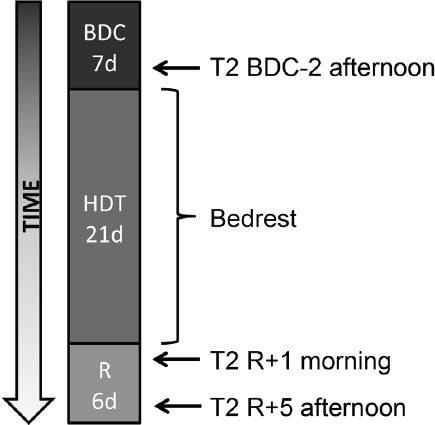
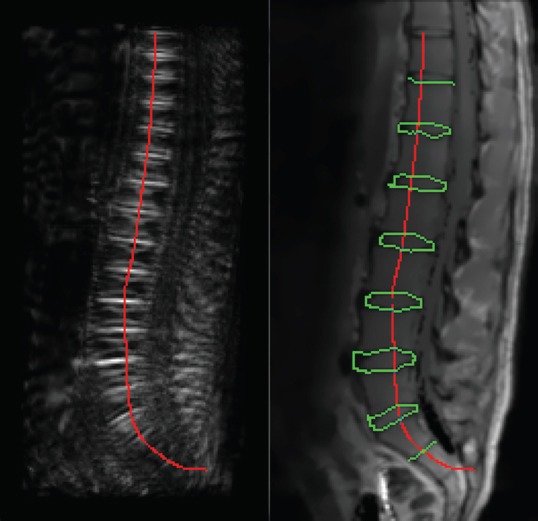
8 men participated in the bed-rest study. Subjects remained in 6° head down tilt bed-rest in two campaigns of 21 days, and received a nutritional intervention (potassium bicarbonate 90 mmol/d) in a cross-over design. MRI measurements were performed 2 days before bed-rest, as well as one and five days after getting up. Image segmentation and data analysis were conducted for the IVDs Th12/L1 to L5/S1.
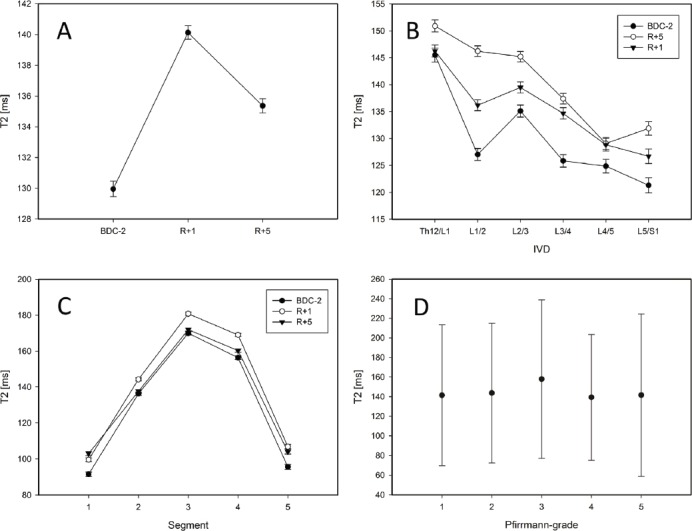
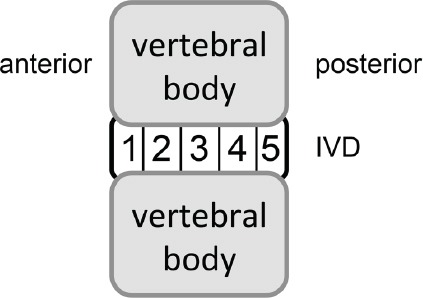
7 subjects, average age of 27.6 (SD 3.3) years, completed the study. Results showed a significant increase in T2-time in all IVDs (p⟨0.001), more pronounced in the nucleus pulposus than in the annulus fibrosus (p⟨0.001). Oral potassium bicarbonate did not show an effect (p=0.443). Pfirrmann-grade correlated with the T2-time (p⟨0.001).
6° head-down tilt bed-rest leads to a T2-time increase in lumbar IVDs. Oral potassium bicarbonate supplementation does not have an effect on IVD T2-time.
太空飞行引起的背痛和椎间盘突出给宇航员带来了问题。本研究的目的是通过磁共振成像(MRI)测量,评估头低位卧床休息(一种模拟太空飞行的状态)前后T2弛豫时间的变化。
8名男性参与了卧床休息研究。受试者在两个为期21天的活动中保持6°头低位卧床休息,并采用交叉设计接受营养干预(碳酸氢钾90 mmol/d)。在卧床休息前2天以及起床后1天和5天进行MRI测量。对胸12/腰1至腰5/骶1椎间盘进行图像分割和数据分析。
7名受试者(平均年龄27.6岁,标准差3.3岁)完成了研究。结果显示,所有椎间盘的T2时间均显著增加(p<0.001),髓核中的增加比纤维环更明显(p<0.001)。口服碳酸氢钾未显示出效果(p=0.443)。Pfirrmann分级与T2时间相关(p<0.001)。
6°头低位卧床休息导致腰椎间盘T2时间增加。口服补充碳酸氢钾对椎间盘T2时间没有影响。