Carlson Nora V, Pargeter Helen M, Templeton Christopher N
School of Biology, University of St Andrews, Harold Mitchell Building, St Andrews, Fife, Scotland KY16 9TH UK.
Departament de Biologia Animal (Vertebrats), Universitat de Barcelona, 08028 Barcelona, Spain.
Behav Ecol Sociobiol. 2017;71(9):133. doi: 10.1007/s00265-017-2361-x. Epub 2017 Aug 13.
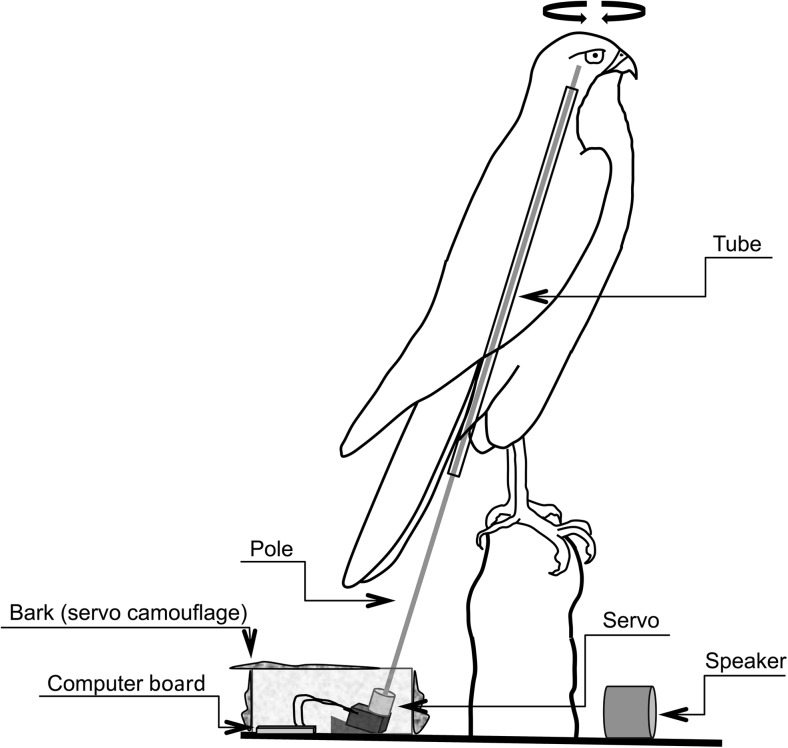
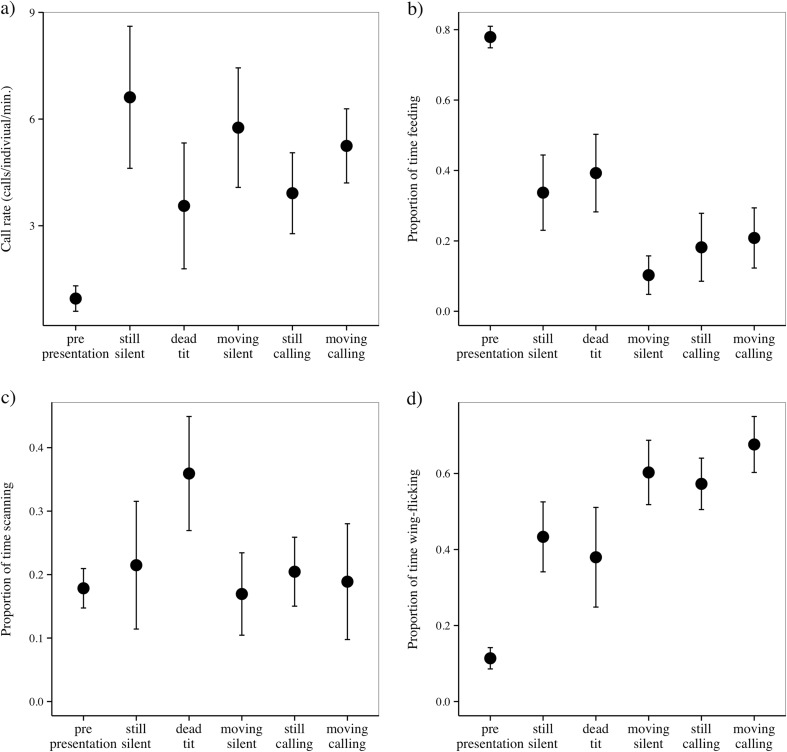
Many animals alter their anti-predator behavior in accordance to the threat level of a predator. While much research has examined variation in mobbing responses to different predators, few studies have investigated how anti-predator behavior is affected by changes in a predator's own state or behavior. We examined the effect of sparrowhawk () behavior on the mobbing response of wild blue tits () using robotic taxidermy sparrowhawks. We manipulated whether the simulated predator moved its head, produced vocalizations, or held a taxidermy blue tit in its talons. When any sparrowhawk model was present, blue tits decreased foraging and increased anti-predator behavior and vocalizations. Additionally, each manipulation of the model predator's state (moving, vocalizing, or the presence of a dead conspecific) impacted different types of blue tit anti-predator behavior and vocalizations. These results indicate that different components of mobbing vary according to the specific state of a given predator-beyond its presence or absence-and suggest that each might play a different role in the overall mobbing response. Last, our results indicate that using more life-like predator stimuli-those featuring simple head movements and audio playback of vocalizations-changes how prey respond to the predator; these 'robo-raptor' models provide a powerful tool to provide increased realism in simulated predator encounters without sacrificing experimental control.
Anti-predatory behavior is often modulated by the threat level posed by a particular predator. While much research has tested how different types of predators change prey behavior, few experiments have examined how predator behavior affects anti-predatory responses of prey. By experimentally manipulating robotic predators, we show that blue tits not only respond to the presence of a sparrowhawk, by decreasing feeding and increasing anti-predator behavior and vocalizations, but that they vary specific anti-predator behaviors when encountering differently behaving predators (moving, vocalizing, or those with captured prey), suggesting that prey pay attention to their predators' state and behavior.
许多动物会根据捕食者的威胁程度改变其反捕食行为。虽然有大量研究探讨了对不同捕食者的围攻反应差异,但很少有研究调查反捕食行为是如何受到捕食者自身状态或行为变化影响的。我们使用机器标本雀鹰来研究雀鹰行为对野生青山雀围攻反应的影响。我们操控模拟捕食者是否转动头部、发出叫声或爪中抓着一只标本青山雀。当任何雀鹰模型出现时,青山雀都会减少觅食,增加反捕食行为和鸣叫。此外,对模型捕食者状态的每次操控(移动、发声或有一只死的同种个体)都会影响青山雀不同类型的反捕食行为和鸣叫。这些结果表明,围攻行为的不同组成部分会根据特定捕食者的具体状态而有所不同——不仅仅取决于其是否存在——并表明每种状态在整体围攻反应中可能发挥不同作用。最后,我们的结果表明,使用更逼真的捕食者刺激物——那些具有简单头部动作和声音回放的刺激物——会改变猎物对捕食者的反应;这些“机器猛禽”模型提供了一个强大的工具,在不牺牲实验控制的情况下,能在模拟捕食者遭遇中提供更高的真实感。
反捕食行为通常会受到特定捕食者所构成威胁程度的调节。虽然有大量研究测试了不同类型的捕食者如何改变猎物行为,但很少有实验研究捕食者行为如何影响猎物的反捕食反应。通过对机器捕食者进行实验操控,我们发现青山雀不仅会对雀鹰的出现做出反应,减少进食并增加反捕食行为和鸣叫,而且在遇到行为不同的捕食者(移动、发声或抓着猎物的捕食者)时,它们会改变特定的反捕食行为,这表明猎物会关注捕食者的状态和行为。