Fischedick Justin T
Excelsior Analytical Laboratory, Inc., Union City, California.
Cannabis Cannabinoid Res. 2017 Mar 1;2(1):34-47. doi: 10.1089/can.2016.0040. eCollection 2017.
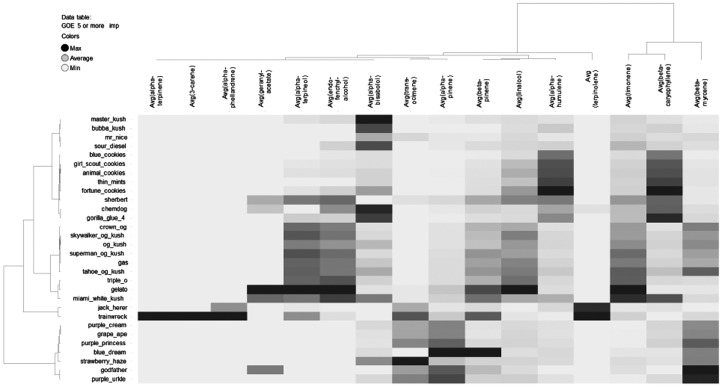
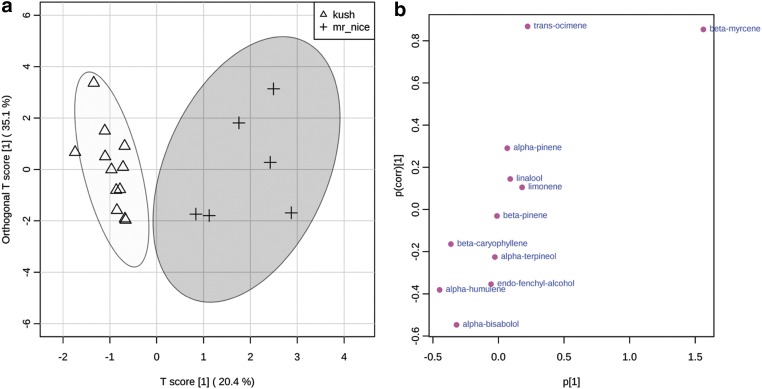
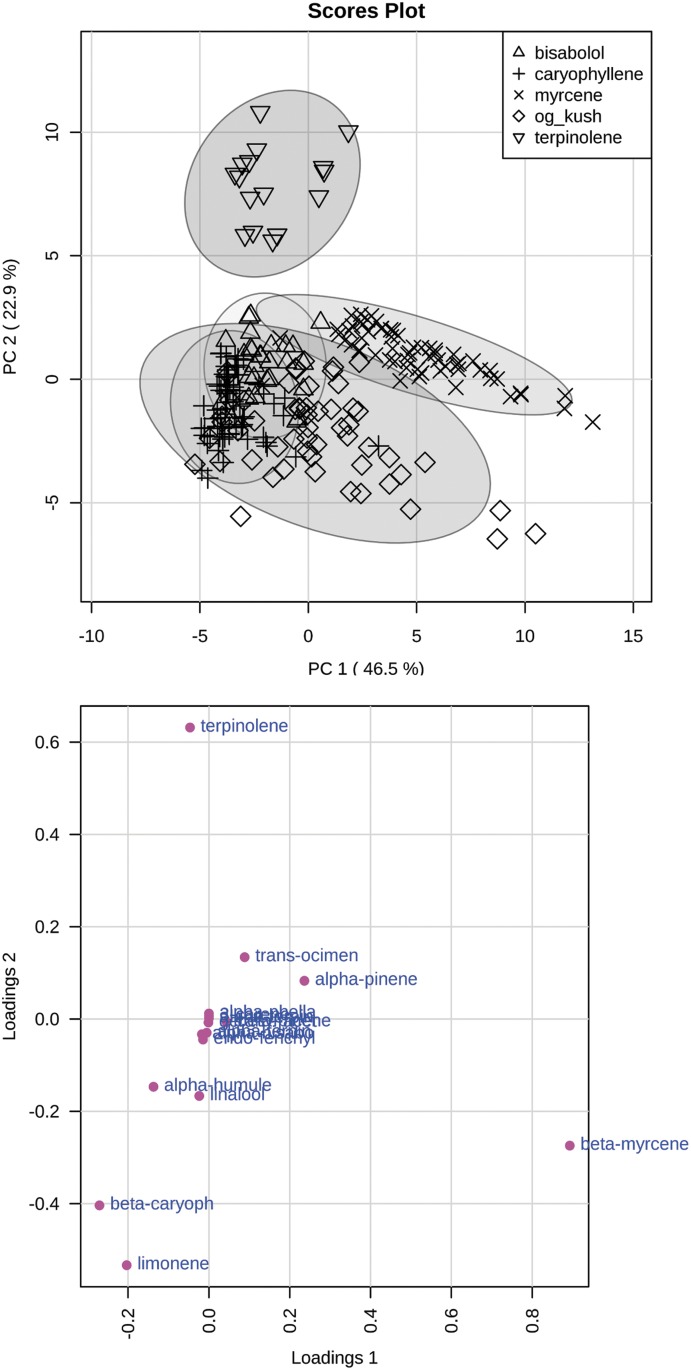
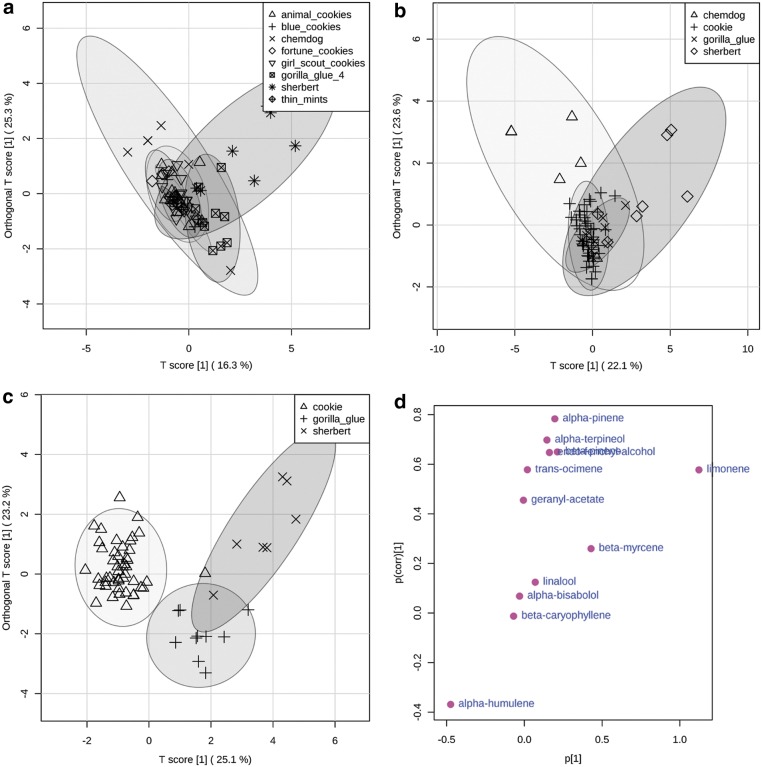
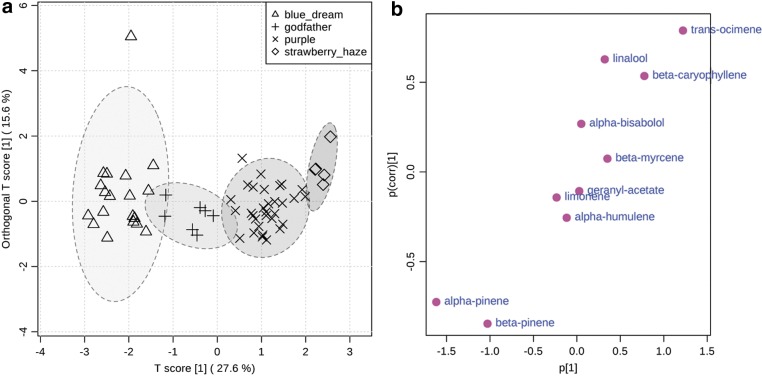
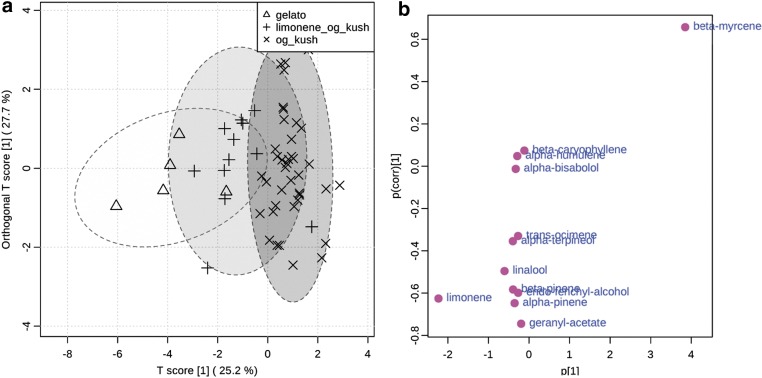
With laws changing around the world regarding the legal status of (cannabis) it is important to develop objective classification systems that help explain the chemical variation found among various cultivars. Currently cannabis cultivars are named using obscure and inconsistent nomenclature. Terpenoids, responsible for the aroma of cannabis, are a useful group of compounds for distinguishing cannabis cultivars with similar cannabinoid content. In this study we analyzed terpenoid content of cannabis samples obtained from a single medical cannabis dispensary in California over the course of a year. Terpenoids were quantified by gas chromatography with flame ionization detection and peak identification was confirmed with gas chromatography mass spectrometry. Quantitative data from 16 major terpenoids were analyzed using hierarchical clustering analysis (HCA), principal component analysis (PCA), partial least squares discriminant analysis (PLS-DA), and orthogonal partial least squares discriminant analysis (OPLS-DA). A total of 233 samples representing 30 cultivars were used to develop a classification scheme based on quantitative data, HCA, PCA, and OPLS-DA. Initially cultivars were divided into five major groups, which were subdivided into 13 classes based on differences in terpenoid profile. Different classification models were compared with PLS-DA and found to perform best when many representative samples of a particular class were included. A hierarchy of terpenoid chemotypes was observed in the data set. Some cultivars fit into distinct chemotypes, whereas others seemed to represent a continuum of chemotypes. This study has demonstrated an approach to classifying cannabis cultivars based on terpenoid profile.
随着世界各地关于(大麻)法律地位的法律不断变化,开发客观的分类系统以帮助解释不同品种之间发现的化学差异变得很重要。目前,大麻品种的命名使用的是模糊且不一致的术语。萜类化合物负责大麻的香气,是区分具有相似大麻素含量的大麻品种的一组有用化合物。在本研究中,我们分析了在一年时间里从加利福尼亚州的一家医用大麻药房获得的大麻样品的萜类化合物含量。通过带有火焰离子化检测的气相色谱法定量萜类化合物,并通过气相色谱 - 质谱法确认峰识别。使用层次聚类分析(HCA)、主成分分析(PCA)、偏最小二乘判别分析(PLS - DA)和正交偏最小二乘判别分析(OPLS - DA)对16种主要萜类化合物的定量数据进行分析。总共使用了代表30个品种的233个样品,基于定量数据、HCA、PCA和OPLS - DA开发了一种分类方案。最初,品种被分为五个主要组,然后根据萜类化合物谱的差异细分为13类。使用PLS - DA比较了不同的分类模型,发现当包含特定类别的许多代表性样品时表现最佳。在数据集中观察到了萜类化学型的层次结构。一些品种符合不同的化学型,而其他品种似乎代表了化学型的连续体。本研究展示了一种基于萜类化合物谱对大麻品种进行分类的方法。