College of pharmacy, Zhejiang Chinese Medical University, Hangzhou, Zhejiang, 310053, China.
The Key Laboratory for Quality Improvement of Agricultural Products of Zhejiang Province, School of Agriculture and Food Science, Zhejiang A&F University, Linan, Hangzhou, Zhejiang, 311300, China.
Sci Rep. 2017 Sep 5;7(1):10554. doi: 10.1038/s41598-017-10215-2.
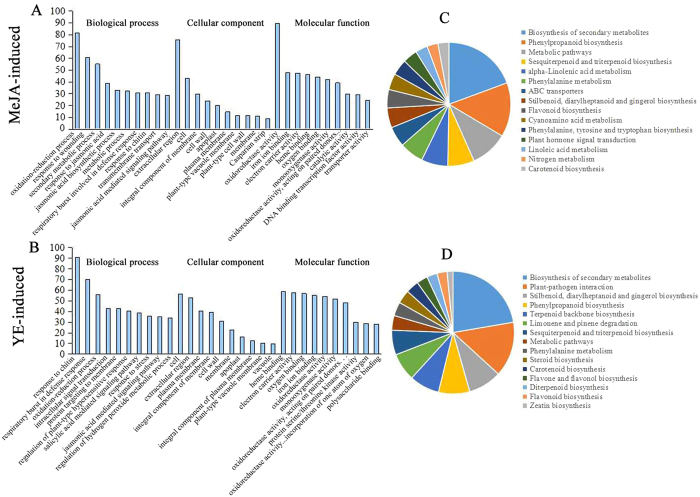
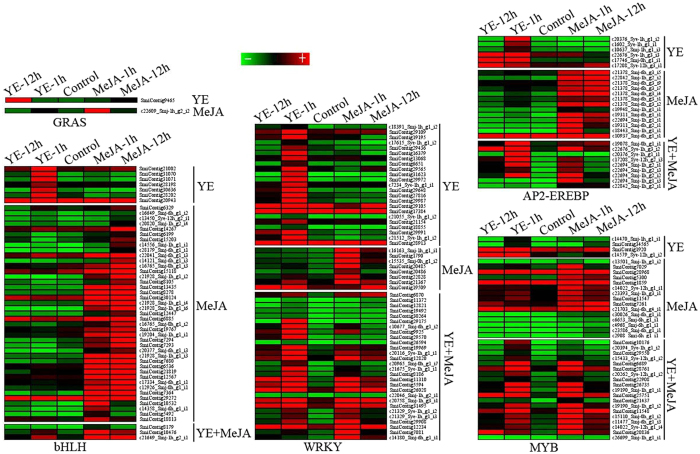
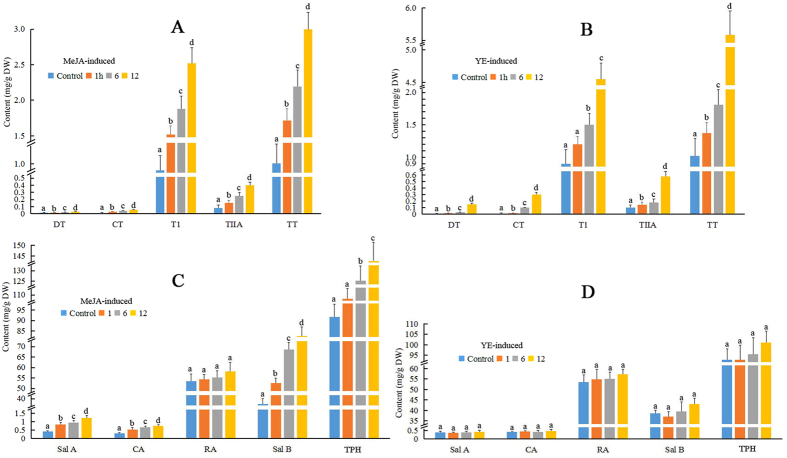
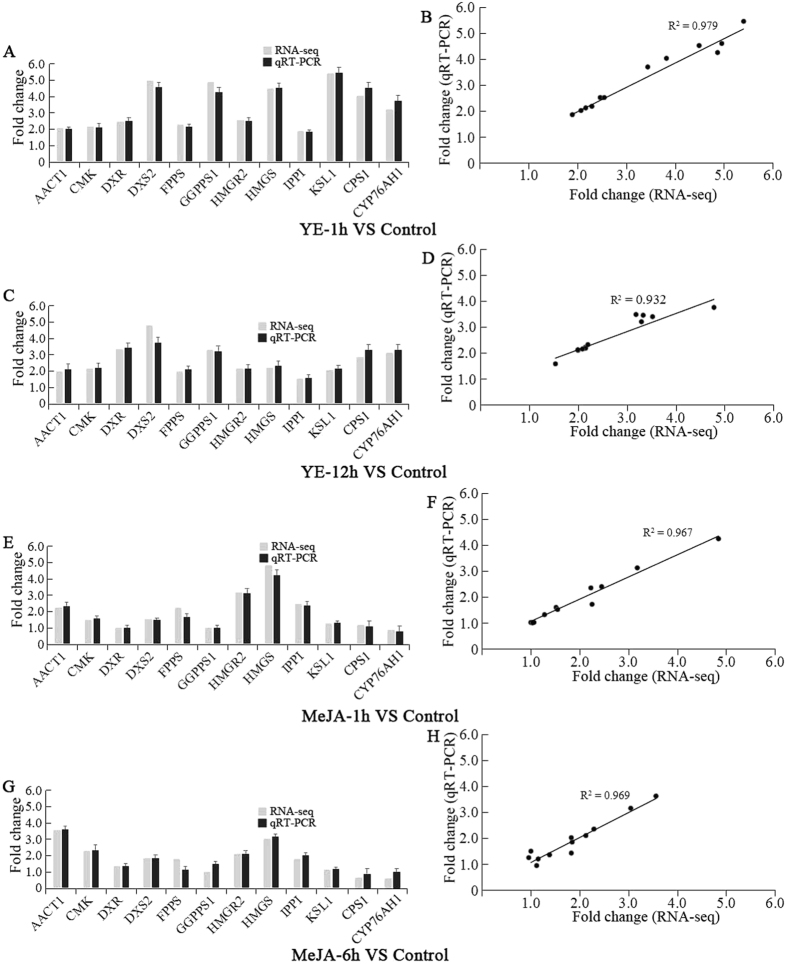
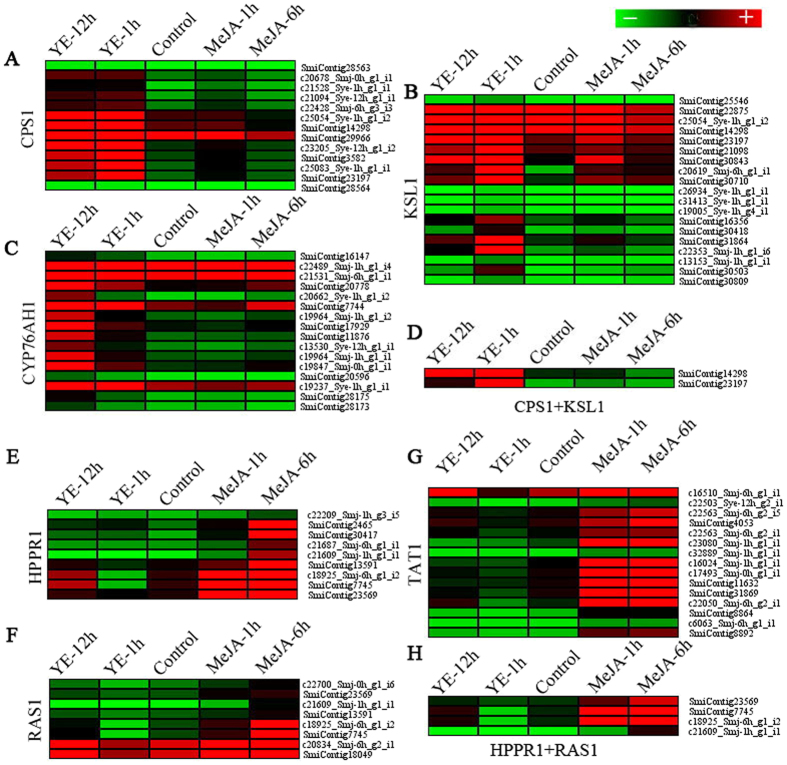
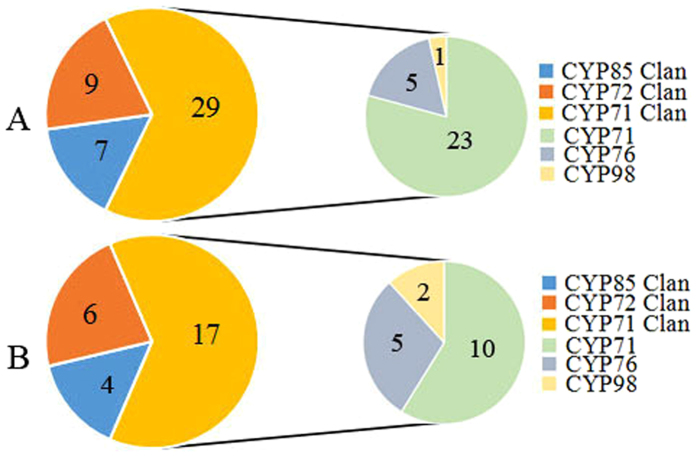
Tanshinones and phenolic acids are crucial bioactive compounds biosynthesized in Salvia miltiorrhiza. Methyl jasmonate (MeJA) is an effective elicitor to enhance the production of phenolic acids and tanshinones simultaneously, while yeast extract (YE) is used as a biotic elicitor that only induce tanshinones accumulation. However, little was known about the different molecular mechanism. To identify the downstream and regulatory genes involved in tanshinone and phenolic acid biosynthesis, we conducted comprehensive transcriptome profiling of S. miltiorrhiza hairy roots treated with either MeJA or YE. Total 55588 unigenes were assembled from about 1.72 billion clean reads, of which 42458 unigenes (76.4%) were successfully annotated. The expression patterns of 19 selected genes in the significantly upregulated unigenes were verified by quantitative real-time PCR. The candidate downstream genes and other cytochrome P450s involved in the late steps of tanshinone and phenolic acid biosynthesis pathways were screened from the RNA-seq dataset based on co-expression pattern analysis with specific biosynthetic genes. Additionally, 375 transcription factors were identified to exhibit a significant up-regulated expression pattern in response to induction. This study can provide us a valuable gene resource for elucidating the molecular mechanism of tanshinones and phenolic acids biosynthesis in hairy roots of S. miltiorrhiza.
丹参酮和酚酸是丹参中合成的重要生物活性化合物。茉莉酸甲酯(MeJA)是一种有效的诱导剂,可以同时提高酚酸和丹参酮的产量,而酵母提取物(YE)则被用作生物诱导剂,仅诱导丹参酮的积累。然而,对于它们在丹参酮和酚酸生物合成中的不同分子机制知之甚少。为了鉴定涉及丹参酮和酚酸生物合成的下游和调节基因,我们对用 MeJA 或 YE 处理的丹参毛状根进行了全面的转录组分析。从约 17.2 亿个清洁读数中组装了 55588 个 unigenes,其中 42458 个 unigenes(76.4%)成功注释。通过定量实时 PCR 验证了在显著上调的 unigenes中 19 个选定基因的表达模式。根据与特定生物合成基因的共表达模式分析,从 RNA-seq 数据集筛选出涉及丹参酮和酚酸生物合成途径后期步骤的候选下游基因和其他细胞色素 P450。此外,鉴定出 375 个转录因子对诱导有明显的上调表达模式。这项研究为阐明丹参毛状根中丹参酮和酚酸生物合成的分子机制提供了有价值的基因资源。