Oleksy Ryszard, Giuggioli Luca, McKetterick Thomas J, Racey Paul A, Jones Gareth
School of Life Sciences, University of Bristol, Bristol, United Kingdom.
Department of Engineering Mathematics, University of Bristol, Bristol, United Kingdom.
PLoS One. 2017 Sep 6;12(9):e0184023. doi: 10.1371/journal.pone.0184023. eCollection 2017.
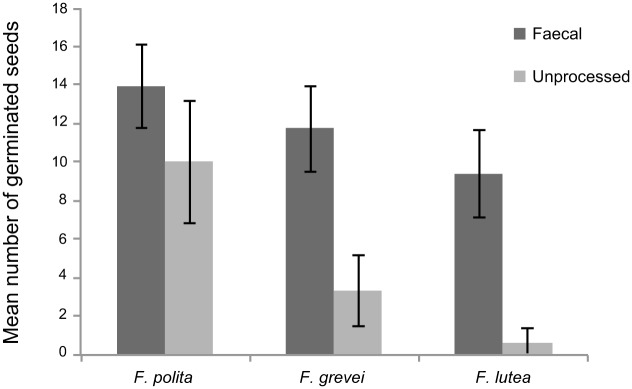
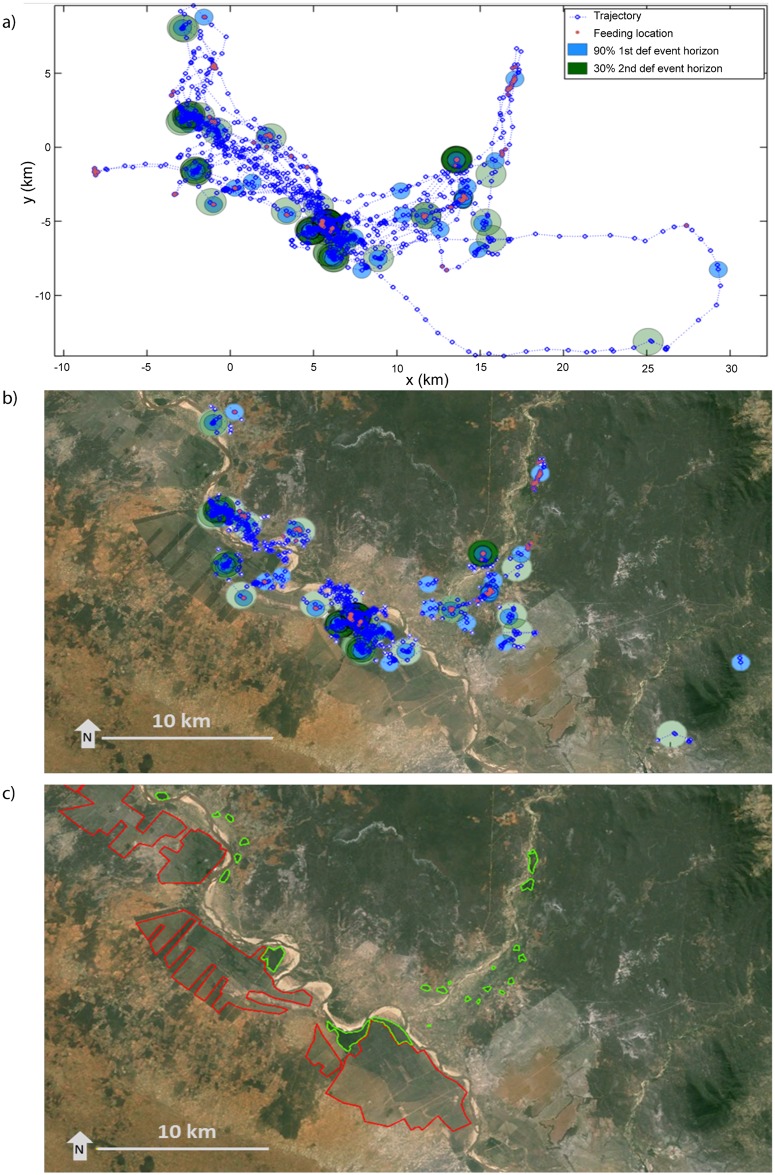
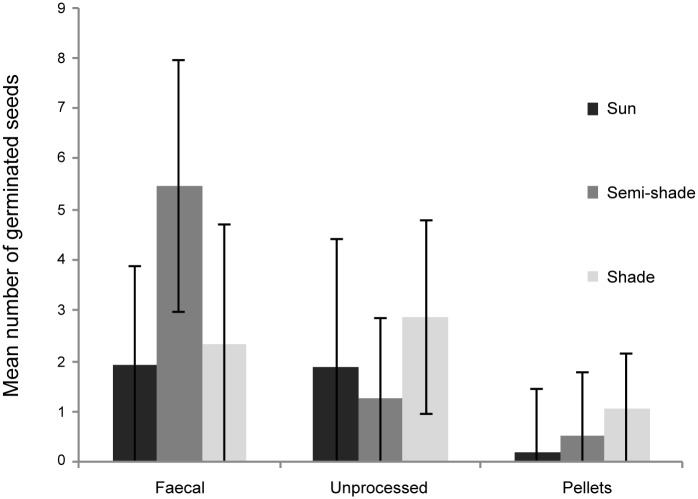
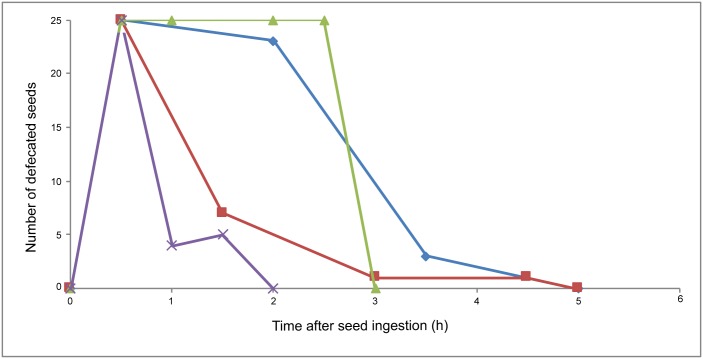
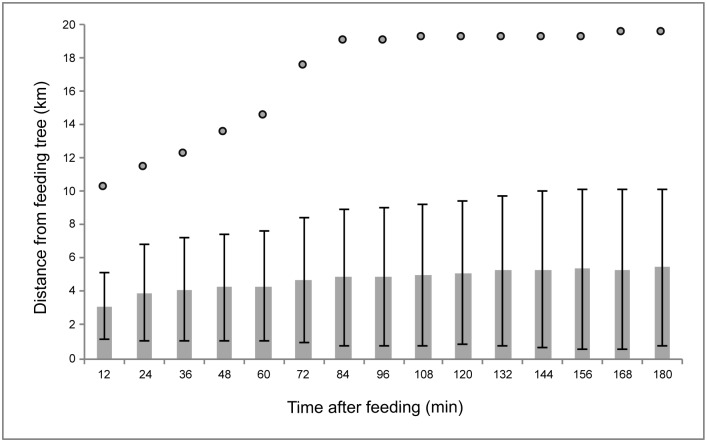
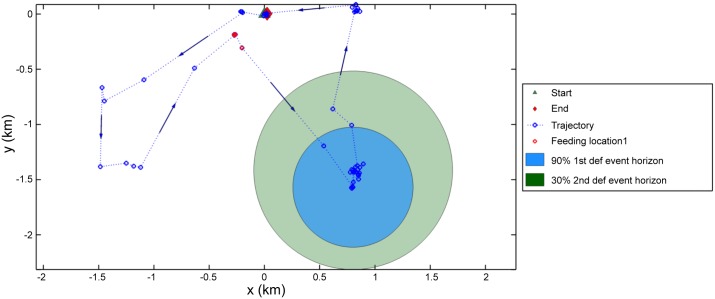
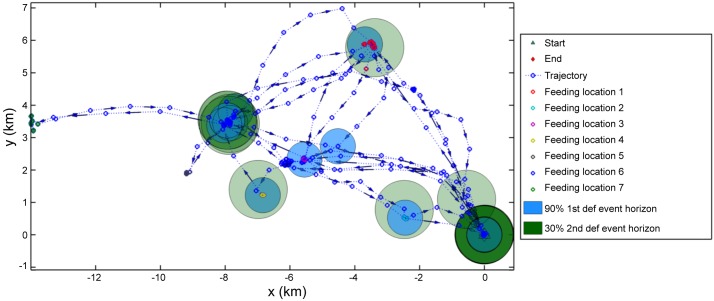
Seed dispersal plays a significant role in forest regeneration and maintenance. Flying foxes are often posited as effective long-distance seed dispersers due to their large home ranges and ability to disperse seeds when flying. We evaluate the importance of the Madagascan flying fox Pteropus rufus in the maintenance and regeneration of forests in one of the world's priority conservation areas. We tested germination success of over 20,000 seeds from the figs Ficus polita, F. grevei and F. lutea extracted from bat faeces and ripe fruits under progressively more natural conditions, ranging from petri-dishes to outdoor environments. Seeds from all fig species showed increased germination success after passing through the bats' digestive tracts. Outside, germination success in F. polita was highest in faecal seeds grown under semi-shaded conditions, and seeds that passed through bats showed increased seedling establishment success. We used data from feeding trials and GPS tracking to construct seed shadow maps to visualize seed dispersal patterns. The models use Gaussian probability density functions to predict the likelihood of defecation events occurring after feeding. In captivity, bats had short gut retention times (often < 30 mins), but were sometimes able to retain seeds for over 24h. In the wild, bats travelled 3-5 km within 24-280 min after feeding, when defecation of ingested seeds is very likely. They produced extensive seed shadows (11 bats potentially dispersing seeds over 58,000 ha over 45 total days of tracking) when feeding on figs within their large foraging areas and dispersed the seeds in habitats that were often partially shaded and hence would facilitate germination up to 20 km from the feeding tree. Because figs are important pioneer species, P. rufus is an important dispersal vector that makes a vital contribution to the regeneration and maintenance of highly fragmented forest patches in Madagascar.
种子传播在森林更新和维持中起着重要作用。由于果蝠的活动范围大且飞行时具有传播种子的能力,它们常被认为是有效的远距离种子传播者。我们评估了马达加斯加果蝠(Pteropus rufus)在世界重点保护区之一的森林维持和更新中的重要性。我们测试了从蝙蝠粪便和成熟果实中提取的超过20000颗来自多脉榕(Ficus polita)、格雷氏榕(F. grevei)和黄果榕(F. lutea)的种子在从培养皿到户外环境等逐渐更自然的条件下的发芽成功率。所有榕树种的种子在经过蝙蝠消化道后发芽成功率都有所提高。在户外,多脉榕的粪便种子在半阴条件下生长时发芽成功率最高,且经过蝙蝠传播的种子幼苗建立成功率增加。我们利用喂食试验和GPS跟踪数据构建种子阴影图,以可视化种子传播模式。这些模型使用高斯概率密度函数来预测进食后排便事件发生的可能性。在圈养环境中,蝙蝠肠道保留时间较短(通常<30分钟),但有时能够将种子保留超过24小时。在野外,蝙蝠进食后24 - 280分钟内飞行3 - 5公里,此时摄入种子很可能会排便。它们在大觅食区内以榕树为食时产生广泛的种子阴影(在总共45天的跟踪中,11只蝙蝠可能在超过58000公顷的区域传播种子),并将种子散布在通常部分遮荫的栖息地,因此有利于在距取食树20公里范围内的种子发芽。由于榕树是重要的先锋物种,马达加斯加果蝠是重要的传播媒介,对马达加斯加高度破碎化的森林斑块的更新和维持做出了重要贡献。