Dutta Sara, Chang Kelly C, Beattie Kylie A, Sheng Jiansong, Tran Phu N, Wu Wendy W, Wu Min, Strauss David G, Colatsky Thomas, Li Zhihua
Division of Applied Regulatory Science, Office of Clinical Pharmacology, Office of Translational Sciences, Center for Drug Evaluation and Research, U.S. Food and Drug AdministrationSilver Spring, MD, United States.
Front Physiol. 2017 Aug 23;8:616. doi: 10.3389/fphys.2017.00616. eCollection 2017.
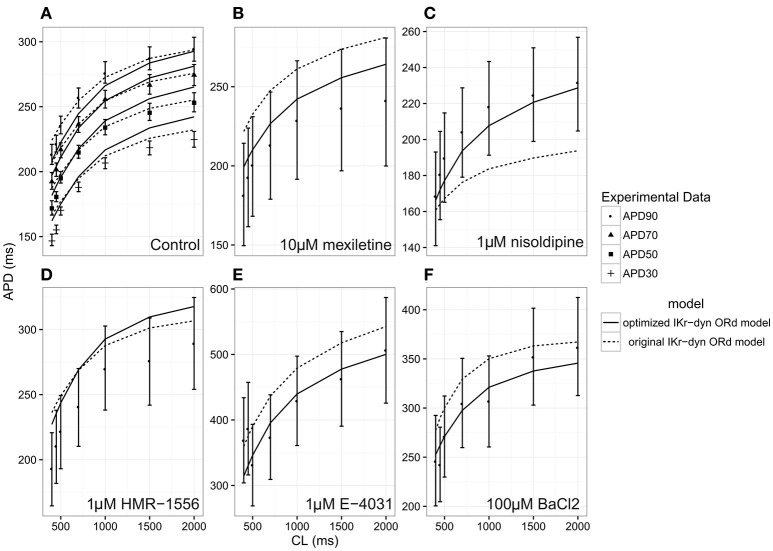
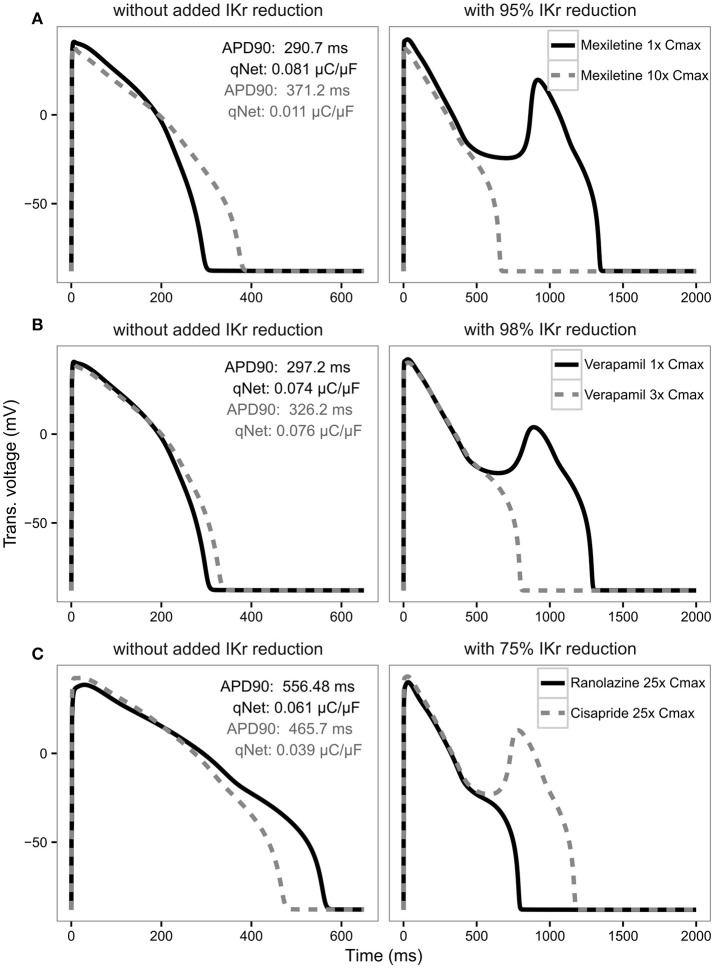
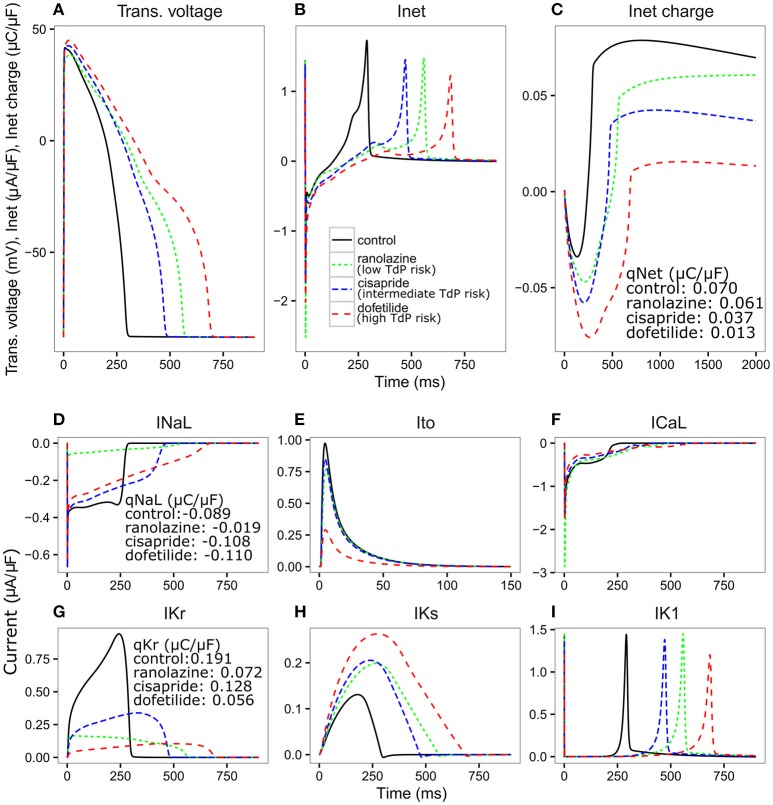
Drug-induced Torsade-de-Pointes (TdP) has been responsible for the withdrawal of many drugs from the market and is therefore of major concern to global regulatory agencies and the pharmaceutical industry. The Comprehensive Proarrhythmia Assay (CiPA) was proposed to improve prediction of TdP risk, using models and multi-channel pharmacology data as integral parts of this initiative. Previously, we reported that combining dynamic interactions between drugs and the rapid delayed rectifier potassium current (IKr) with multi-channel pharmacology is important for TdP risk classification, and we modified the original O'Hara Rudy ventricular cell mathematical model to include a Markov model of IKr to represent dynamic drug-IKr interactions (IKr-dynamic ORd model). We also developed a novel metric that could separate drugs with different TdP liabilities at high concentrations based on total electronic charge carried by the major inward ionic currents during the action potential. In this study, we further optimized the IKr-dynamic ORd model by refining model parameters using published human cardiomyocyte experimental data under control and drug block conditions. Using this optimized model and manual patch clamp data, we developed an updated version of the metric that quantifies the net electronic charge carried by major inward and outward ionic currents during the steady state action potential, which could classify the level of drug-induced TdP risk across a wide range of concentrations and pacing rates. We also established a framework to quantitatively evaluate a system's robustness against the induction of early afterdepolarizations (EADs), and demonstrated that the new metric is correlated with the cell's robustness to the pro-EAD perturbation of IKr conductance reduction. In summary, in this work we present an optimized model that is more consistent with experimental data, an improved metric that can classify drugs at concentrations both near and higher than clinical exposure, and a physiological framework to check the relationship between a metric and EAD. These findings provide a solid foundation for using models for the regulatory assessment of TdP risk under the CiPA paradigm.
药物诱发的尖端扭转型室性心动过速(TdP)已导致许多药物退市,因此受到全球监管机构和制药行业的高度关注。综合心律失常检测(CiPA)旨在通过使用模型和多通道药理学数据作为该计划的组成部分,来改进对TdP风险的预测。此前,我们报告称,将药物与快速延迟整流钾电流(IKr)之间的动态相互作用与多通道药理学相结合,对于TdP风险分类很重要,并且我们修改了原始的奥哈拉·鲁迪心室细胞数学模型,纳入了IKr的马尔可夫模型以表示药物与IKr的动态相互作用(IKr动态ORd模型)。我们还开发了一种新的指标,该指标可以根据动作电位期间主要内向离子电流携带的总电荷,在高浓度下区分具有不同TdP倾向的药物。在本研究中,我们利用已发表的对照和药物阻断条件下的人类心肌细胞实验数据优化模型参数,进一步优化了IKr动态ORd模型。使用这个优化后的模型和膜片钳手动记录数据,我们开发了该指标的更新版本,该版本量化了稳态动作电位期间主要内向和外向离子电流携带的净电荷,它可以在广泛的浓度和起搏频率范围内对药物诱发的TdP风险水平进行分类。我们还建立了一个框架来定量评估系统对早期后去极化(EAD)诱发的稳健性,并证明新指标与细胞对IKr电导降低的促EAD扰动的稳健性相关。总之,在这项工作中,我们提出了一个与实验数据更一致的优化模型、一个可以在接近和高于临床暴露浓度下对药物进行分类的改进指标以及一个用于检查指标与EAD之间关系的生理学框架。这些发现为在CiPA范式下使用模型进行TdP风险的监管评估提供了坚实的基础。